September 25, 2026
Carbon Monoxide Furnace Safety: What Every Homeowner Should Know
Now that it’s been dipping into the 50s at night, a lot of Triangle homeowners are firing up their furnace for the first time since last winter. That first run of the season is exactly when carbon monoxide furnace safety deserves some real attention, because a gas furnace that’s been sitting idle for months is also a furnace that hasn’t had anything checked in months. Most heating seasons pass without incident. But CO poisoning is one of those things where the stakes are high enough that it’s worth understanding, even briefly, rather than assuming it won’t happen to you.
Where Carbon Monoxide Actually Comes From
A gas furnace burns fuel to produce heat, and combustion always produces carbon monoxide as a byproduct. Under normal operation, that CO is safely vented outside through the flue and never enters your home’s air supply. The heat exchanger is the component doing the important work here: it transfers heat from the combustion chamber into the air that circulates through your ductwork, while keeping the combustion gases physically separated from that air the entire time.
Problems start when that separation fails. A cracked heat exchanger, a blocked or damaged flue, or a furnace that isn’t burning fuel cleanly can all allow carbon monoxide to mix with the air your system distributes through the house. None of these situations look dramatic from the outside. A furnace with a cracked heat exchanger typically still runs, still produces heat, and doesn’t give any obvious visual sign that something is wrong. That’s exactly why detectors and inspections matter so much here.
Why This Is a Bigger Deal Than a Typical Repair Issue
Carbon monoxide is colorless and odorless, so your senses genuinely cannot detect it. Early symptoms of CO exposure, headache, dizziness, nausea, and fatigue, are easy to mistake for a cold or general tiredness, especially since they tend to show up gradually as concentration builds over hours. The CDC notes that CO poisoning sends tens of thousands of people to emergency rooms every year in the United States, and heating season is consistently when incidents spike, since furnaces and other combustion appliances are running more and homes are sealed up tighter against the cold.
One detail worth knowing: symptoms often improve when someone leaves the house and get worse again when they return, which is a pattern that can make CO exposure hard to connect to the home itself. If multiple people or pets in the household are experiencing similar symptoms around the same time, or if symptoms consistently ease when you’re away from the house, that pattern is worth taking seriously.
Signs Your Furnace Might Have a Carbon Monoxide Problem
A few physical signs sometimes accompany a CO issue, though it’s important to understand these are not reliable on their own and a furnace can leak CO without any of them being present.
A burner flame that’s yellow or flickering rather than a steady blue is worth noting. Normal combustion produces a blue flame; yellow suggests incomplete combustion, which increases CO production. Soot or dark staining around the furnace cabinet, the burners, or the flue connection can also indicate a combustion problem. A persistent, unusual odor when the furnace runs, distinct from the brief dusty smell that’s normal on the first startup of the season, is worth investigating. Excess condensation on windows near the furnace, or a flue pipe that feels unusually hot to the touch, can point toward venting issues as well.
None of these signs are a substitute for a working CO detector, and none of them mean you should try to diagnose the furnace yourself. If you notice any of them, the right move is to shut the system off and call a technician, not to investigate further on your own.
CO Detectors: Where and How Many
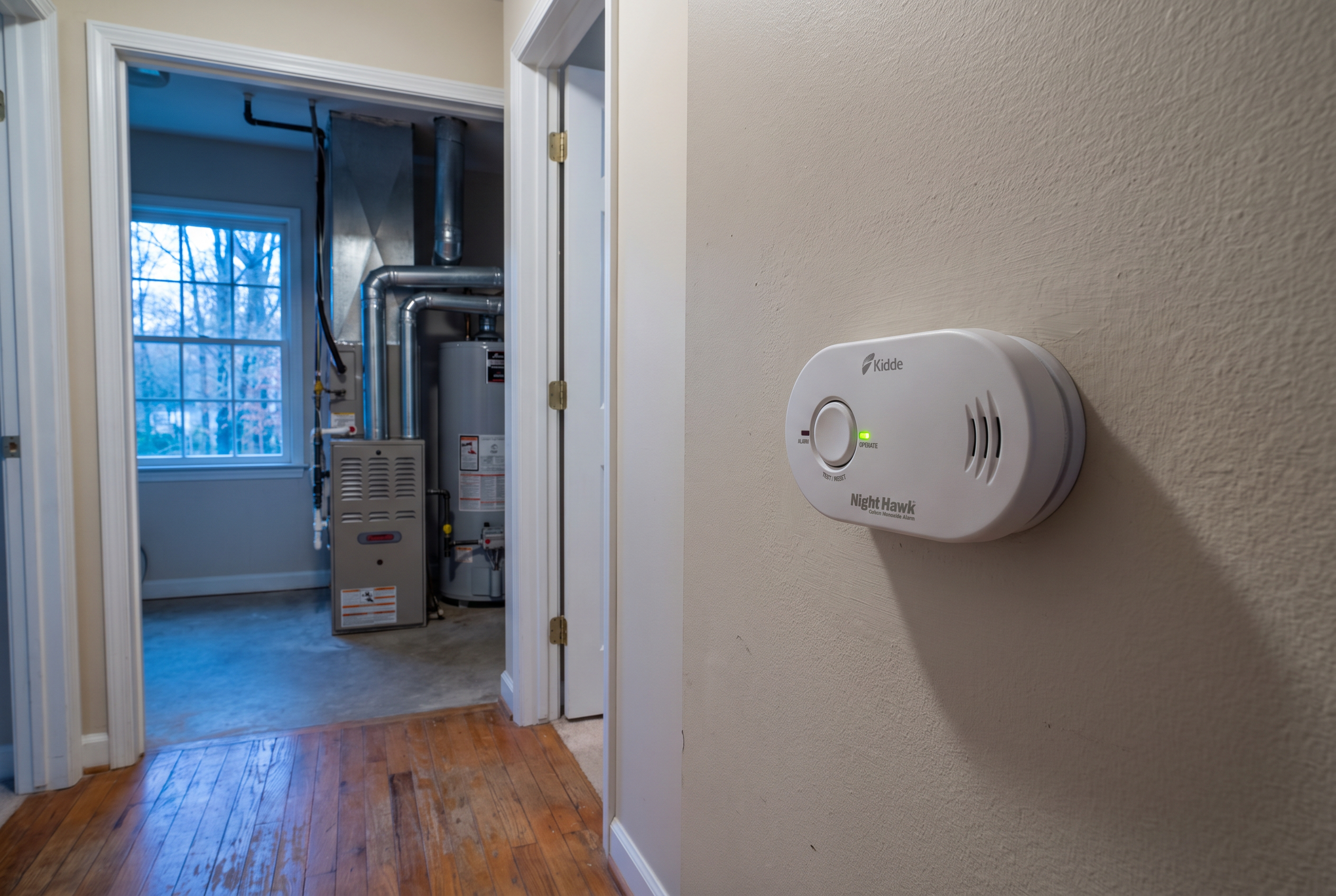
Every home with any gas-burning appliance, which includes furnaces, water heaters, stoves, and fireplaces, needs working carbon monoxide detectors. North Carolina building code requires CO detectors in new construction and major renovations near sleeping areas, but plenty of existing homes are under-equipped, especially older houses that predate the requirement.
The general guidance is one detector on every level of the home, including the basement, and one within earshot of each sleeping area. Detectors should be placed at knee to chest height on a wall, since CO mixes with air rather than settling like a heavier gas, and away from direct proximity to the furnace itself or to cooking appliances, where normal operation might trigger false alarms. Combination smoke and CO detectors are widely available and a reasonable choice if you’re setting up detection for the first time.
Test detectors monthly and replace batteries at least once a year. Most CO detectors also have a limited lifespan, typically five to seven years, after which the sensor itself degrades even if the unit still appears to function. Check the manufacture date on the back of your detectors; if you’re not sure how old they are, that uncertainty alone is a reason to replace them.
What a Professional Inspection Actually Checks
A proper furnace safety inspection goes well beyond what a homeowner can check visually. A technician tests the heat exchanger for cracks using specialized equipment, verifies the flue is properly vented and free of blockages, checks the burner assembly for clean and complete combustion, and tests ambient CO levels near the furnace and throughout the ductwork while the system runs. This is standard practice during a fall tune-up specifically because heating season is when these issues matter most.
If a technician does find a cracked heat exchanger, that’s not a component that gets patched or repaired. A cracked heat exchanger means the furnace needs to be replaced, full stop, and running the system in that condition afterward is not something any responsible technician would sign off on. It’s one of the more serious findings we can deliver on a service call, but it’s far better to hear it during a planned fall inspection than to discover it the hard way partway through winter. Take a look at what our preventative maintenance visits include, since a combustion and safety check is part of every fall tune-up we do.
If You Suspect a CO Problem Right Now
If your CO detector goes off, or if multiple people in the house are experiencing symptoms like headache, dizziness, or nausea that seem to improve when you leave the house, get everyone outside immediately and call 911 from outside the home. Don’t take time to open windows or investigate the source first. Once everyone is safe, emergency services can assess the situation, and you’ll want a qualified technician to inspect the system before running it again.
This isn’t a situation to wait out or handle casually, and it’s genuinely one of the few HVAC issues where the right response is emergency services first and a service call second.
Getting Ahead of It This Heating Season
The good news is that carbon monoxide furnace safety is very manageable with a bit of routine attention. Working detectors on every level of your home, a fall inspection that includes a real combustion and heat exchanger check, and knowing the basic warning signs cover almost everything that matters here. If your furnace hasn’t been inspected in a while, or if you’re not confident your detectors are current and working, now is the time to deal with both before you’re relying on the system daily.
If you’re in Raleigh, Garner, or anywhere in the Triangle and want a proper safety inspection before winter sets in, we’re happy to come take a look. Check out our heating services page for more on what we cover, or get in touch here to schedule an inspection.
Frequently Asked Questions
Can a furnace leak carbon monoxide without any warning signs?
Yes, and this is exactly why a working CO detector matters so much. A cracked heat exchanger or a venting problem doesn’t always produce visible symptoms like soot, unusual smells, or a flickering flame. The furnace can continue to run and produce heat normally while still allowing CO into the airstream. Detectors and professional inspections are the reliable way to catch this, not visual inspection alone.
How often should carbon monoxide detectors be replaced?
Most CO detectors have a functional lifespan of five to seven years, after which the sensor degrades even if the unit still powers on and appears to work. Check the manufacture date printed on the back of the unit. Batteries should be tested monthly and replaced at least annually regardless of the detector’s age.
What should I do if my carbon monoxide detector goes off?
Get everyone, including pets, outside immediately and call 911 from outside the home. Don’t stop to investigate the source or open windows first. Once everyone is safe, let emergency services assess the situation, and have a qualified technician inspect your heating system before running it again.
Is a cracked heat exchanger repairable?
No. A cracked heat exchanger requires furnace replacement rather than repair. It’s a structural failure in the component that separates combustion gases from your home’s breathing air, and there’s no reliable way to patch or seal it safely. A technician who finds a cracked heat exchanger during an inspection will recommend replacement rather than continued use of the existing unit.
Categories

Let's Talk.
We’ll be happy to get you the pricing, service or information you need as soon as possible.