September 4, 2026
My AC Stopped Working — What Do I Do First?
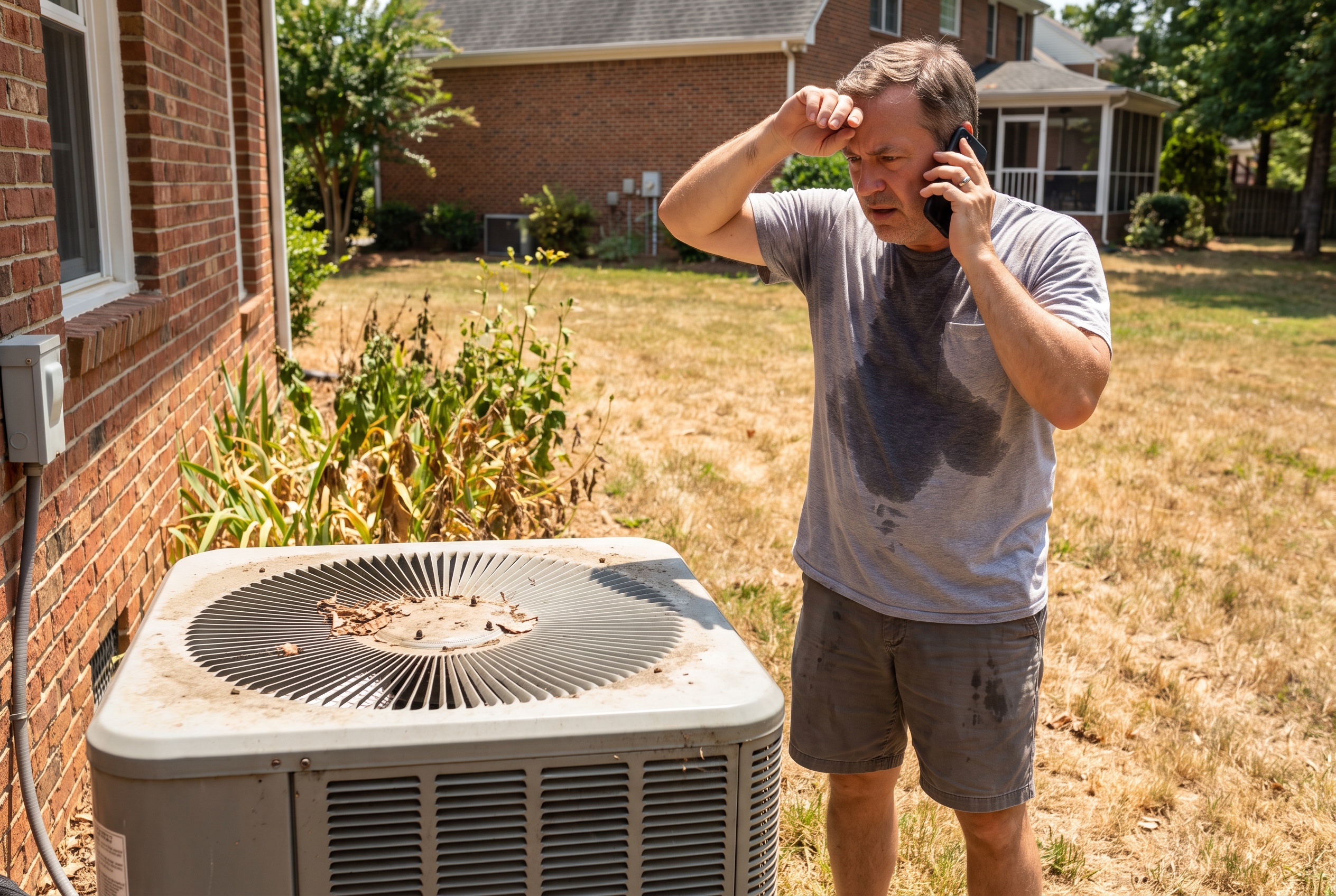
It’s the middle of summer, it’s brutally hot outside, and your AC stopped working. Before you call anyone or start catastrophizing about what it’s going to cost, take a breath. A surprising number of AC failures have simple explanations that take five minutes to rule out, and knowing what to check first can save you time, money, and a lot of unnecessary stress.
Here’s how to think through it.
Start With the Simple Stuff
When an AC system stops working suddenly, the most common culprits aren’t dramatic. Go through these before assuming the worst.
Check your thermostat first. It sounds obvious, but thermostat issues cause a lot of service calls that turn out to be nothing. Make sure it’s set to cool and not fan-only, that the set temperature is actually below the current room temperature, and that it has power. If it’s battery-operated and the display is dim or blank, swap the batteries before anything else. Smart thermostat owners should check whether the device lost its wifi connection or pushed an update that changed the settings overnight.
Check the circuit breaker next. AC systems draw a lot of power, and during peak summer heat when the system is running harder than usual, tripped breakers are more common than you’d think. Go to your electrical panel and look for any breakers in the middle position rather than fully on or fully off. If the AC breaker has tripped, reset it by switching it fully off first and then back on. If it trips again immediately, stop there and call someone: a breaker that won’t stay reset is telling you something is wrong electrically, and pushing through it can cause real damage.
Check the air filter. A completely clogged filter can restrict airflow so severely that the system shuts itself down as a protective measure. If your filter looks like it’s growing a sweater, replace it and give the system about 30 minutes to reset before trying again.
Check the condensate drain pan. Most modern AC systems have a float switch in the drain pan that shuts the system down if the pan fills with water, which happens when the condensate drain line gets clogged. Look near the indoor air handler for a drain pan and see if there’s standing water in it. If there is, the drain line needs to be cleared before the system will come back on.
Check the Outdoor Unit
If everything inside checks out, go look at the outdoor condenser unit. A few things to look for out there.
Is the outdoor unit running at all? If the indoor air handler is blowing air but the outdoor unit is completely silent and still, the problem is almost certainly outside. This points toward a failed capacitor, a tripped disconnect, or a compressor issue. The disconnect box is the small box mounted on the wall near the outdoor unit; occasionally the disconnect itself fails or gets bumped into the off position. If you’re comfortable checking it, look inside for a pulled fuse or a switched-off disconnect. If you’re not comfortable working near electrical equipment, leave it for a technician.
Is the outdoor unit running but not doing much? If the fan is spinning but the system isn’t cooling, you may be dealing with low refrigerant, a failing compressor, or a dirty condenser coil that’s causing the system to overheat and throttle back. This one needs a professional diagnosis regardless.
Is the outdoor unit iced over? Ice on the refrigerant lines or on the unit itself sounds counterintuitive but it’s a real problem, and it usually means either severely restricted airflow from a clogged filter or low refrigerant. If you see ice, turn the system off and let it thaw completely before running it again. Running a frozen system can damage the compressor. Once it’s thawed, replace the filter if you haven’t already and try again; if it ices back up, call for service.
The Most Common Reasons AC Systems Stop Working in Summer
If you’ve worked through the basics and the system still isn’t running, here’s what’s most likely going on based on what we see on service calls this time of year.
A failed capacitor is probably the single most common cause of a sudden AC stoppage in summer. Capacitors are the components that give the compressor and fan motors the electrical kick they need to start up, and they wear out over time. Heat accelerates that process, which is why they fail most often during the hottest weeks of the year when the system is running constantly. A capacitor replacement is generally a straightforward repair and not the most expensive thing in the world, which is reassuring news when this turns out to be the cause.
Refrigerant issues are another common culprit. A system that’s been slowly leaking refrigerant over time will eventually reach a point where it can’t cool effectively, and sometimes it’ll trigger a safety shutoff before that happens. Low refrigerant isn’t a DIY fix; it requires a licensed technician to find the leak, repair it, and recharge the system properly.
Compressor failure is the expensive scenario. The compressor is the heart of the system, and when it fails the system stops cooling entirely. On an older system, a failed compressor often makes replacement a more financially sensible option than repair, since a compressor is a major component and the labor costs on top of parts add up fast. If this turns out to be the diagnosis on a system that’s already 15 years or older, it’s worth getting a replacement quote alongside the repair quote so you can make an informed decision. Our AC replacement page has more on what that process looks like.
What to Expect When You Call for Service Right Now
We’ll be straight with you: during a heat wave, every HVAC company in the Triangle is slammed. Wait times for service calls are longer than they would be in May or October, and that’s just the reality of peak season demand.
When you call, be specific about what you’re experiencing. “My AC stopped working” gets you in the queue; “my AC stopped working, the outdoor unit isn’t running at all, and the breaker is fine” helps a dispatcher prioritize correctly and may help a technician arrive with the right parts. The more information you can give upfront, the better.
While you’re waiting, do what you can to keep the house livable. Close blinds on sun-facing windows, run ceiling fans, and avoid using the oven or dryer during the hottest part of the day. Ground floor spaces will stay cooler than upper floors. If you have anyone vulnerable in the house, including elderly family members, young kids, or pets, take that seriously and consider alternatives like a hotel or a friend’s place if the heat gets genuinely dangerous.
If your system is older and you’ve been nursing it along for a few seasons, this might be the moment to have the replacement conversation rather than the repair one. We’re not going to push you toward a new system if a repair makes sense, but if you’ve been putting off dealing with an aging unit, a failure during peak season sometimes clarifies the decision. Take a look at our AC repair page and our AC replacement page to get a sense of both paths.
Don’t Skip the Follow-Up
Once your system is back up and running, it’s worth scheduling a proper tune-up if it’s been a while. A system that just failed in summer heat has been under significant stress, and having a technician go through it thoroughly after a repair, checking refrigerant levels, cleaning coils, and testing electrical components, is good insurance against a repeat failure before the season is out. Our AC tune-up service covers all of that if you want to know what’s involved.
Ready to Get It Fixed?
If you’re in Raleigh, Garner, or anywhere in the Triangle and your AC stopped working, give Bowman Heating, Cooling and Plumbing a call. We’ve been handling exactly these situations in North Carolina homes for more than 30 years and we’ll get someone out to you as fast as we can. Reach out here to get on the schedule.
Frequently Asked Questions
What should I check first if my AC stopped working?
Start with the thermostat settings, then check the circuit breaker, then look at the air filter. After that, check the outdoor unit to see whether it’s running at all. A surprising number of AC failures trace back to one of these basic things rather than a major mechanical problem.
Why did my AC stop working on the hottest day of the year?
It’s not a coincidence. Extreme heat puts HVAC systems under more stress than any other time of year: compressors work harder, capacitors run hotter, and components that were borderline functional finally give out under the load. Capacitor failures in particular spike during heat waves for exactly this reason.
How long will I have to wait for an AC repair during a heat wave?
During peak summer heat, every HVAC company in the area is dealing with high call volume. Wait times vary, but being specific about your symptoms when you call helps dispatchers prioritize and can sometimes get a technician to you faster. If you have vulnerable household members, don’t wait it out in a dangerously hot house; make alternative arrangements while you wait for service.
Should I repair or replace my AC if it stops working in summer?
It depends on the age of the system and what failed. A capacitor replacement on a 10-year-old system is an easy call. A compressor failure on a 16-year-old system is a different conversation entirely. Get a repair quote and a replacement quote side by side if there’s any question, and factor in that an aging system is also costing you more to operate every month than a new one would.
Categories

Let's Talk.
We’ll be happy to get you the pricing, service or information you need as soon as possible.