October 30, 2026
Water Heater Not Working? What to Check Before You Call a Plumber
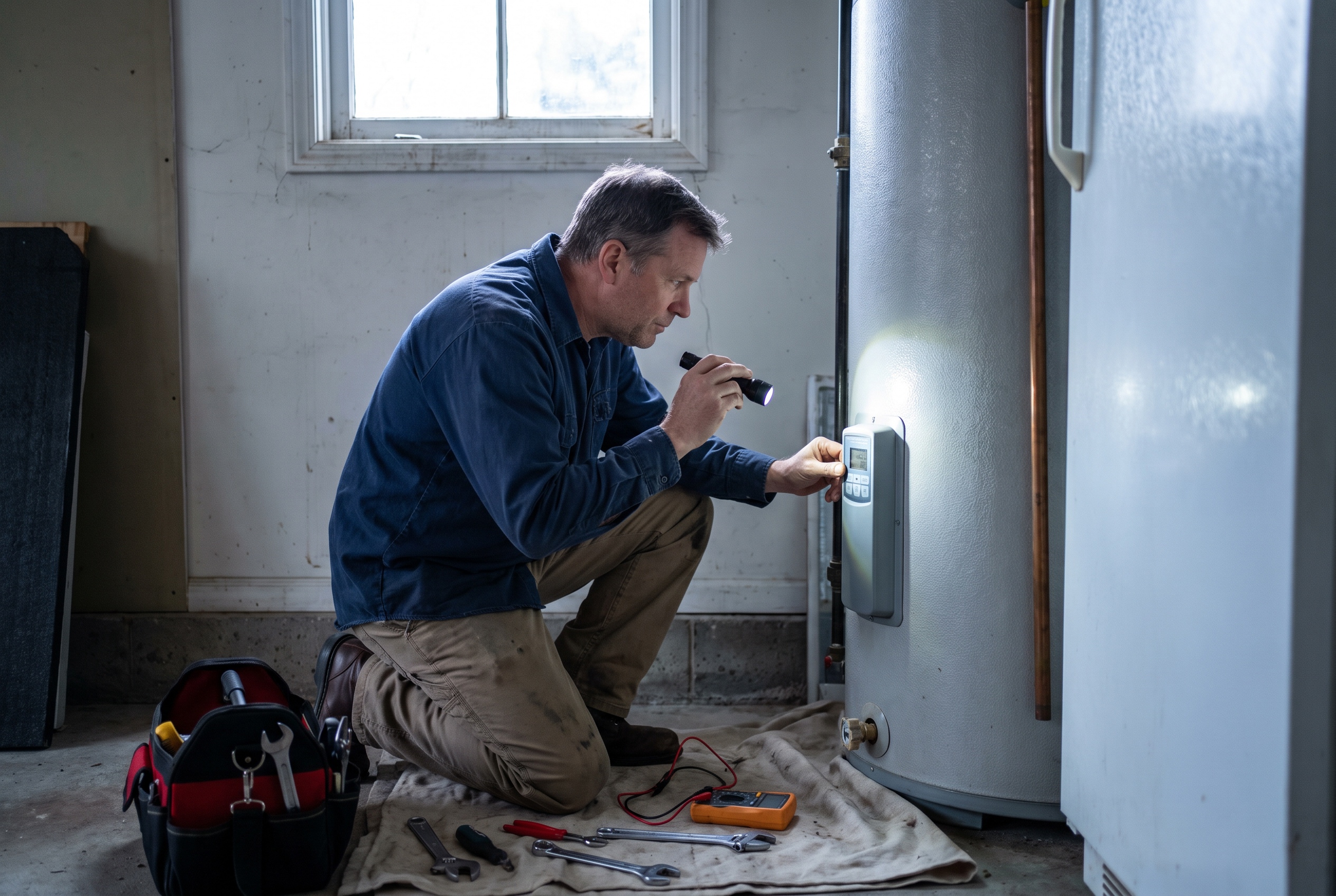
Nothing wakes you up faster than a cold shower you weren’t expecting. If you have a water heater not working on a chilly morning, you’re dealing with one of the most disruptive household problems there is, and it tends to happen right when the weather turns and everyone in the house wants a long hot shower. Before you start calling around, a few quick checks solve a surprising number of no hot water problems, and knowing what you’re looking at will help you figure out whether this is a ten-minute fix or a job for a technician.
Water Heater Not Working? Start With the Simple Checks
First, confirm the problem is actually the water heater. Run hot water at a couple of different faucets. If one sink is cold but the rest are fine, you may be dealing with a fixture problem rather than the heater itself. If every tap in the house is cold or barely warm, the heater is the place to look.
If you have an electric water heater, start at the breaker panel. Water heaters pull a lot of power, and a tripped breaker is one of the most common reasons for no hot water at all. Switch it fully off and back on once. Many electric units also have a red reset button on the upper thermostat behind the access panel. That button trips when the water gets too hot, and pressing it can bring the heater back. Turn the breaker off before you remove any panel, and if the reset button trips again right after you press it, stop there. A heater that keeps tripping is telling you something is failing, and repeated resets just mask it.
If you have a gas water heater, check whether the pilot light is lit. Most newer units have a small window near the bottom where you can see it, and the label on the tank walks you through relighting it step by step. If you’re comfortable following those instructions, give it one try. If the pilot won’t stay lit, or lights and then goes out again after you release the knob, that usually points to a worn thermocouple, which is a small and inexpensive part but one that needs to be replaced rather than coaxed along.
Finally, check the temperature setting. It sounds almost too obvious, but dials get bumped and settings get changed, especially in houses with kids or anyone who’s been poking around in the garage. Most households do well with a setting around 120 degrees.
If You Smell Gas or See Water, Stop
Two situations call for putting the troubleshooting aside. If you smell gas near the water heater, don’t touch any switches or try to relight anything. Get everyone and the pets outside and call your gas utility or 911 from outside the house.
The second is water pooling around the base of the tank. A small amount of condensation is one thing, but an actual leak from the tank itself usually means the inner tank has corroded, and that isn’t repairable. Shut off the cold water supply to the heater using the valve on the pipe above it, turn off the power at the breaker or set a gas unit to its pilot or off setting, and call for service. Leaving a leaking tank to run is how a bad day turns into water damage across a garage floor or a finished room.
Common Reasons a Water Heater Stops Working
If the basic checks don’t turn up anything, here’s what we tend to find when we get out to a no hot water call.
On electric units, a burned out heating element or a failed thermostat is the usual culprit. Most tanks have two elements, and when one fails you’ll often get lukewarm water or hot water that runs out far sooner than it used to. Elements wear out from a combination of age and mineral buildup, and replacing them is a fairly routine repair.
On gas units, besides the thermocouple, a dirty burner or a failing gas control valve can keep the heater from firing properly. Because these involve gas, they’re not something to experiment with yourself.
Sediment is the quiet problem behind a lot of failures. Over the years, minerals settle at the bottom of the tank and build up into a layer that insulates the water from the burner or lower element. The tank has to work harder to heat the same amount of water, which is why you sometimes hear popping or rumbling sounds as the water heats up. If your water heater is making noise it never used to, sediment is the most likely reason, and it’s also a sign the tank has been under stress for a while.
A failed dip tube is another one that’s easy to miss. That’s the tube that sends incoming cold water to the bottom of the tank, and when it cracks, the cold water mixes in near the top and you end up with water that’s never quite hot enough. If your hot water has been disappointing for weeks rather than disappearing all at once, that’s worth mentioning to the technician.
Why Cold Weather Makes a Water Heater Not Working More Likely
There’s a reason these calls pile up once the temperature drops. The water coming into your house from underground is colder in winter, so the heater has to raise it by a bigger margin to reach the same temperature. A tank that was only just keeping up in October can fall behind in January. Many Triangle homes also have the water heater in a garage, attic, or crawlspace, where the surrounding air gets cold enough to pull heat out of the tank around the clock.
Add in holiday guests, extra laundry, and longer showers, and an older heater that’s been marginal for a while often chooses a cold morning to finally give out. Sediment and worn components don’t announce themselves in mild weather, but they show up quickly once the demand goes up.
What About Tankless Water Heaters?
Tankless units fail differently. They heat water on demand rather than storing it, so a problem usually shows up as water that goes cold partway through a shower, an error code on the display, or a unit that won’t fire at all. The most common cause in our area is mineral scale building up inside the heat exchanger, which restricts flow and makes the unit overheat or shut down. Tankless heaters need to be flushed and descaled periodically to keep working properly, and skipping it is the main reason otherwise good units start acting up. Many also have a minimum flow rate they need to fire, so a very low flow from a faucet can trick them into shutting off.
Tankless units are more complex than a basic tank, and most of what goes wrong with them is beyond a homeowner’s reach. If yours is showing an error code, check the manual for what it means, but plan on having it looked at professionally.
Repair or Replace?
Age is the biggest factor. A traditional tank water heater generally lasts somewhere in the range of 8 to 12 years, while a well-maintained tankless unit can run closer to 20. If your tank is past 10 years old and has quit, a repair buys you less than it would on a newer unit, since whatever failed is likely not the last thing that will. A leaking tank is the clearest case: once the tank itself has failed, replacement is the only real option.
On a younger heater, a new element, thermostat, or thermocouple is usually a worthwhile fix. When we look at a unit, we’ll tell you plainly which side of that line it falls on. If replacement is the better call, our water heater page covers what’s involved, and if the cost is a concern, take a look at our financing options. For a neutral overview of the different types of water heaters and what to weigh when choosing one, the Department of Energy’s water heating guide is a solid place to start.
Don’t Wait for the Cold Shower
Most water heater failures are preventable with a little attention. Flushing a tank heater once a year clears out the sediment before it becomes a problem, and checking the anode rod, which sacrifices itself to protect the inside of the tank from corrosion, can add years to a heater’s life. Tankless units benefit from regular descaling. The water heater maintenance we offer covers exactly this, and it pairs well with the rest of what’s in our preventative maintenance plan if you’d like your heating and cooling equipment looked at on the same visit.
Need Hot Water Back?
If you’re in Raleigh, Garner, or anywhere in the Triangle and you have a water heater not working, give Bowman Heating, Cooling and Plumbing a call and we’ll get someone out as quickly as we can. It helps if you can tell us whether the heater is gas or electric, roughly how old it is, and what you’ve already checked. You can reach out here to get on the schedule.
Frequently Asked Questions
Why is my water heater not working when it has power?
If the heater has power but you have no hot water, the problem is usually a failed heating element or thermostat on an electric unit, or a thermocouple or gas control issue on a gas unit. A tripped high-limit reset button can also keep an electric heater from firing even when the breaker is on. If pressing the reset doesn’t fix it, a technician can test the components and tell you which one has failed.
Why do I have no hot water but the pilot light is on?
A lit pilot means the thermocouple is probably working, but the main burner may not be firing. Common causes include a dirty burner, a failing gas control valve, or the temperature dial being set too low. Because these involve gas components, this is a good time to have a professional take a look rather than adjusting things yourself.
How long should a water heater last?
A standard tank water heater typically lasts around 8 to 12 years, depending on water quality, usage, and how well it’s been maintained. Tankless water heaters can last about 20 years with regular descaling. If your tank is approaching the 10 year mark and starting to act up, it’s worth planning for a replacement rather than waiting for it to fail.
What should I do if my water heater is leaking?
Shut off the cold water supply to the heater and turn off the power or gas to it, then call for service. A leak from the tank itself generally means the tank has failed and needs to be replaced, since there’s no reliable way to repair a corroded tank. Don’t leave a leaking heater running, because the water damage can get expensive quickly.
Categories

Let's Talk.
We’ll be happy to get you the pricing, service or information you need as soon as possible.