October 16, 2026
Heat Not Working? What to Check Before You Call for Service
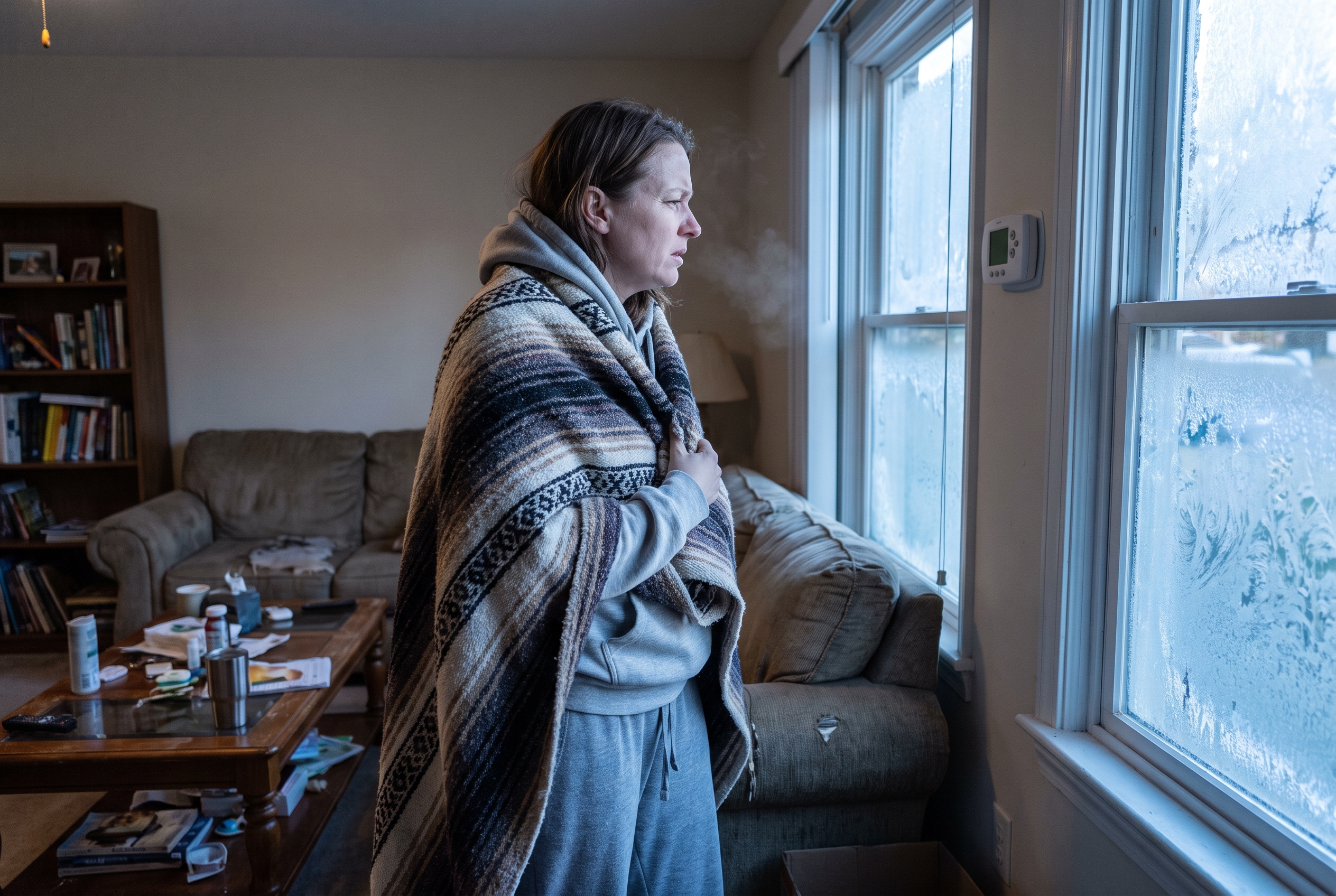
It’s six in the morning, the house is cold, and the thermostat swears the heat is on but nothing is coming out of the vents. If you have heat not working on one of the coldest mornings of the year, you’re in good company, because cold snaps are the busiest stretch of the year for heating calls across the Triangle. Before you start phoning around, a handful of quick checks solve more problems than you’d expect, and the rest of this should help you sort out whether you’re dealing with a five-minute fix or something that needs a technician.
Heat Not Working? Start With the Thermostat
It sounds almost too basic, but thermostat problems account for a surprising number of no-heat calls. Make sure it’s set to heat rather than cool or off, that the temperature is set a few degrees above the current room temperature, and that the display is actually on. A blank or dim screen usually means dead batteries, so swap those first. If you have a smart thermostat, check that it hasn’t dropped off your wifi or applied an update that reset your schedule overnight.
If the thermostat looks fine and you hear nothing at all when you raise the set point, move on to power.
Check the Power Before Anything Else
A furnace needs electricity to run even though it burns gas, since the blower, the ignition system, and the control board all depend on it. Start at your electrical panel and look for a tripped breaker, which will sit in the middle position instead of fully on or off. Switch it fully off and then back on once. If it trips again right away, stop there and call for service, because a breaker that won’t hold is pointing to a real electrical problem.
Then look for the furnace’s own service switch. It usually looks like a regular light switch mounted on or near the furnace, and it gets flipped off by accident more often than anyone likes to admit, especially after someone was working in the utility room or garage. Many furnaces also have a safety switch behind the blower door that shuts everything down if the panel isn’t seated correctly.
Look at the Air Filter
A badly clogged filter restricts airflow enough that the furnace overheats and shuts itself off as a safety measure. It will often restart after cooling down, run a few minutes, and shut off again, which looks a lot like a mysterious intermittent failure. If your filter is gray and matted, replace it, give the system a few minutes, and see whether the pattern changes.
If You Smell Gas, Stop
This is the one situation where you shouldn’t troubleshoot at all. If you smell gas near the furnace or anywhere else in the house, don’t touch switches or try to relight anything. Get everyone and the pets outside and call your gas utility or 911 from outside. Everything else on this list can wait; this can’t.
Common Reasons for Heat Not Working in a Cold Snap
If the basic checks come up empty, here’s what we tend to find when we get out to a no-heat call this time of year.
A failed or dirty ignition component is near the top of the list. Modern furnaces light with an electronic igniter that can crack or wear out, and a flame sensor coated in residue can shut the burner off a few seconds after it lights because it can’t confirm a flame. You’ll hear the furnace try to start, run briefly, and quit. Both are routine repairs, and a flame sensor cleaning is one of the things a fall tune-up catches before it becomes a no-heat call.
Blower motor and capacitor problems are the second big category. If the furnace seems to be firing but little or no air is moving through the vents, the blower is the likely suspect. Capacitors weaken with age, and the extra load of a long cold stretch is often what finally tips one over.
High-efficiency furnaces add a cold-weather problem of their own. They produce condensation as part of normal operation and drain it away through a small line, and when a stretch of freezing temperatures freezes that line or clogs it, the furnace shuts down as a protection. If your furnace is a newer high-efficiency model and the failure showed up during a hard freeze, that’s worth mentioning when you call, since it can mean a quicker diagnosis.
Control board failures and gas valve issues round out the list. These are less common, but they aren’t DIY territory, and they’re another reason a no-heat situation sometimes turns out to be more than a quick reset.
A Quick Note If You Have a Heat Pump
A lot of Triangle homes heat with a heat pump rather than a gas furnace, and a few things that look like problems aren’t. Air from a heat pump typically feels cooler than furnace air, more lukewarm than hot, even when the system is working correctly. Light frost on the outdoor unit and occasional clouds of steam are normal, since the unit periodically runs a defrost cycle. What isn’t normal is a heavy block of ice covering the whole unit, an outdoor fan that isn’t spinning when the system is calling for heat, or indoor air that stays genuinely cold. Any of those deserves a call. If your thermostat has an emergency heat setting, it’s reasonable to use it to stay warm while you wait for service, though it runs on electric resistance heat and gets expensive if you leave it on for long.
Staying Warm While You Wait
When it’s freezing out, every heating company in the area is stretched thin, and you may be waiting longer than you’d like. Close off rooms you aren’t using, shut curtains at night, and gather everyone in one room with blankets and layers. If you use a space heater, plug it directly into the wall (not an extension cord), keep it clear of anything flammable, and never leave it running while you sleep or leave the house.
Please don’t heat the house with your oven or gas stove, and never run a grill, generator, or camp heater indoors. All of those can produce carbon monoxide, and a no-heat emergency is exactly when people make that mistake. If anyone in the household is elderly, very young, or otherwise vulnerable to cold, don’t tough it out; a friend’s place or a hotel is a perfectly reasonable call.
When It’s Time to Think About Replacement
Sometimes a no-heat call is the final straw for a system that’s been nursing along for years. If your furnace or heat pump is past the 15 to 20 year mark, has needed repairs several times recently, or you’ve watched the heating bills climb with no good explanation, it’s worth asking for a replacement quote alongside the repair quote. We’d rather you make that decision with both numbers in front of you than feel pushed in either direction. Our heating system installation page walks through how to tell when replacement makes more sense than another repair, and the Department of Energy’s furnace guide is a solid neutral reference on how heating equipment works and what regular upkeep involves.
Once you’re warm again, it’s also worth thinking about how to avoid a repeat. Most of the failures above are the kind a yearly inspection catches early, and you can see exactly what we check on our preventative maintenance page.
Need Heat Back Now?
If you’re in Raleigh, Garner, or anywhere in the Triangle and your heat isn’t working, give Bowman Heating, Cooling and Plumbing a call and we’ll get someone to you as quickly as we can. Tell the dispatcher what you’ve already checked and what you’re seeing or hearing, since it helps us arrive prepared. You can reach out here to get on the schedule, or read more about what we handle on our heating services page.
Frequently Asked Questions
Why is my heat not working even though the furnace is running?
If the furnace is running but the house isn’t warming up, the usual suspects are a clogged filter, a failing blower motor, closed or blocked vents, or a heat exchanger or burner issue limiting output. Start with the filter and vents. If those are fine and the air at the registers is lukewarm or cold, it needs a technician to find out why.
Why does my furnace turn on and then shut off after a few minutes?
This pattern, called short cycling, is most often caused by an overheating furnace from a clogged filter or restricted airflow, or by a dirty flame sensor that can’t confirm the burner is lit. Replacing the filter is a reasonable first step. If the problem continues, have it looked at, since repeated short cycling stresses the equipment.
Is it normal for a heat pump to blow cooler air than a furnace?
Yes. A heat pump delivers warm air, but it’s typically cooler than what a gas furnace produces, so it can feel lukewarm at the vent even when everything is working properly. What matters is whether the house is holding its set temperature. If it isn’t, or the air feels truly cold, the system needs to be checked.
What should I do if my heat stops working at night?
Run through the quick checks if you’re comfortable: thermostat, breaker, furnace switch, and filter. If none of those solve it, bundle up, close off unused rooms, and call for service first thing, or right away if you have anyone vulnerable in the house. Never use an oven, gas stove, grill, or generator indoors for warmth because of the carbon monoxide risk.
Categories

Let's Talk.
We’ll be happy to get you the pricing, service or information you need as soon as possible.