
September 11, 2026
How to Improve Airflow in Your Home: What’s Actually Causing the Problem
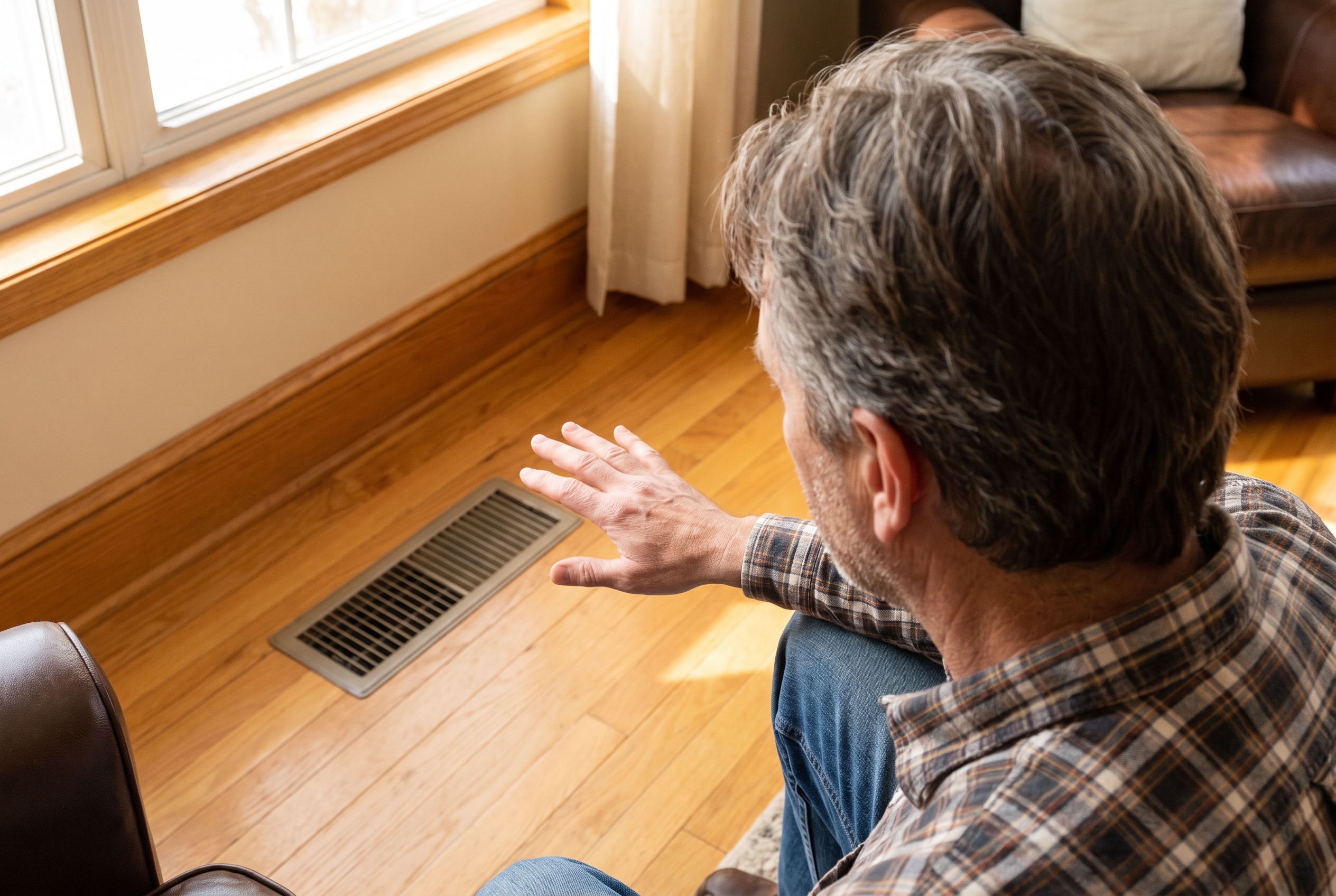
If certain rooms in your house never quite reach the temperature on the thermostat, or some vents seem to barely push any air while others work fine, you’ve got an airflow problem. It’s one of the most common complaints we hear from homeowners across the Triangle, and it’s also one of the most misdiagnosed. People assume the system is undersized or that the equipment is failing, when in reality the problem is usually somewhere in how air is moving through the house. Here’s how to think about it and what actually fixes it.
Start With the Filter
Before anything else, check your air filter. A clogged filter is the most common and most overlooked cause of poor airflow in a home, and it’s the first thing we check on any service call where weak airflow is the complaint. When a filter loads up with dust and debris, it restricts the volume of air the system can pull through and push out, which reduces airflow at every vent in the house simultaneously. If you haven’t changed your filter in a few months, especially during a summer where the system has been running constantly, there’s a reasonable chance that’s a significant part of what’s going on.
Replace it, give the system an hour or so to respond, and see whether the situation improves before going further. It’s a five-dollar fix that solves the problem more often than you’d think.
Check Your Vents and Registers
This one sounds too simple, but it comes up regularly: partially or fully closed supply vents are a surprisingly common cause of uneven airflow. Go through the house and make sure every supply vent is open and unobstructed. Furniture sitting directly in front of or on top of a register kills airflow in that area and forces the system to work harder everywhere else. Rugs over floor registers do the same thing.
Return air vents deserve attention too. Returns are the vents that pull air back into the system to be conditioned and recirculated, and they need clear space around them to work properly. A return vent blocked by a piece of furniture or sealed off in a renovation creates negative pressure in that part of the house, which throws off airflow balance throughout the whole system. Every return needs a clear path to pull air through.
While you’re at it, check whether any vents have been closed off intentionally in rooms that aren’t being used. This is a common energy-saving attempt that actually backfires: closing vents increases static pressure in the duct system, which stresses the blower motor and can cause airflow problems in other parts of the house.
Ductwork Is Usually Where the Real Problem Lives
If the filter is clean and the vents are open and you still have weak or uneven airflow, the duct system is the next place to look. Ductwork problems are responsible for a large proportion of the airflow complaints we investigate, and they tend to fall into a few categories.
Duct leakage is the big one. Studies consistently show that the average home loses somewhere between 20 and 30 percent of conditioned air through leaks and gaps in the duct system before it ever reaches the living space. In the Triangle, where a lot of ductwork runs through unconditioned attics, that air isn’t just lost; it’s being dumped into a space that can hit 150 degrees in July, which compounds the efficiency loss considerably. If a room at the end of a long duct run is consistently harder to cool than the rest of the house, leakage in that run is a likely explanation.
Collapsed or crushed flex duct is another common issue, particularly in older homes. Flex duct is exactly what it sounds like: flexible ducting that can be routed around obstacles in an attic or crawlspace. It’s practical for installation but it’s also vulnerable to being kinked, crushed by attic storage, or degraded over time, and even a partial restriction in a flex duct run significantly reduces airflow to everything downstream of it.
Undersized or poorly designed duct systems are a third category and the hardest to fix. If the original installation used duct runs that were too small for the system’s airflow requirements, or if additions and renovations added conditioned square footage without adding duct capacity, no amount of maintenance is going to solve the problem completely. This is where a proper duct design evaluation becomes necessary. Our mini split page is worth looking at if you have a specific zone or addition that’s chronically hard to condition; sometimes a dedicated ductless unit for that space is a cleaner solution than trying to extend an already-strained duct system.
The Blower Motor and Coil Matter Too
Airflow problems don’t always start in the ducts. The air handler itself can be a source of restriction if the blower motor is underperforming or if the evaporator coil is dirty enough to impede airflow through the system.
A dirty evaporator coil is more common than most homeowners realize, and it causes two problems at once: it reduces the system’s ability to remove heat and humidity from the air, and it restricts the volume of air moving through the system. Coil cleaning is part of a proper annual maintenance visit and it makes a noticeable difference in airflow when the coil has had time to build up a significant layer of debris. If your system hasn’t been serviced in a couple of years and airflow seems weaker than it used to be across the whole house rather than in specific rooms, this is a likely contributor.
Blower motors can also lose efficiency over time, particularly if they haven’t been lubricated or maintained properly. A motor that’s running below its rated speed moves less air than the system was designed to deliver, which affects every room simultaneously. This shows up in a maintenance inspection and is usually a straightforward fix when caught early. Take a look at what our preventative maintenance visits cover for specifics on what we check during a tune-up.
Pressure Imbalances and the Problem With Closed Doors
One airflow issue that doesn’t get talked about enough is pressure imbalance caused by the way a home is used rather than anything mechanically wrong with the system. In a house where bedroom doors are kept closed most of the time, the supply air being pushed into those rooms has nowhere to return to the system efficiently, since most return vents are located in hallways or common areas rather than individual bedrooms. This creates positive pressure in the closed rooms and negative pressure in the rest of the house, and it throws off airflow balance throughout.
The fix can be as simple as leaving interior doors open more consistently or adding door undercuts to allow air to move beneath closed doors back toward the returns. In homes where this is a persistent issue, transfer grilles or jump ducts between rooms and the hallway are a more permanent solution. It’s the kind of thing that gets identified during a proper system evaluation and is easy to overlook if you’re just focused on the equipment itself.
When Airflow Problems Point Toward a Bigger Conversation
Sometimes weak or uneven airflow is a symptom of a system that’s at the end of its useful life rather than a specific fixable problem. An aging blower motor, a coil that’s been cleaned enough times that it’s starting to degrade, ductwork that’s been repaired in multiple places: at some point the cumulative picture points toward replacement rather than another round of repairs.
If your system is more than 15 years old and airflow has been declining gradually over several seasons, it’s worth having a technician evaluate the whole picture rather than just addressing one component at a time. Our cooling services page covers what a full system evaluation involves, and our healthy air page has more on how airflow and air quality connect if that’s been a concern alongside comfort.
Getting to the Bottom of It
Airflow problems are almost always solvable once you identify where the restriction actually is. The challenge is that the symptom, a room that won’t cool down, can have half a dozen different causes, and the right fix depends on which one you’re actually dealing with. A clogged filter is a five-minute job; a duct leakage problem requires testing and sealing; a pressure imbalance needs a system evaluation to diagnose properly.
If you’re in Raleigh, Garner, or anywhere in the Triangle and you’ve been living with rooms that never feel right no matter what the thermostat says, we’re happy to come take a look and give you a straight answer on what’s actually going on. Get in touch here to set something up.
Frequently Asked Questions
Why is airflow weak in one room but fine everywhere else?
The most common causes are a closed or obstructed vent in that room, a leak or restriction in the duct run serving that area, or a collapsed section of flex duct somewhere between the air handler and that part of the house. Rooms at the end of long duct runs are particularly vulnerable to these issues since they’re the furthest point from the system and any restriction along the way compounds by the time air gets there.
Can closing vents in unused rooms improve airflow elsewhere?
No, and it usually makes things worse. Closing vents increases static pressure in the duct system, which stresses the blower motor and can actually reduce airflow throughout the house rather than redirecting it. The system was designed to move a certain volume of air through all of its supply vents; restricting some of them throws that balance off.
How do I know if my ductwork is the problem?
A few signs point toward ductwork as the culprit: rooms at the end of duct runs that are consistently harder to condition than the rest of the house, higher than expected energy bills despite reasonable thermostat settings, or visible damage to flex duct in the attic. A duct leakage test performed by a technician gives you a definitive answer and identifies where the losses are occurring.
Does a dirty air filter really affect airflow that much?
Yes, significantly. A heavily clogged filter can reduce system airflow by 15 percent or more, which affects every vent in the house simultaneously and forces the blower motor to work harder to move the same volume of air. During summer when the system runs constantly, filters load up faster than most homeowners expect. Checking it monthly rather than on a fixed calendar schedule is the better approach.
Categories

Let's Talk.
We’ll be happy to get you the pricing, service or information you need as soon as possible.