August 27, 2026
Signs Your Furnace Needs to Be Replaced Before Winter
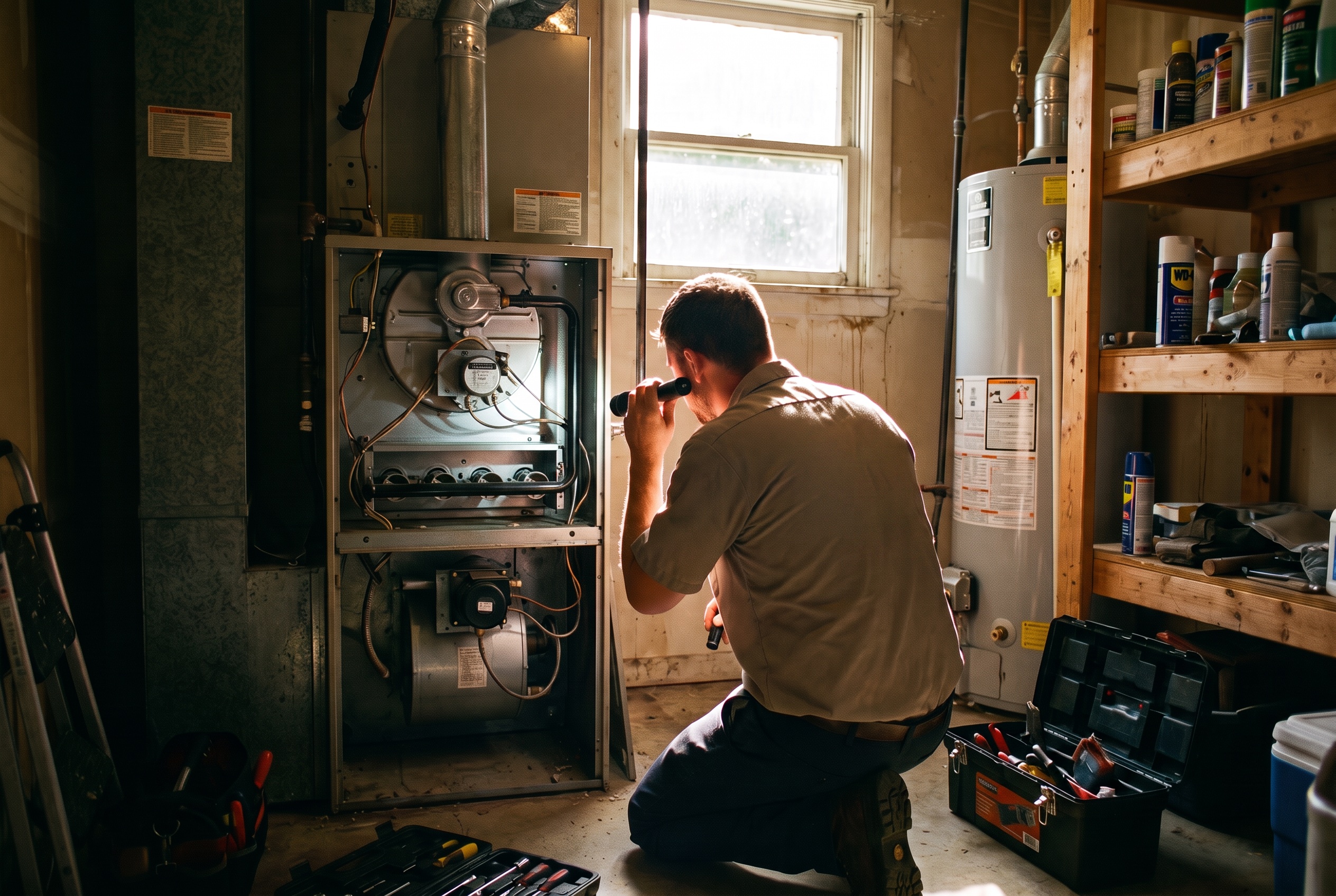
Nobody wants to find out their furnace is done for in the middle of January when it’s 28 degrees outside and the next available appointment is three days out. The good news is that furnaces rarely fail without warning. They give signals for months, sometimes years before they finally quit, and if you know what to look for, you can make a planned replacement on your own timeline rather than an emergency one on the worst possible day. Here are the signs your furnace needs to be replaced, and what to actually do about them before winter arrives.
It’s More Than 15 to 20 Years Old
Age isn’t a death sentence for a furnace, but it’s the most important piece of context for everything else on this list. A gas furnace in good working order with consistent maintenance can run 20 years or more. But past that point, efficiency has typically degraded significantly, components are harder to source, and the likelihood of a significant failure in any given winter goes up considerably.
If you’re not sure how old your furnace is, the manufacture date is usually printed on a label inside the cabinet door or encoded in the serial number. If you bought the house and inherited whatever was there, it’s worth finding out. A 22-year-old furnace that’s been running fine is still a 22-year-old furnace, and knowing that changes how you think about repair bills when they start coming in.
Your Heating Bills Keep Climbing
Furnaces lose efficiency as they age. It happens gradually, which is part of why it’s easy to miss. Your bill might go up a little each winter, and you might chalk it up to rate increases or a cold stretch. But if your heating costs have been trending upward over several years without a clear explanation, the furnace is worth looking at.
Older furnaces typically carry an AFUE rating of 80 percent or below, meaning 20 cents of every dollar spent on gas escapes as waste heat. Modern high-efficiency furnaces run at 95 to 98 percent AFUE. In a home that heats heavily through January and February, that difference in operating cost is real and measurable over the course of a winter. The Department of Energy notes that upgrading from a low-efficiency to a high-efficiency furnace can cut heating costs by as much as 30 percent depending on the existing equipment and climate. In the Triangle, where we get cold snaps that push the heating system hard for weeks at a time, that adds up.
It’s Been Repaired More Than Once in the Last Few Years
One significant repair on an older furnace is a judgment call. Two or three in a short window is a pattern, and patterns mean something. Furnace components don’t usually fail in isolation; when a system starts breaking down, it tends to break down across multiple areas as the age and wear catch up with everything at once.
A useful frame here is the same rule of thumb that applies to any aging HVAC equipment: multiply the repair cost by the system’s age in years. If that number is approaching or exceeding the cost of a replacement, you’re likely pouring money into a system that’s going to need replacing anyway, just on a worse timeline. A $400 repair on a 10-year-old furnace is probably worth doing. The same repair on an 18-year-old furnace that had a $600 repair last winter is a different conversation.
The Heat Exchanger Is Cracked
This is the one that matters most from a safety standpoint. The heat exchanger is the component that separates combustion gases from the air that circulates through your home. When it cracks, those gases, including carbon monoxide, can enter the airstream. It’s not a dramatic or visible failure—you won’t necessarily smell anything or notice anything obviously wrong—which is exactly what makes it dangerous.
Signs that might point toward a cracked heat exchanger include a yellow or flickering burner flame rather than a steady blue one, soot or black marks around the furnace, unusual smells when the heat runs, or occupants experiencing headaches or nausea that clear up when they leave the house. If a technician finds a cracked heat exchanger during an inspection, replacement is not optional. Repairing a cracked heat exchanger on an older furnace is rarely cost-effective anyway, and running a furnace with a known crack is genuinely dangerous. Make sure you have working carbon monoxide detectors on every level of your home regardless; it’s a basic precaution that every household should have in place before heating season.
It’s Struggling to Heat the House Evenly
If some rooms are consistently colder than others, if the system runs long cycles without bringing the house up to temperature, or if you’ve found yourself nudging the thermostat higher each winter just to stay comfortable, the furnace may be losing capacity. This can happen as heat exchangers degrade, burners get dirty, or blower motors start to wear out.
Uneven heating can also be a duct problem rather than a furnace problem, so it’s worth having someone take a look at the whole system rather than assuming the furnace is automatically the culprit. But when uneven heating shows up alongside age and other symptoms on this list, it usually points toward the equipment.
It’s Making Noises It Didn’t Used to Make
Furnaces make noise, that’s normal. What’s not normal is when the character of those sounds changes. Banging or popping at startup can indicate delayed ignition, where gas builds up before igniting in a small burst. Rattling can mean loose panels or components. Squealing points toward blower motor or belt issues. A persistent rumbling during operation is worth having someone listen to.
None of these automatically mean the furnace needs to be replaced, but they do mean it needs to be looked at. Catching a failing ignition system or a worn blower motor before heating season is a much better situation than catching it in February.
Repair vs. Replace: How to Think About It
If your furnace is under 15 years old, reasonably efficient, and the repair is straightforward, fixing it usually makes sense. If it’s pushing 20 years, has needed multiple repairs recently, and is showing two or three of the signs above, replacement is probably the financially smarter call even if the immediate repair cost seems manageable.
The timing argument for replacing before winter rather than waiting until a failure is real. Scheduling a planned replacement in September or October means you choose the timeline, you have time to evaluate equipment options without pressure, and you’re not competing for installation appointments with everyone else whose system just died in a cold snap. Our heating system installation page has more detail on what replacement involves and how to think about the right equipment for your home. If cost is a factor in the decision, take a look at our financing options as well.
Get It Looked at Before You Need It
The best time to find out your furnace has a problem is before you’re depending on it. A pre-season inspection catches the issues above and gives you options—repair, replace, or monitor—rather than forcing your hand when it’s 25 degrees and the system just stopped. If you’re in Raleigh, Garner, or anywhere in the Triangle and want someone to take a look before winter, give us a call. We’ve been keeping North Carolina homes warm for more than 30 years and we’ll give you a straight answer on where your system stands. Get in touch here to set something up.
Frequently Asked Questions
How long should a gas furnace last?
Most gas furnaces last between 15 and 20 years with reasonable maintenance. Some well-maintained systems push beyond that, but past the 20-year mark the likelihood of significant component failures increases and efficiency has typically dropped considerably from original specs.
Is it worth repairing a furnace that is more than 15 years old?
It depends on the repair cost, the condition of the rest of the system, and whether it’s been showing other signs of wear. A useful rule of thumb is to multiply the repair cost by the system’s age, and if that figure approaches the cost of replacement, replacing usually makes more financial sense. Factor in that an older furnace is also costing more to operate every month than a modern high-efficiency unit would.
What are the most serious warning signs that a furnace needs to be replaced?
A cracked heat exchanger is the most serious from a safety standpoint since it can allow carbon monoxide to enter your home’s airstream. Beyond that, repeated significant repairs in a short window, a furnace that can no longer heat the house evenly despite running constantly, and age past 18 to 20 years combined with rising heating bills are the clearest signals that replacement makes more sense than continued repair.
What time of year is best to replace a furnace?
Early fall, before heating season starts, is the best window. You have time to evaluate options without pressure, installation appointments are more available than they’ll be once cold weather hits, and you’re not replacing the system under emergency conditions. September and October are ideal in the Triangle—warm enough that you’re not depending on heat yet, early enough to get ahead of the rush.
Categories

Let's Talk.
We’ll be happy to get you the pricing, service or information you need as soon as possible.