
July 7, 2026
What to Set Your Thermostat to Before You Leave for Vacation
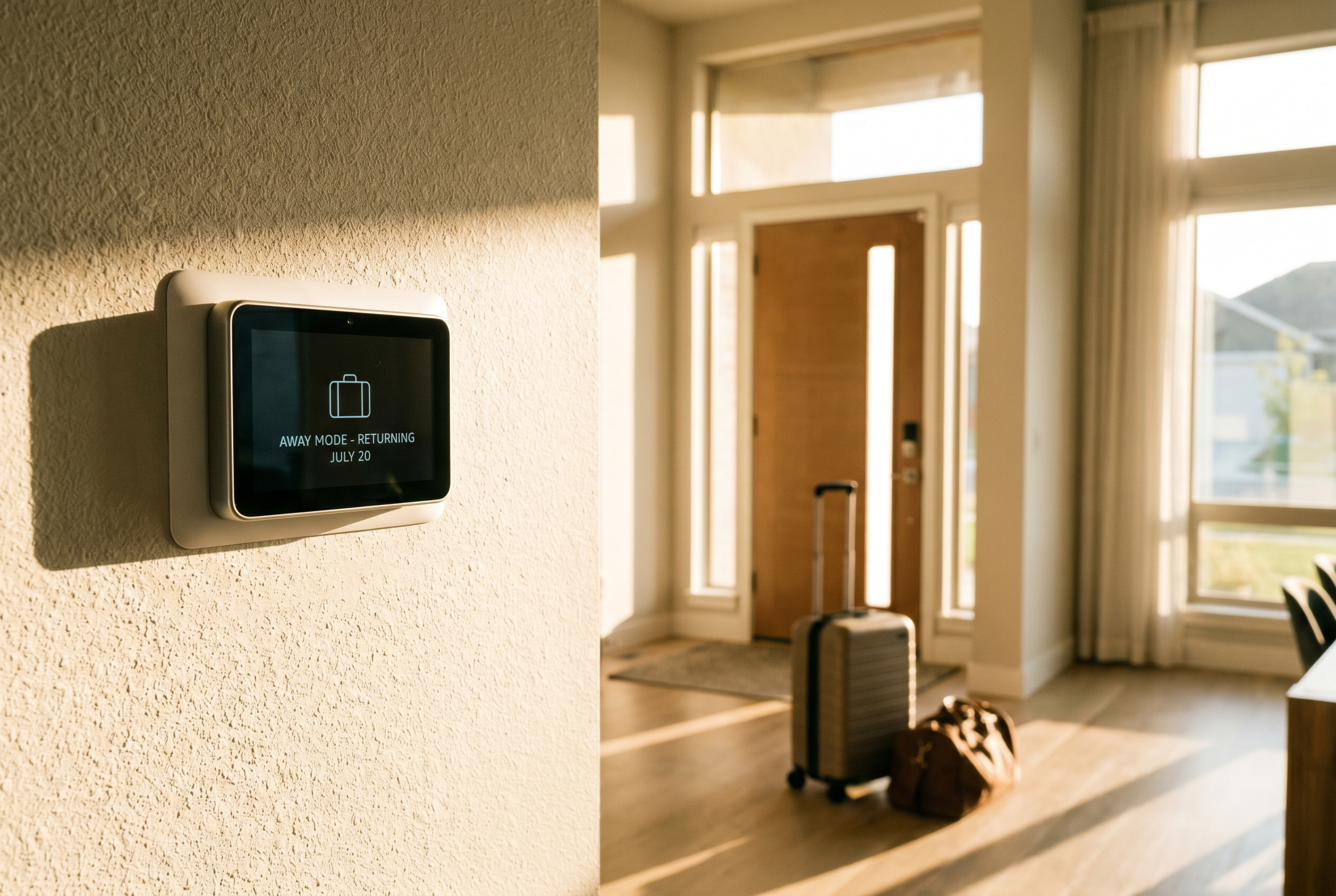
It’s July, you’re heading out of town, and you’re standing at the thermostat trying to figure out what to do with it. Turn it off completely? Bump it up to 85 and hope for the best? Leave it where it is so you don’t come back to a disaster? The thermostat setting before vacation is one of those things people genuinely disagree on, and the wrong call can cost you more than you’d expect.
Here’s the actual answer, plus why it matters more in North Carolina than a lot of people realize.
Do Not Turn Your AC Off Completely
This one comes up every summer and the answer is always the same: don’t do it. Turning the AC off entirely when you leave for a week in July sounds like it saves energy, and technically it does in the short term. But what happens to a closed-up house in North Carolina when there’s no air conditioning running is not pretty.
Indoor temperatures can hit 90 degrees or above within a day or two. At that point humidity takes over, and in our climate that happens fast. Moisture levels climb, and you start creating ideal conditions for mold growth, particularly in closets, bathrooms, and anywhere with limited airflow. Wood floors, furniture, musical instruments, and electronics don’t love extended exposure to heat and humidity either. And when you come back and turn the system back on, it has to work incredibly hard to pull the house back down from 90-something degrees, which is a brutal way to stress the equipment.
The energy savings from turning it off are real but they’re not worth it when you factor in the risk of mold, the wear on the system when it restarts, and the fact that you’re walking back into a sauna.
The Right Thermostat Setting for Vacation in Summer
The sweet spot for most homes in the Triangle is somewhere between 78 and 82 degrees when you’re away in summer. This keeps the system running often enough to manage humidity, prevents the house from getting dangerously hot, and still saves meaningful energy compared to holding your normal set point while you’re gone.
Humidity control is the real reason for this range. Your AC removes moisture from the air as it runs. If the set point is too high, the system barely runs and humidity climbs unchecked. Setting it at 80 rather than 85 or off entirely keeps the system cycling enough to stay on top of it, which is especially important if you’re going to be gone for more than a few days.
If you have pets staying in the house, obviously adjust accordingly. Eighty degrees is fine for most homes but not for a dog or cat left alone in there.
This Is Where a Smart Thermostat Really Earns Its Keep
If you don’t have a smart thermostat yet, this scenario is one of the best arguments for getting one. Being able to monitor your home’s temperature and humidity from your phone while you’re sitting on a beach somewhere is genuinely useful, not just a gimmick.
Most smart thermostats have a dedicated vacation or away mode that handles this automatically. You set your parameters before you leave and the system manages itself. If something goes wrong—a power outage, a system failure, temperatures climbing higher than expected—you get an alert on your phone and can deal with it remotely or call someone to check on the house, rather than coming home to a problem that’s been sitting for a week.
Some models also track humidity separately and can run the system specifically to manage moisture even when the temperature target is already met. In a North Carolina summer, that’s a feature worth having. We can talk through thermostat options when we’re out for any service visit if that’s something you want to explore.
A Few Other Things Worth Doing Before You Leave
The thermostat setting is the main thing, but while you’re thinking about the HVAC system before a trip, a couple of other things are worth checking.
Change or check your air filter before you go. A clean filter means the system runs more efficiently while you’re away, and you won’t come home to one that’s been pushing air through a clogged filter for a week straight.
Make sure your condensate drain line is clear. In summer the drain line is working hard to remove all the moisture the system is pulling out of the air. A clogged drain line can cause the drain pan to overflow, which means water damage, and that’s a miserable thing to come home to. If you’ve never had the drain line checked or flushed, a quick maintenance visit before a long trip is worth it. Check out our preventative maintenance page if you want to know more about what that involves.
If you have a smart thermostat, make sure it’s connected and working before you leave, not when you’re already at the airport. Log in, verify the app is showing current readings, and set your away temperature before you walk out the door. Our cooling services page has more on system health and what we can help with if you want a quick checkup before a long trip.
Coming Home
When you get back, don’t just drop the thermostat back to 70 and expect the house to cool down in twenty minutes. Give the system a realistic amount of time to recover, especially if the house has been sitting at 80 for a week. Close the blinds, run ceiling fans, and let it work. It’ll get there.
If you come home and the house is noticeably hotter than your set point(like it’s 88 inside when you had it set to 80) that’s a sign something may have gone wrong while you were away. Check the filter, check the drain pan for water, and if neither of those is obviously the issue, give us a call. Reach out here and we’ll get someone out to take a look.
Frequently Asked Questions
What should I set my thermostat to when I go on vacation in summer?
Between 78 and 82 degrees is the right range for most homes in North Carolina during summer. This keeps the system running often enough to control humidity, prevents the house from getting dangerously hot, and saves energy compared to holding your normal set point while you’re away.
Is it okay to turn the AC off completely when I leave for vacation?
We don’t recommend it, especially in summer. A closed-up house in North Carolina can reach 90 degrees or above within a day or two without AC running. That level of heat and humidity creates real risk of mold growth and can damage wood floors, furniture, and electronics. The energy savings aren’t worth it for most people.
How does a smart thermostat help when I’m on vacation?
It lets you monitor and adjust your home’s temperature and humidity from anywhere using your phone. Most smart thermostats have a dedicated away or vacation mode, and many will send you an alert if the temperature goes above a threshold you set. That means if something goes wrong while you’re away, you find out immediately rather than when you walk in the door.
Should I do anything to my HVAC system before leaving for a long trip?
A couple of things worth doing: check or replace your air filter, and make sure your condensate drain line is clear. A clogged drain line can overflow the drain pan while you’re away and cause water damage. If you haven’t had the system serviced recently, a quick maintenance visit before a long vacation is a reasonable precaution.
Categories

Let's Talk.
We’ll be happy to get you the pricing, service or information you need as soon as possible.