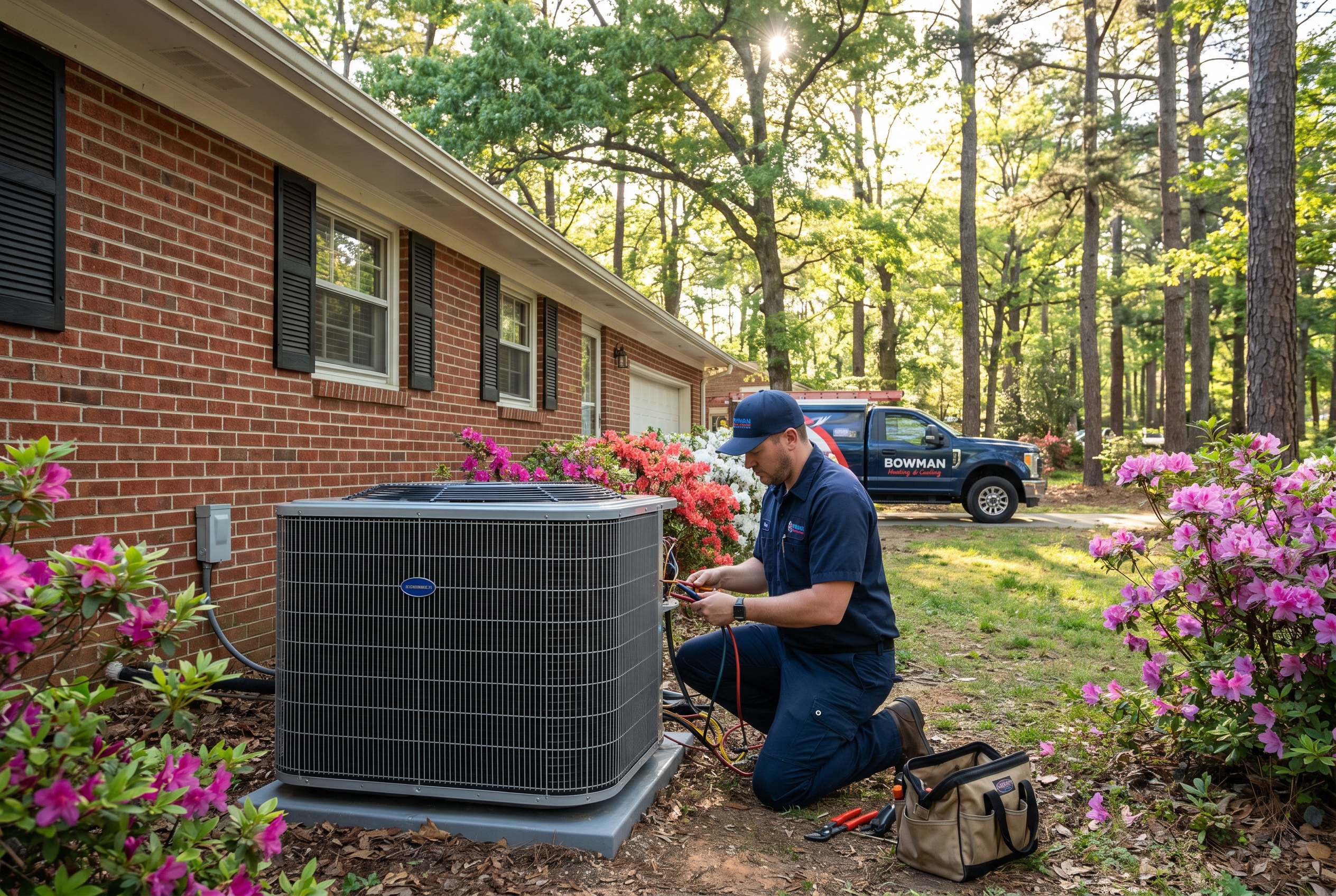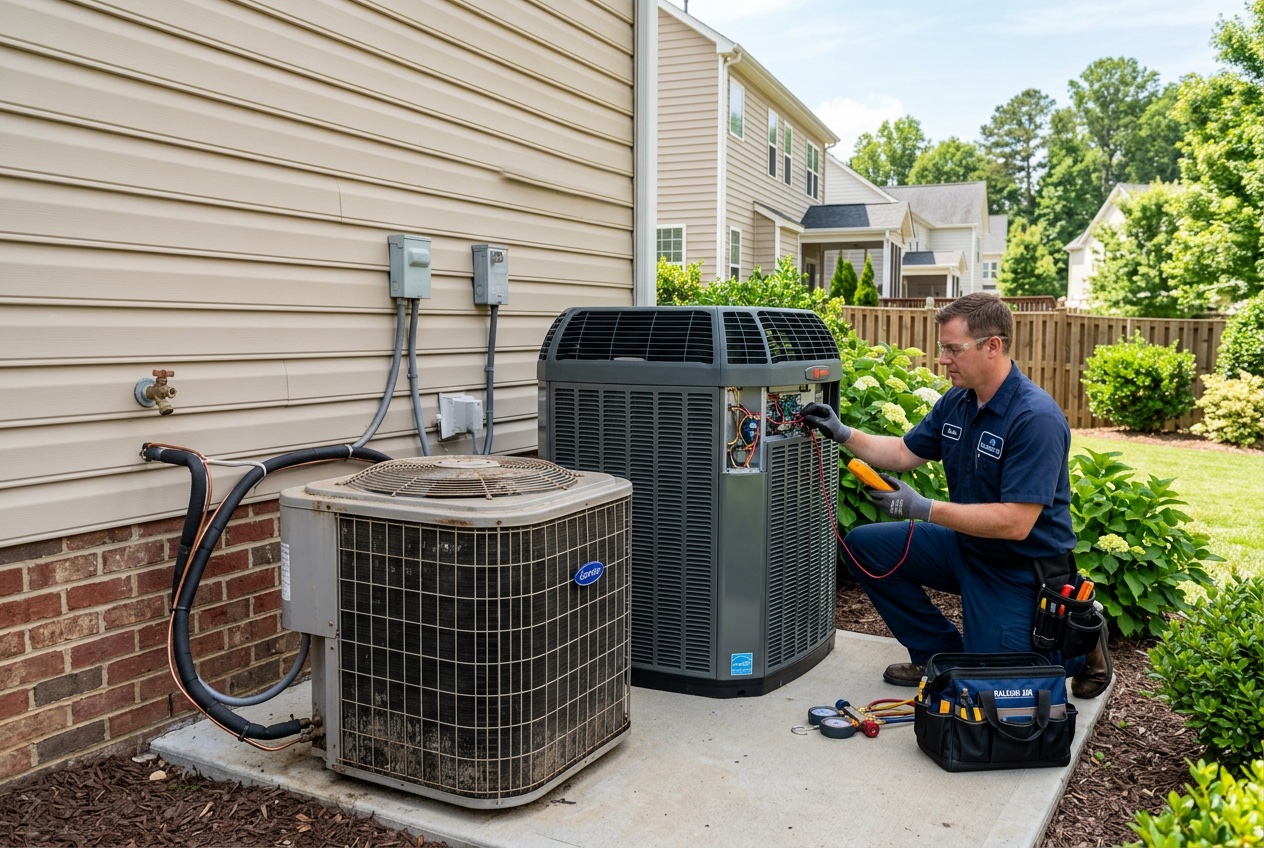
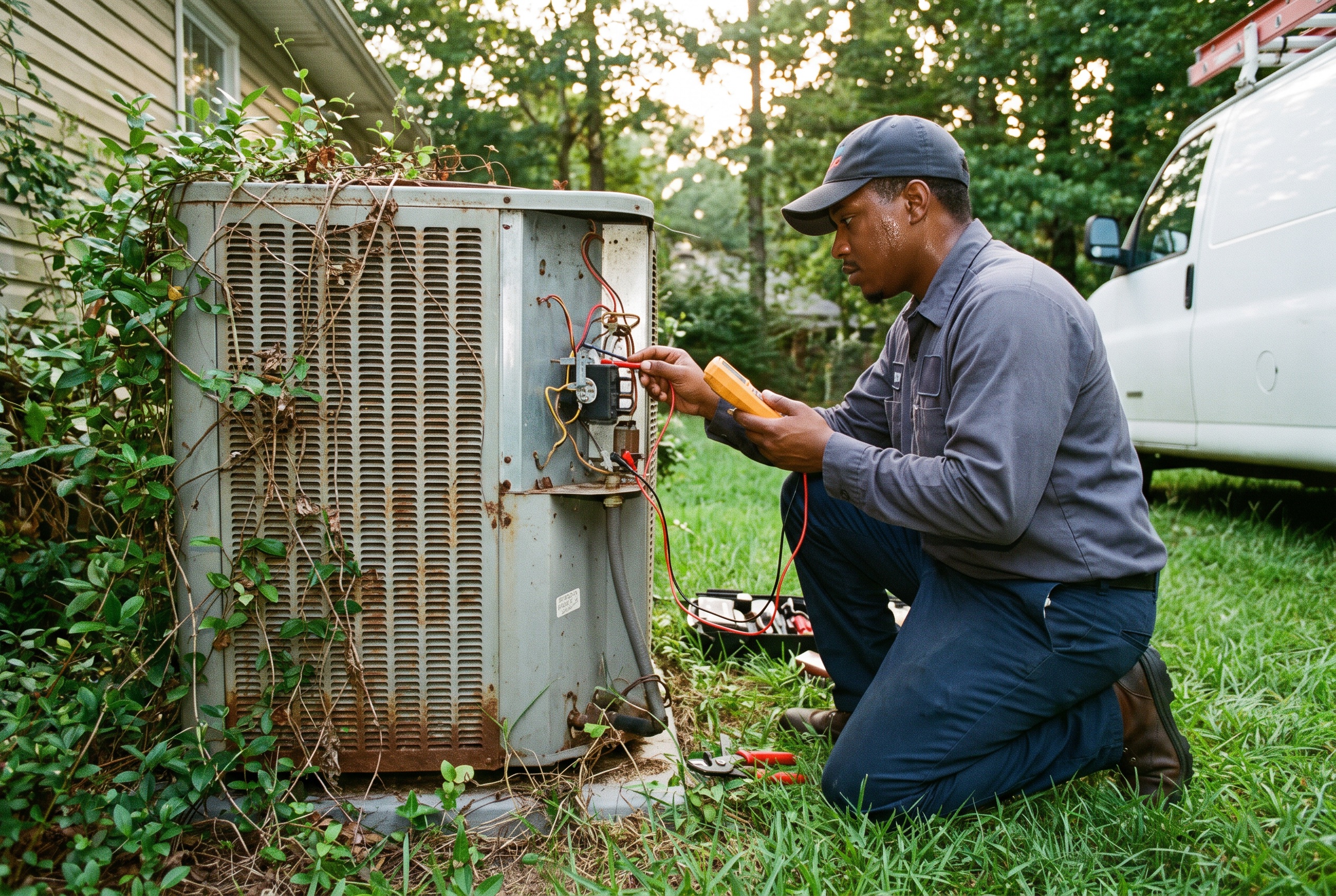
It’s one of the most common questions we get, usually from a homeowner who’s staring down a repair bill and trying to figure out whether it makes more sense to fix what they have or cut their losses and replace it. How long does an HVAC system last? The honest answer is that it depends on the type of equipment, how well it’s been maintained, and how hard it’s had to work, but there are some useful general guidelines that can help you figure out where you stand.
Typical Lifespans by System Type
Different types of HVAC equipment age at different rates, and knowing roughly where each one falls gives you a baseline for thinking about your own system.
A central air conditioning system in a North Carolina home typically lasts between 15 and 20 years. That’s under normal conditions with reasonable maintenance. Systems that have been neglected, undersized, or running in particularly demanding conditions tend to fall toward the lower end of that range. We see a lot of systems in the Triangle that were installed in the early 2000s during the big suburban growth wave, and a meaningful number of those are either at or past the point where replacement is starting to make more financial sense than continued repair.
Gas furnaces tend to last a bit longer, generally somewhere in the 20-year range and sometimes beyond that with good maintenance. They have fewer moving parts than cooling equipment and don’t face the same thermal stress from running through brutal summers. That said, heat exchangers crack, ignition systems fail, and control boards go; and once a furnace starts having significant component failures, the repair-versus-replace math changes quickly.
Heat pumps split the difference, typically running 15 to 20 years similar to a central AC system. They’re doing double duty as both heating and cooling equipment, which means more total runtime than a system that only handles one season. In a climate like ours where heat pumps run in cooling mode from May through September and heating mode through winter, that adds up over time. The Department of Energy notes that proper maintenance is one of the most significant factors in heat pump longevity, which tracks with what we see in the field.
Ductless mini split systems, when properly maintained, can push toward 20 years or more. Mitsubishi systems in particular have a strong track record for longevity. The inverter-driven compressors in modern mini splits run more gently than traditional on-off compressors, which contributes to their lifespan.
Ductwork doesn’t get talked about enough in the lifespan conversation. A well-installed duct system in a conditioned space can last the life of the house. Ductwork in unconditioned attics is another story: heat, humidity, and the occasional pest intrusion take a toll, and flex duct in particular can degrade significantly over 20 to 25 years. If your equipment is being replaced but the ductwork is the same age or older, it’s worth evaluating before assuming it’s still in good shape.
Why North Carolina Is Harder on HVAC Equipment Than Most Places
The Triangle’s climate genuinely shortens equipment life compared to milder regions, and it’s worth understanding why. Our cooling season runs roughly five months of serious runtime, often including extended stretches of extreme heat like what we’ve seen this summer. That’s a lot of hours on the compressor, the fan motors, and the electrical components every single year.
Humidity is the other factor. High moisture levels accelerate corrosion on coils, electrical connections, and drain components. It also means the system is constantly working to remove moisture from the air on top of just cooling it, which adds to the overall load. A system in Phoenix running in dry heat ages differently than the same system in Raleigh running in humid subtropical conditions. ENERGY STAR notes that climate and usage patterns are significant variables in HVAC equipment lifespan, which is why regional context matters when thinking about replacement timelines.
Maintenance Makes a Bigger Difference Than Most People Realize
We’ve seen well-maintained systems push comfortably past 20 years and neglected ones fail at 10. In addition to keeping things running smoothly in the short term, maintenance is also about catching the small things before they become the expensive things, and keeping the system operating efficiently enough that it’s not working harder than it needs to every single day.
A dirty evaporator coil makes the compressor work harder, a clogged filter restricts airflow and stresses the blower motor, low refrigerant from an unaddressed leak causes the compressor to run hot, etc. None of these kill a system overnight, but all of them shorten its life meaningfully over years of accumulated wear. Annual preventative maintenance catches all of these things. It’s genuinely one of the better investments in terms of protecting equipment life and keeping efficiency from degrading year over year. Take a look at what our preventative maintenance visits include if you want the specifics on what we cover.
The Repair vs. Replace Decision
Age alone doesn’t tell you whether to replace a system. The more useful frame is the relationship between repair cost, system age, and efficiency. A commonly used rule of thumb is to multiply the repair cost by the age of the system in years. If that number exceeds the cost of a new system, replacement is usually the smarter financial move. So a $600 repair on a 10-year-old system is probably worth doing. The same repair on a 17-year-old system is a harder call.
Efficiency is the other variable that doesn’t show up directly in repair bills but matters a lot over time. A system that’s 15 years old is almost certainly significantly less efficient than what’s available today, both because it’s lost efficiency through age and wear and because equipment standards have improved substantially. A modern system rated at 16 SEER2 or above uses meaningfully less electricity to produce the same amount of cooling than a 13 SEER system from 2008. In a climate where you’re running the AC hard from May through September, that difference shows up on every Duke Energy bill for the life of the new system.
If your system is past the 15-year mark and starting to need repairs, it’s worth at least getting a replacement quote so you can make a genuinely informed decision rather than just defaulting to fixing what you have. We’re not going to push you toward replacement if the repair makes sense, but we’ll give you a straight answer either way. Check out our cooling services page for more on what a system evaluation involves, or our heating services page if it’s the heating side you’re thinking about.
Signs Your System Is Getting Close to the End
Beyond age, there are a few patterns that tend to show up as systems near the end of their useful life. Increasing repair frequency is the obvious one: if you’ve had two or three significant repairs in the last couple of years, the system is telling you something. Rising energy bills without a corresponding change in usage or rates is another one, since aging equipment loses efficiency gradually and that shows up as higher operating costs over time.
Uneven comfort, rooms that are harder to condition than they used to be, and the system running longer cycles to achieve the same results are all worth paying attention to. None of these are definitive on their own, but taken together with age they paint a pretty clear picture. If you’re noticing several of these things in combination, it’s worth having someone come take a look before the system makes the decision for you in the middle of a heat wave.
Ready to Figure Out Where You Stand?
If you’re in Raleigh, Garner, or the surrounding Triangle area and you’re not sure whether your system has more life in it or whether it’s time to start thinking about replacement, we’re happy to come take a look and give you a straight answer. We’ve been doing this work in North Carolina homes for more than 30 years. Get in touch here to set something up.
Frequently Asked Questions
How long does a central AC unit last in North Carolina?
Typically between 15 and 20 years, though the Triangle’s hot, humid summers put more wear on equipment than milder climates do. Systems that have been well maintained tend to land toward the upper end of that range. Systems that have been neglected or run through repeated extreme heat seasons often fall short of it.
Is it worth repairing an HVAC system that is more than 15 years old?
It depends on the repair cost and what condition the rest of the system is in. A useful rule of thumb is to multiply the repair cost by the system’s age, and if that figure exceeds the cost of replacement, replacement usually makes more financial sense. An aging system also costs more to operate than a modern one, so efficiency savings factor into the calculation too.
How can I make my HVAC system last longer?
Annual professional maintenance is the single biggest factor. Beyond that, staying on top of filter changes, keeping the outdoor unit clear of debris, and addressing small issues before they become large ones all contribute to a longer equipment life. Systems that run at a reasonable set point rather than being pushed to their limits constantly also tend to last longer.
How do I know if my HVAC system needs to be replaced?
Age past 15 years combined with increasing repair frequency, rising energy bills, and declining comfort are the main signals. If the system is having its second or third significant repair in a few years and is approaching or past the 15-year mark, it’s worth getting a replacement quote so you can make an informed decision rather than continuing to invest in aging equipment.