
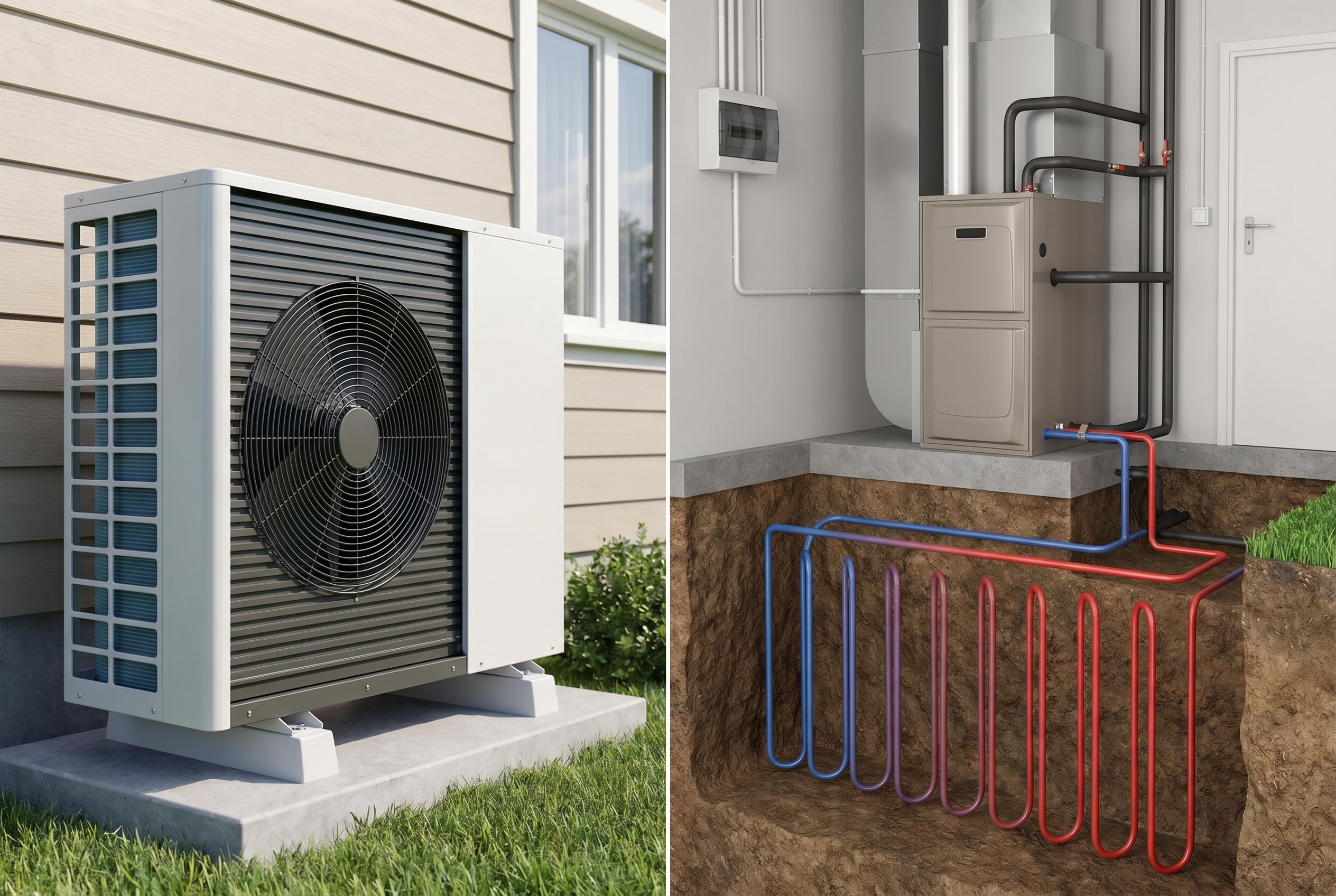
If you are comparing geothermal vs heat pump NC options, you are probably trying to answer a bigger question than just which system is newer or more efficient on paper. Most homeowners want to know what will actually save money over time, what will keep the house comfortable in North Carolina weather, and whether the upfront investment makes sense for the home they have.
That is where this comparison gets interesting. Both systems can be energy-efficient, and both can heat and cool a home. But they do it in different ways, and the long-term savings picture depends on more than just the equipment label. Installation cost, maintenance needs, property layout, and how long you plan to stay in the home all matter.
Geothermal vs Heat Pump System Differences
A standard heat pump moves heat between your home and the outdoor air. In a climate like North Carolina’s, that can work very well because winters are usually moderate and summers are long and humid. For many homes, a well-installed air-source heat pump offers strong efficiency and year-round comfort without the higher installation cost of geothermal.
Geothermal works differently. Instead of exchanging heat with outdoor air, it uses the more stable temperatures below ground. That gives it a major efficiency advantage in the right situation, especially because underground temperatures are much less affected by outdoor weather swings than the air above ground.
This is also why the geothermal HVAC Raleigh NC homeowners consider is often framed as a long-term investment rather than a simple equipment swap. It can deliver excellent comfort and operating efficiency, but it usually requires more planning and a larger upfront commitment.
Which One Usually Costs Less to Run?
When people ask which system saves more, they are usually asking about monthly operating cost. In many cases, geothermal wins that part of the comparison. Because it draws from the more stable temperature underground, it often does not have to work as hard as an air-source heat pump during very hot or cold stretches.
That said, lower operating cost does not automatically make it the better financial choice for every home. A standard heat pump may still be the smarter value if the upfront installation cost is significantly lower and the homeowner does not plan to stay in the house long enough to fully benefit from the long-term savings.
The U.S. Department of Energy offers a good general overview of how geothermal heat pumps work and why they can be highly efficient. For air-source systems, ENERGY STAR also has a useful guide to heat pumps and heating and cooling efficiency.
Upfront Cost Changes the Equation
This is where many decisions are really made. A standard heat pump usually has the lower upfront cost and the simpler installation path. For homeowners replacing an aging HVAC system in an existing home, that makes it a very practical option.
Geothermal is different. It often comes with higher installation cost because the system includes loop work, specialized design considerations, and a more involved setup overall. That can make it a harder sell if the comparison begins and ends with the price tag.
But if the conversation is about long-term value, not just first cost, geothermal starts to look more compelling. Bowman has built a real niche here, and geothermal remains one of the clearest ways the company differentiates itself in the Triangle. If you want the service-side overview, Bowman’s geothermal page is the best internal starting point.
Comfort in North Carolina Weather
North Carolina is a good state for this comparison because homeowners deal with both summer humidity and winter heating demand, but not the kind of extreme cold found farther north. That means standard heat pumps often perform well here, which is one reason they are so common.
Geothermal still has an edge in consistency. Because it is not relying on outdoor air that swings from muggy summer afternoons to winter cold snaps, it can deliver steadier performance and often more stable indoor comfort. For some homeowners, that comfort difference matters just as much as the utility bill.
Bowman’s geothermal experience is a meaningful factor here too. The company’s heating content highlights nearly 650 geothermal systems installed in the Triangle since 1987, which is not the kind of claim most local HVAC companies can make. That makes geothermal HVAC Raleigh NC homeowners are considering a more credible conversation for Bowman than it would be for a generalist contractor.
Maintenance and Repair Differences
Neither system is maintenance-free. A standard heat pump still needs seasonal service, airflow checks, filter changes, and attention to outdoor components. Geothermal systems also need regular service, but the maintenance profile is a little different because the system relies on ground loops and specialized equipment rather than a typical outdoor condenser.
That is one reason it helps to work with a contractor who truly understands geothermal systems instead of treating them like an exotic side service. If you want to dig into that topic more, Bowman’s article on common problems with geothermal systems is a natural follow-up.
So Which One Saves More?
If the question is strictly about operating efficiency, geothermal usually has the advantage. If the question is about total value for a specific home, the answer is more personal. A standard heat pump may save more in the real world if the homeowner wants lower upfront cost, a simpler installation, and a strong return without the bigger initial investment.
Geothermal may save more over the long haul for homeowners who plan to stay put, want maximum efficiency, and have a property that supports the installation well. In other words, geothermal usually wins the long game, while a conventional heat pump often wins on entry cost and simplicity.
How to Choose the Right System for Your Home
The smartest way to compare these systems is not to ask which one is universally better. It is to ask which one fits your home, your budget, and your long-term plans. That is where load calculations, property layout, existing ductwork, and expected length of ownership all start to matter.
If you want help comparing your options, Bowman Heating, Cooling, & Plumbing can help you evaluate what makes sense for your home instead of pushing a one-size-fits-all answer. To talk through geothermal or heat pump options, visit the contact page.
Frequently Asked Questions
Is geothermal more efficient than a standard heat pump?
In many cases, yes. Geothermal systems often deliver greater operating efficiency because they use more stable underground temperatures instead of outdoor air.
Does geothermal always save more money?
Not always in the short term. Geothermal usually has higher upfront installation cost, so total savings depend on how long you stay in the home and how the system is used.
Are heat pumps a good choice in North Carolina?
Yes. North Carolina’s relatively moderate winters make standard heat pumps a strong option for many homes.
Who is a good candidate for geothermal?
Homeowners planning to stay long term, prioritize efficiency, and have property conditions that support the installation are often the best candidates.