
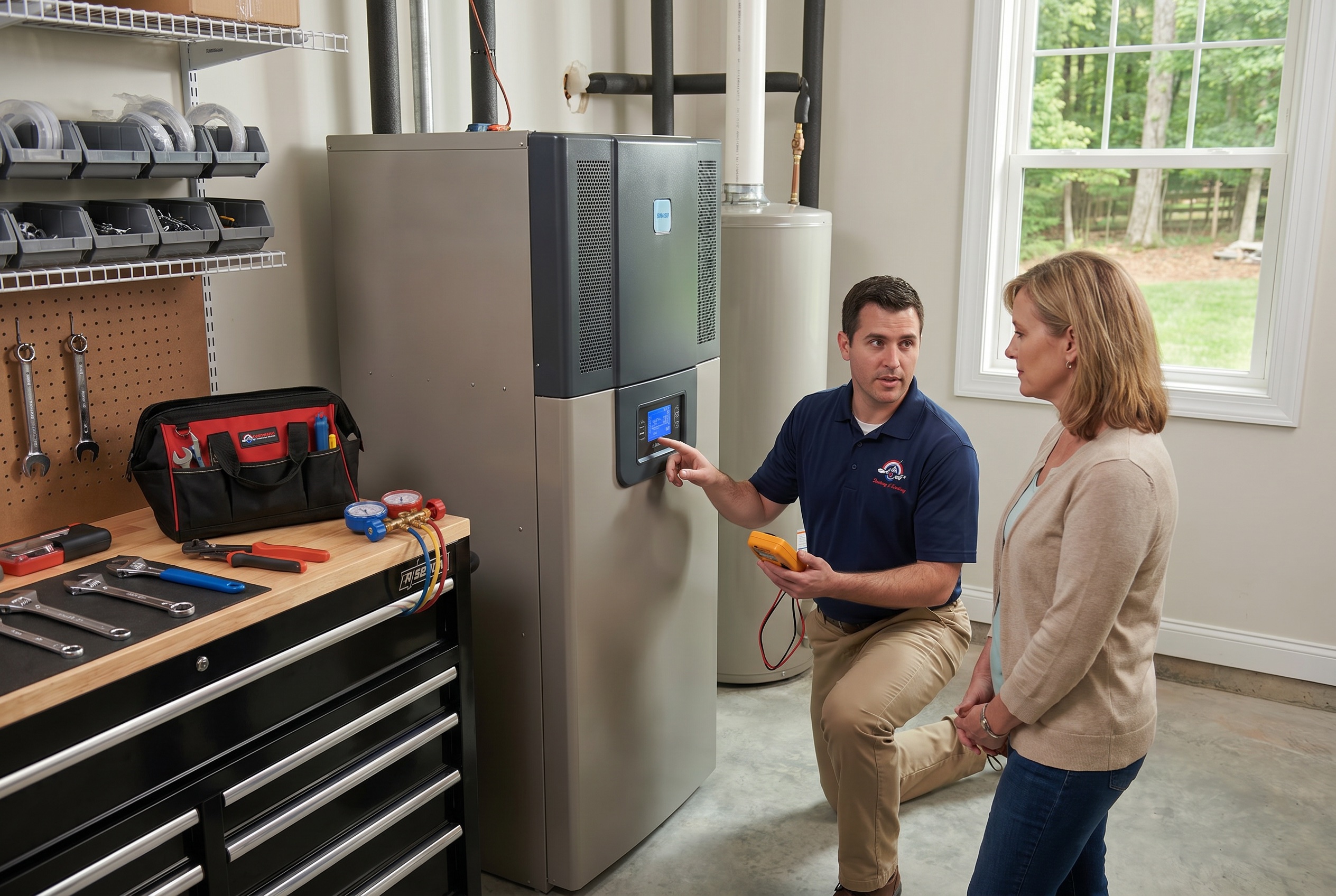
If you are researching geothermal issues, there is a good chance your system is not heating or cooling the way it should, your utility bills have changed, or something just feels off in the house. Geothermal systems are known for efficiency and long-term reliability, but like any HVAC system, they can still develop problems over time.
The good news is that many geothermal problems start with symptoms homeowners can notice early. Strange noises, uneven temperatures, weak airflow, and higher operating costs are all signs worth paying attention to. Catching those issues sooner usually gives you more options and helps prevent a smaller repair from turning into a bigger one.
Geothermal Issues Homeowners Should Take Seriously
One reason geothermal systems can be confusing is that they do not always fail in obvious ways. Sometimes the system still runs, but comfort starts slipping. A home may feel humid in summer, rooms may heat unevenly in winter, or the unit may run longer than usual without delivering the same results.
In other cases, the issue is easier to spot. You may hear unusual noises from the indoor equipment, notice that the thermostat setting does not match how the home feels, or see a sudden jump in utility costs. Those are all signs the system needs attention, even if it has not stopped working completely.
If you want a broader overview of known trouble spots, Bowman already has a helpful resource on common problems with geothermal systems. That page pairs well with a more practical homeowner guide like this one.
What Usually Causes Geothermal Problems
Not every geothermal repair comes from the underground loop itself. In fact, many geothermal issues come from the same kinds of components that affect other HVAC systems, including airflow restrictions, thermostat problems, electrical faults, dirty filters, or worn indoor parts.
That is part of why diagnosis matters. A geothermal system can be extremely efficient, but it still depends on good airflow, sound controls, and proper maintenance. If the blower is struggling, the filter is clogged, or the thermostat is not reading correctly, comfort can suffer even when the loop field is doing its job.
Loop-side issues can happen too, though they are less common. When they do, the symptoms may look like poor heating or cooling performance, longer run times, or efficiency that seems to drop without an obvious reason. That is one reason geothermal systems should be evaluated by a contractor who understands both conventional HVAC components and ground-source equipment.
Why Small Symptoms Can Turn Into Bigger Repairs
One of the most common mistakes homeowners make is waiting too long because the system is still sort of working. Maybe the house eventually reaches temperature, but only after running for much longer than usual. Maybe one floor feels fine while another does not. Those are still signs that something has changed.
In North Carolina, that matters because systems often have to deal with long stretches of heat and humidity. If a geothermal unit is already underperforming, summer demand can make the problem more noticeable. A system that once handled comfort with ease may start falling behind when the weather gets more demanding.
Routine maintenance helps with that. Bowman’s preventative maintenance page is a useful internal link for homeowners who want to understand how regular service reduces the odds of unexpected breakdowns.
When the Problem May Be Airflow or Indoor Comfort
Some homeowners assume geothermal trouble always starts underground, but indoor comfort issues often point elsewhere. Poor airflow, dirty filters, indoor air quality concerns, and duct restrictions can all make a geothermal system seem less effective than it really is.
If the house feels muggy, dusty, or uneven from room to room, the system may need a broader comfort evaluation instead of a single-part fix. That is also why Bowman’s healthy air page can be relevant for geothermal customers. Air movement and filtration still matter, even with high-efficiency equipment.
What Homeowners Can Check Before Calling
There are a few simple things worth checking before you schedule service. Start with the thermostat settings and make sure the system is operating in the correct mode. Check the air filter if it has not been changed recently. Pay attention to whether airflow feels weaker than normal or whether one area of the home is much less comfortable than the rest.
Those checks will not solve every problem, but they can help rule out a basic issue and give a technician more useful information when you call. If the system is making unusual noises, running constantly, or still not performing correctly after those basics, it is time for a professional diagnosis.
When to Call a Geothermal Specialist
Geothermal systems are not the kind of equipment you want guessed at. They are specialized systems, and the best results usually come from working with a contractor who has real experience with geothermal installation, service, and repair. That matters even more when symptoms are subtle and the source of the issue is not obvious.
Bowman has long leaned into geothermal as a technical specialty, which makes this a natural area of authority for the company in the Triangle. If your system is underperforming, you can also review Bowman’s geothermal service page or head straight to the contact page to schedule service.
For homeowners who want an outside reference, the U.S. Department of Energy explains that geothermal heat pumps use the stable temperature of the shallow earth for heating and cooling, and ENERGY STAR notes that they are among the most efficient and comfortable heating and cooling technologies available. DOE also emphasizes that proper operation and maintenance matter for long-term performance, which is exactly why small problems should not be ignored. Learn more from the U.S. Department of Energy and see ENERGY STAR’s geothermal heat pump guidance.
Frequently Asked Questions
Are geothermal issues common?
Serious loop-related failures are not usually common, but geothermal systems can still develop airflow, control, maintenance, and component issues over time.
What are the first signs of geothermal problems?
Uneven temperatures, longer run times, weak airflow, strange noises, and higher utility bills are all early warning signs worth paying attention to.
Can I troubleshoot geothermal issues myself?
You can check basics like thermostat settings and filters, but deeper diagnosis usually requires professional equipment and geothermal experience.
Does a geothermal system still need regular maintenance?
Yes. Even efficient systems need routine maintenance to keep airflow, controls, and performance where they should be.