🛠 NOW OFFERING PLUMBING SERVICES — CALL (919) 772-2759 🛠 NOW OFFERING PLUMBING SERVICES — CALL (919) 772-2759 🛠 NOW OFFERING PLUMBING SERVICES — CALL (919) 772-2759

Fan Kicks On But Compressor Not Working: What Raleigh Homeowners Should Check

If the fan kicks on but compressor not working, your air conditioner may look and sound like it’s running even though it isn’t actually cooling your home. That can be frustrating on a hot North Carolina day, especially when the outdoor unit seems partly alive but the house keeps getting warmer.

This is one of those HVAC problems that can have a few different causes. Sometimes the issue is relatively straightforward, like a failed capacitor or thermostat signal problem. Other times, it points to a more serious electrical or compressor-related failure. The key is knowing what you can safely check yourself and when it is time to bring in a professional.

Why the Fan Kicks On But Compressor Not Working

In a central air system, the outdoor unit contains both the fan and the compressor, but they do not do the same job. The fan helps move air through the condenser coil, while the compressor is the component that circulates refrigerant and makes actual cooling possible. When the fan is running but the compressor is not, the system may sound active without doing the part that matters most.

In Raleigh and the surrounding Triangle, this problem tends to show up fast once summer heat and humidity settle in. A system that is only half-working often becomes obvious during the hottest part of the afternoon, when your AC needs to be at full strength to keep up.

Common Causes of This AC Problem

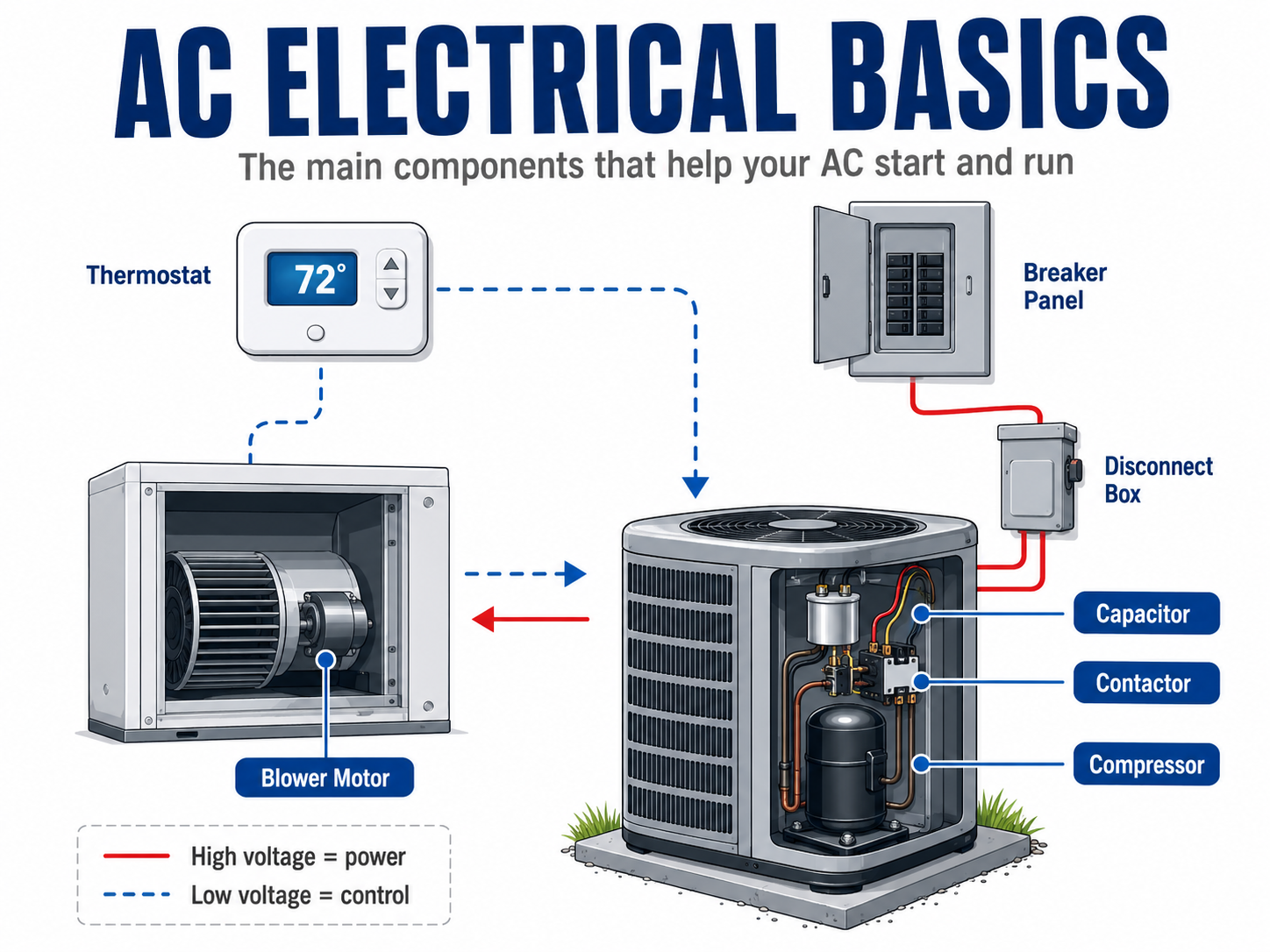
One of the most common culprits is a failed capacitor. Many AC systems use capacitors to help start the compressor and fan motor. In some cases, the fan may still run while the compressor does not get the boost it needs to start. This is a very common service call during hot weather.

A bad contactor can also cause similar symptoms. The contactor is responsible for helping deliver power to the outdoor unit’s major components. If it is worn, pitted, or failing electrically, the compressor may not engage the way it should.

Thermostat and control issues are also worth considering. If the thermostat is not sending the right signal, or if there is a wiring issue somewhere in the low-voltage controls, the system may not fully activate.

Then there are the more serious possibilities. Electrical faults, compressor overheating, or a failing compressor can all prevent the unit from cooling properly. If that is the case, continuing to let the system try to run may put more strain on already stressed components.

What Homeowners Can Safely Check First

Before calling for service, there are a few basic things you can look at safely. Start with the thermostat and make sure it is set to cool and the set point is below the current room temperature. It is also worth checking the circuit breaker to see whether anything has tripped.

If your filter is badly clogged, replace it. A dirty filter usually does not directly cause this exact symptom by itself, but restricted airflow can contribute to broader system stress and poor performance. If the outdoor unit is dirty or packed with debris, that is also worth noting.

Beyond that, it is best not to start poking around inside the condenser. Outdoor units contain high-voltage electrical components, and capacitor-related problems in particular are not a good DIY experiment.

When to Stop Running the System

If the fan kicks on but compressor not working continues to happen, it is usually best to shut the system off and call for service. Letting the unit keep trying to run can increase wear and may lead to additional damage, especially if the compressor is overheating or failing to start repeatedly.

This is also one of those situations where homeowners sometimes notice warm air coming from the vents or a house that never quite reaches temperature. If that sounds familiar, Bowman’s article on why an AC may be running but not cooling your Raleigh home is a helpful related read.

Why This Problem Should Be Diagnosed Professionally

Because several different failures can produce the same symptom, the real issue is not always obvious from the outside. A technician needs to check whether the compressor is receiving power, whether the capacitor is testing within range, and whether the system controls are operating correctly.

This kind of diagnosis matters because the repair options can vary widely. In some cases, the fix is relatively modest. In others, homeowners may need to weigh repair cost against the age and condition of the system. If that becomes part of the conversation, Bowman’s guide to AC repair cost in North Carolina can help frame expectations.

The U.S. Department of Energy also notes that proper maintenance and timely repairs help air conditioners run more efficiently and reduce the risk of larger breakdowns over time. Their maintenance guidance is worth a read, especially if your system has had recurring performance issues.

Preventing Future Compressor and Cooling Problems

Not every compressor issue can be prevented, but regular maintenance gives you a much better chance of catching smaller electrical and performance problems before they turn into a midsummer breakdown. Weak capacitors, dirty coils, and worn contactors are all easier to deal with during a maintenance visit than during an emergency call in July.

That is why seasonal service matters. If you want to reduce the chances of bigger cooling problems later, Bowman’s post on AC maintenance tips for Raleigh homeowners is a good next step.

Call Bowman If Your AC Is Running But Not Cooling

When your outdoor fan is spinning but your house is still heating up, the problem is usually not going to fix itself. If the fan kicks on but compressor not working is what you are seeing, a professional diagnosis can help you avoid extra wear, lost comfort, and bigger repair costs later.

If you are in Raleigh, Garner, Clayton, Cary, or the nearby Triangle, you can learn more about Bowman’s cooling services or contact the team to schedule service.

Frequently Asked Questions

Can an AC fan run if the compressor is bad?

Yes. The fan and compressor are separate components, so the fan may still run even if the compressor is not starting or has failed.

Is a bad capacitor a common reason this happens?

Yes. A weak or failed capacitor is one of the most common reasons an outdoor fan may run while the compressor does not.

Should I keep running my AC if it is not cooling?

Usually no. If the compressor is not working, letting the system continue to run can add stress and potentially make the problem worse.

Do I need repair or replacement?

That depends on the age of the system, the condition of the compressor, and the total repair cost. A technician can help you compare the options.
Why Is My Air Conditioner Running But Not Cooling My Raleigh Home?

If you find your AC running but not cooling, you are not dealing with a minor annoyance. In Raleigh, that problem can make a house uncomfortable fast, especially once spring turns into a humid North Carolina summer. Sometimes the system still sounds normal. The fan runs, the thermostat looks right, and air is coming through the vents. The problem is that the air is not actually cool enough to lower the temperature in your home.


When that happens, homeowners usually want to know two things. First, what is causing it? Second, is this something simple or a sign that it is time to call for repair? The answer depends on how your system is behaving, but there are a few common causes that show up again and again.

Why AC running but not cooling happens

An air conditioner can keep running even when part of the system is not doing its job. The thermostat may be calling for cooling and the blower may still be moving air, but that does not mean the system is removing heat properly.


One common issue is restricted airflow. A clogged air filter, blocked return vent, dirty evaporator coil, or matted outdoor condenser coil can all reduce performance. This is especially relevant in the Triangle, where pollen season can coat outdoor equipment and make an already stressed system work even harder.


Low refrigerant is another major possibility. If the refrigerant charge is low because of a leak, your system may still run for long stretches without cooling the home effectively. You may notice that the air conditioner is blowing warm air or that the house never quite reaches the thermostat setting.


Electrical problems can also cause this issue. A failing capacitor, damaged contactor, or problem with the outdoor unit can leave you with indoor airflow but no real cooling. In some cases, the indoor unit is running while the outdoor unit is not doing enough work to reject heat. That creates the frustrating situation where everything sounds active, but comfort never improves.

Signs the problem is getting worse

Sometimes homeowners wait because the system is still technically running. That can be a mistake. When an AC is operating without cooling properly, it often works longer and harder than it should. That extra run time can increase wear, raise electric bills, and turn a manageable repair into a more expensive one.


Watch for a few signs that point to a real cooling problem. The home may feel sticky or humid even when the AC has been on for hours. Some rooms may stay warmer than others. The thermostat may show the set temperature, but the actual room never gets there. You may also notice weak airflow, warm air from vents, ice on refrigerant lines, or unusual cycling where the system seems to run endlessly.


If your utility bill climbs without a clear reason, that matters too. In Raleigh and surrounding areas, high summer humidity already makes cooling systems work harder. When the unit is struggling mechanically on top of that, energy use can spike quickly.

What you can check before calling for service

There are a few practical things worth checking before assuming the worst. Start with the thermostat. Make sure it is set to cool, the fan setting is correct, and the temperature setting is actually below the room temperature.


Next, look at the air filter. If it is dirty, replace it. A severely clogged filter can choke airflow enough to hurt cooling performance. Then check that supply vents and return vents are open and not blocked by furniture or rugs.


Go outside and look at the condenser unit. If it is packed with leaves, grass clippings, or visible debris, gently clear the area around it. Good airflow outside matters just as much as airflow inside. If the coil looks heavily coated with grime or pollen, that may be part of the problem.


It is also worth checking whether the outdoor unit is actually running. If the indoor air handler is on but the outdoor unit is silent or only partially operating, the system needs professional diagnosis.


Routine upkeep helps prevent a lot of these issues. Regular preventative maintenance can catch airflow restrictions, worn electrical parts, and low-performance issues before they leave you sweating through a Raleigh afternoon.

When it is time to call an HVAC professional

If basic checks do not solve the problem, it is time to bring in a technician. Low refrigerant, frozen coils, compressor issues, failing capacitors, and electrical faults are not good DIY territory. They require proper tools, testing, and safe handling.


This is especially true if your AC is running constantly, the air coming from vents is warm, or the system is short cycling. Those symptoms usually mean the problem goes beyond a simple filter change.


At that point, it helps to work with a company that handles full cooling services and can evaluate the system as a whole rather than guessing at one part. If the issue is tied to airflow, duct performance, or indoor comfort conditions, Bowman can also look at related concerns like indoor air quality solutions, which matter more than many homeowners realize in North Carolina’s long humid season.


For homeowners who want to understand how efficient cooling practices affect comfort and energy use, the U.S. Department of Energy’s air conditioning guidance is a useful resource. It offers a solid overview of how maintenance and system condition affect performance.

What Bowman recommends for Raleigh-area homeowners

When an AC is running but not cooling, the safest move is to address it early. Waiting rarely improves the situation, and in many cases it makes repair costs higher. In Raleigh, Garner, Clayton, Cary, and nearby communities, the combination of heat, humidity, and pollen puts real pressure on cooling equipment. Small performance issues do not stay small for long once summer sets in.


If your house is not cooling the way it should, Bowman Heating & Cooling can inspect the system, identify the cause, and recommend the right fix without overcomplicating it. Whether the problem is airflow, refrigerant, electrical components, or general wear, getting a clear diagnosis is the fastest path back to comfort.


If you can’t solve your AC running but not cooling, contact Bowman Heating & Cooling to schedule service and get your system checked before the next hot stretch hits.

Frequently Asked Questions

Why is my AC running but the house is still warm?

This usually means the system is moving air but not removing heat properly. Common causes include dirty filters, low refrigerant, frozen coils, thermostat issues, or a problem with the outdoor unit.

Can a dirty filter cause an AC to stop cooling?

Yes. A clogged filter can restrict airflow enough to reduce cooling performance, and in some cases it can contribute to coil freezing and longer run times.

Why is my air conditioner blowing warm air in Raleigh?

In Raleigh, warm air from vents may be caused by low refrigerant, pollen and debris affecting the outdoor unit, electrical component failure, or heavy seasonal demand exposing an existing weakness in the system.

When should I call a professional if my AC is not cooling?

If changing the filter and checking thermostat settings do not solve it, or if you notice warm air, ice buildup, unusual noises, or nonstop running, it is time to schedule professional service.