If the fan kicks on but compressor not working, your air conditioner may look and sound like it’s running even though it isn’t actually cooling your home. That can be frustrating on a hot North Carolina day, especially when the outdoor unit seems partly alive but the house keeps getting warmer.
This is one of those HVAC problems that can have a few different causes. Sometimes the issue is relatively straightforward, like a failed capacitor or thermostat signal problem. Other times, it points to a more serious electrical or compressor-related failure. The key is knowing what you can safely check yourself and when it is time to bring in a professional.
Why the Fan Kicks On But Compressor Not Working
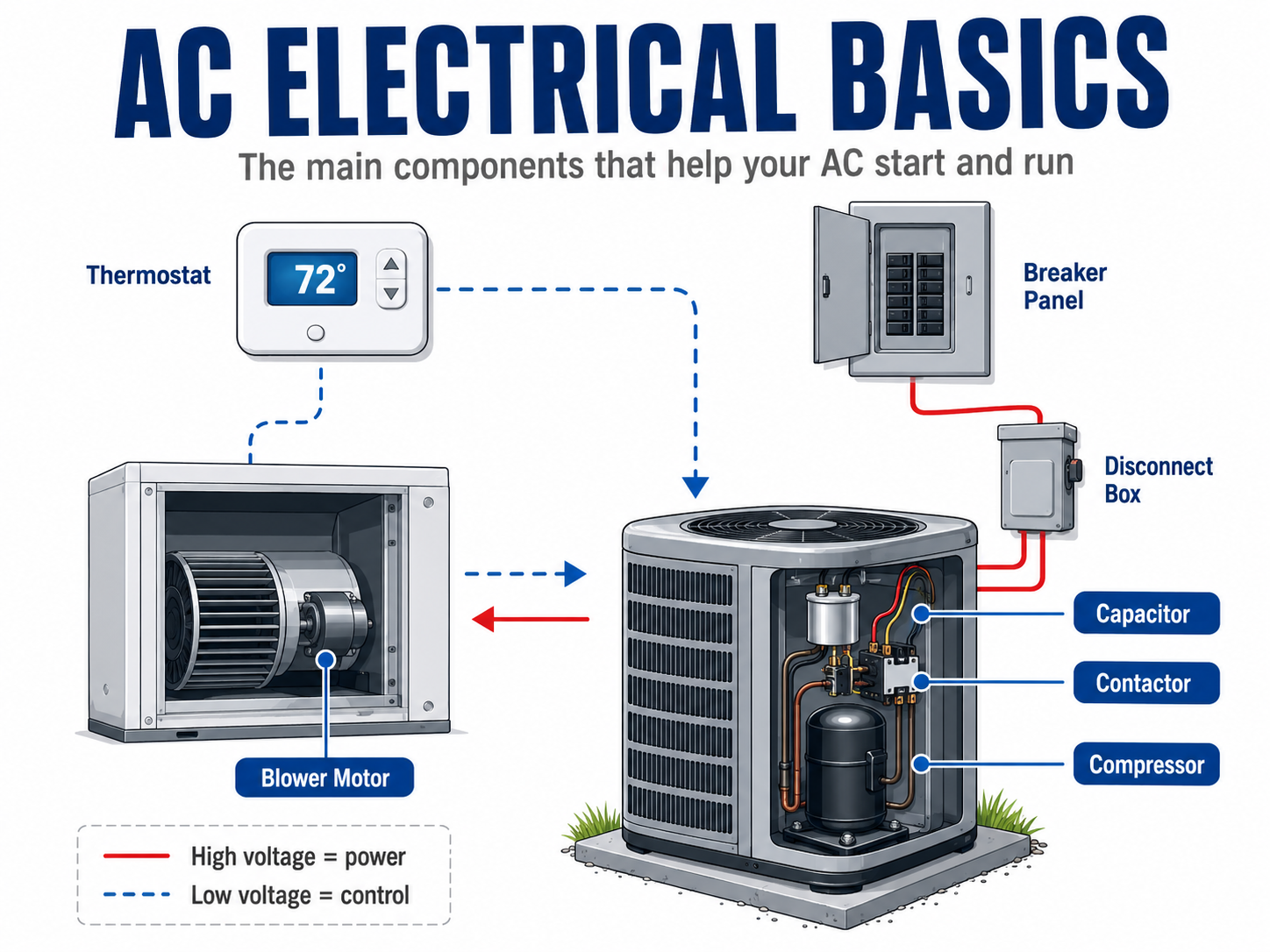
In a central air system, the outdoor unit contains both the fan and the compressor, but they do not do the same job. The fan helps move air through the condenser coil, while the compressor is the component that circulates refrigerant and makes actual cooling possible. When the fan is running but the compressor is not, the system may sound active without doing the part that matters most.
In Raleigh and the surrounding Triangle, this problem tends to show up fast once summer heat and humidity settle in. A system that is only half-working often becomes obvious during the hottest part of the afternoon, when your AC needs to be at full strength to keep up.
Common Causes of This AC Problem
One of the most common culprits is a failed capacitor. Many AC systems use capacitors to help start the compressor and fan motor. In some cases, the fan may still run while the compressor does not get the boost it needs to start. This is a very common service call during hot weather.
A bad contactor can also cause similar symptoms. The contactor is responsible for helping deliver power to the outdoor unit’s major components. If it is worn, pitted, or failing electrically, the compressor may not engage the way it should.
Thermostat and control issues are also worth considering. If the thermostat is not sending the right signal, or if there is a wiring issue somewhere in the low-voltage controls, the system may not fully activate.
Then there are the more serious possibilities. Electrical faults, compressor overheating, or a failing compressor can all prevent the unit from cooling properly. If that is the case, continuing to let the system try to run may put more strain on already stressed components.
What Homeowners Can Safely Check First
Before calling for service, there are a few basic things you can look at safely. Start with the thermostat and make sure it is set to cool and the set point is below the current room temperature. It is also worth checking the circuit breaker to see whether anything has tripped.
If your filter is badly clogged, replace it. A dirty filter usually does not directly cause this exact symptom by itself, but restricted airflow can contribute to broader system stress and poor performance. If the outdoor unit is dirty or packed with debris, that is also worth noting.
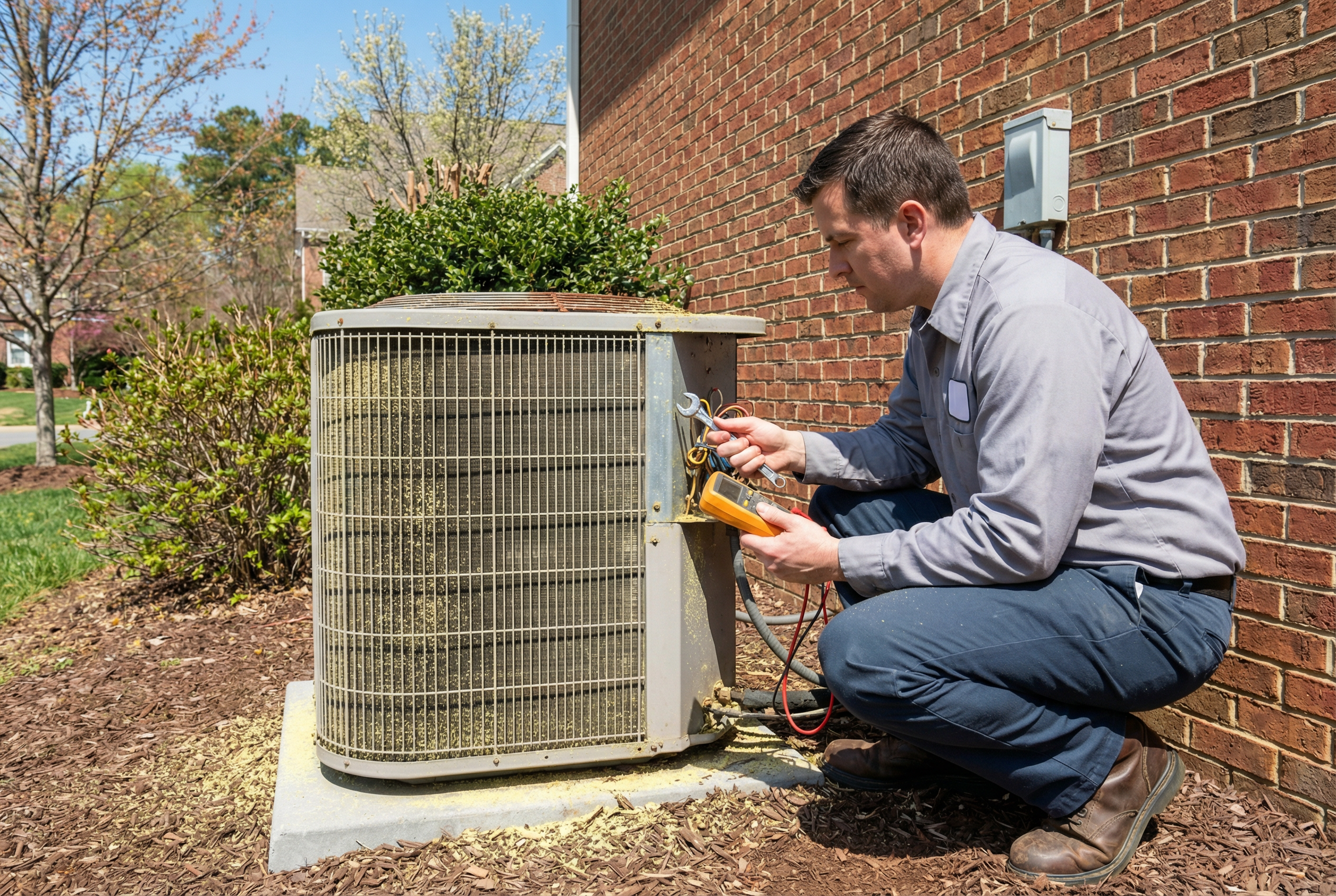
Beyond that, it is best not to start poking around inside the condenser. Outdoor units contain high-voltage electrical components, and capacitor-related problems in particular are not a good DIY experiment.
When to Stop Running the System
If the fan kicks on but compressor not working continues to happen, it is usually best to shut the system off and call for service. Letting the unit keep trying to run can increase wear and may lead to additional damage, especially if the compressor is overheating or failing to start repeatedly.
This is also one of those situations where homeowners sometimes notice warm air coming from the vents or a house that never quite reaches temperature. If that sounds familiar, Bowman’s article on why an AC may be running but not cooling your Raleigh home is a helpful related read.
Why This Problem Should Be Diagnosed Professionally
Because several different failures can produce the same symptom, the real issue is not always obvious from the outside. A technician needs to check whether the compressor is receiving power, whether the capacitor is testing within range, and whether the system controls are operating correctly.
This kind of diagnosis matters because the repair options can vary widely. In some cases, the fix is relatively modest. In others, homeowners may need to weigh repair cost against the age and condition of the system. If that becomes part of the conversation, Bowman’s guide to AC repair cost in North Carolina can help frame expectations.
The U.S. Department of Energy also notes that proper maintenance and timely repairs help air conditioners run more efficiently and reduce the risk of larger breakdowns over time. Their maintenance guidance is worth a read, especially if your system has had recurring performance issues.
Preventing Future Compressor and Cooling Problems
Not every compressor issue can be prevented, but regular maintenance gives you a much better chance of catching smaller electrical and performance problems before they turn into a midsummer breakdown. Weak capacitors, dirty coils, and worn contactors are all easier to deal with during a maintenance visit than during an emergency call in July.
That is why seasonal service matters. If you want to reduce the chances of bigger cooling problems later, Bowman’s post on AC maintenance tips for Raleigh homeowners is a good next step.
Call Bowman If Your AC Is Running But Not Cooling
When your outdoor fan is spinning but your house is still heating up, the problem is usually not going to fix itself. If the fan kicks on but compressor not working is what you are seeing, a professional diagnosis can help you avoid extra wear, lost comfort, and bigger repair costs later.
If you are in Raleigh, Garner, Clayton, Cary, or the nearby Triangle, you can learn more about Bowman’s cooling services or contact the team to schedule service.
Frequently Asked Questions
Can an AC fan run if the compressor is bad?
Yes. The fan and compressor are separate components, so the fan may still run even if the compressor is not starting or has failed.
Is a bad capacitor a common reason this happens?
Yes. A weak or failed capacitor is one of the most common reasons an outdoor fan may run while the compressor does not.
Should I keep running my AC if it is not cooling?
Usually no. If the compressor is not working, letting the system continue to run can add stress and potentially make the problem worse.
Do I need repair or replacement?
That depends on the age of the system, the condition of the compressor, and the total repair cost. A technician can help you compare the options.