🛠 NOW OFFERING PLUMBING SERVICES — CALL (919) 772-2759 🛠 NOW OFFERING PLUMBING SERVICES — CALL (919) 772-2759 🛠 NOW OFFERING PLUMBING SERVICES — CALL (919) 772-2759

How to Improve Airflow in Your Home: What’s Actually Causing the Problem

If certain rooms in your house never quite reach the temperature on the thermostat, or some vents seem to barely push any air while others work fine, you’ve got an airflow problem. It’s one of the most common complaints we hear from homeowners across the Triangle, and it’s also one of the most misdiagnosed. People assume the system is undersized or that the equipment is failing, when in reality the problem is usually somewhere in how air is moving through the house. Here’s how to think about it and what actually fixes it.

Start With the Filter

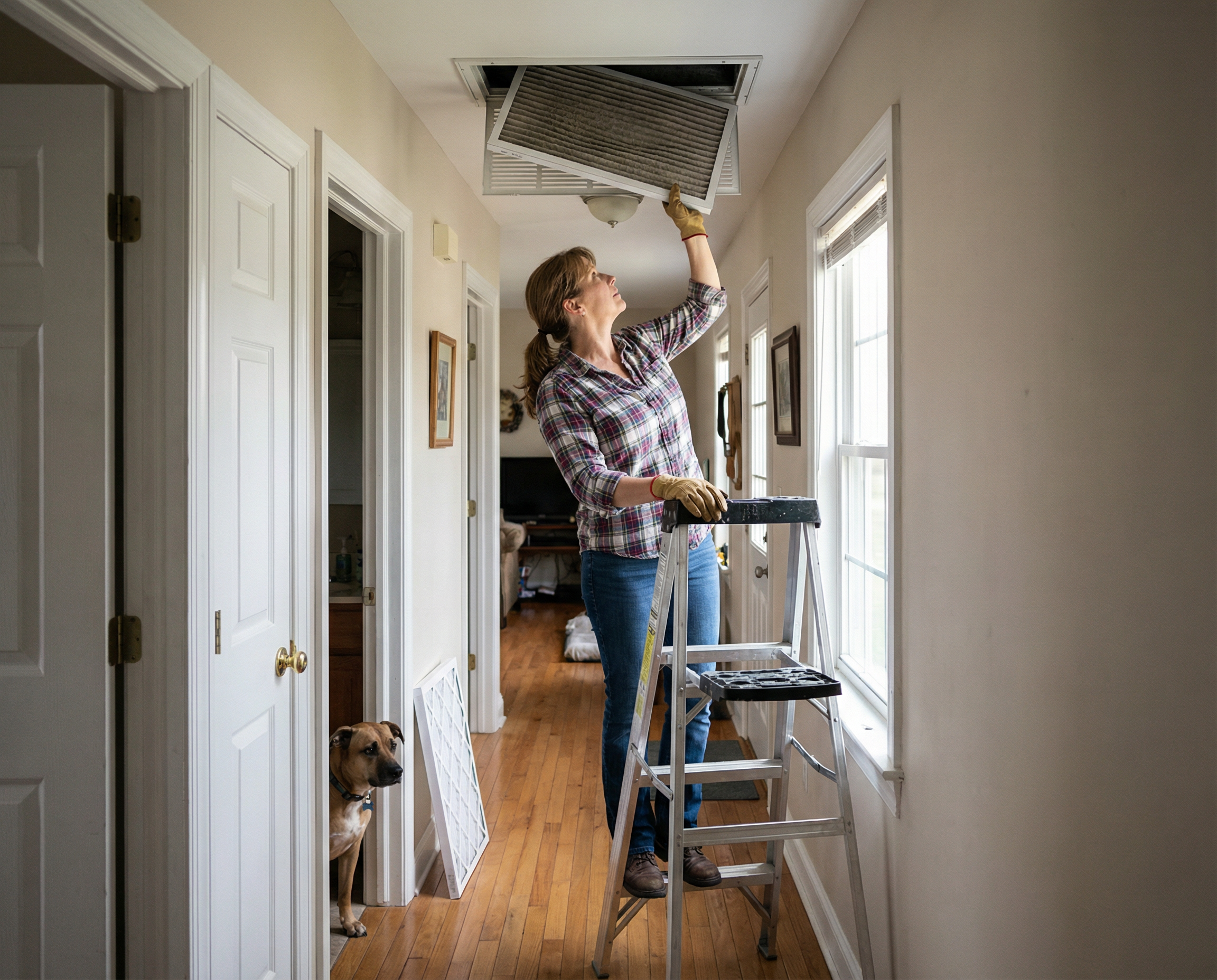
Before anything else, check your air filter. A clogged filter is the most common and most overlooked cause of poor airflow in a home, and it’s the first thing we check on any service call where weak airflow is the complaint. When a filter loads up with dust and debris, it restricts the volume of air the system can pull through and push out, which reduces airflow at every vent in the house simultaneously. If you haven’t changed your filter in a few months, especially during a summer where the system has been running constantly, there’s a reasonable chance that’s a significant part of what’s going on.


Replace it, give the system an hour or so to respond, and see whether the situation improves before going further. It’s a five-dollar fix that solves the problem more often than you’d think.

Check Your Vents and Registers

This one sounds too simple, but it comes up regularly: partially or fully closed supply vents are a surprisingly common cause of uneven airflow. Go through the house and make sure every supply vent is open and unobstructed. Furniture sitting directly in front of or on top of a register kills airflow in that area and forces the system to work harder everywhere else. Rugs over floor registers do the same thing.


Return air vents deserve attention too. Returns are the vents that pull air back into the system to be conditioned and recirculated, and they need clear space around them to work properly. A return vent blocked by a piece of furniture or sealed off in a renovation creates negative pressure in that part of the house, which throws off airflow balance throughout the whole system. Every return needs a clear path to pull air through.


While you’re at it, check whether any vents have been closed off intentionally in rooms that aren’t being used. This is a common energy-saving attempt that actually backfires: closing vents increases static pressure in the duct system, which stresses the blower motor and can cause airflow problems in other parts of the house.

Ductwork Is Usually Where the Real Problem Lives

If the filter is clean and the vents are open and you still have weak or uneven airflow, the duct system is the next place to look. Ductwork problems are responsible for a large proportion of the airflow complaints we investigate, and they tend to fall into a few categories.


Duct leakage is the big one. Studies consistently show that the average home loses somewhere between 20 and 30 percent of conditioned air through leaks and gaps in the duct system before it ever reaches the living space. In the Triangle, where a lot of ductwork runs through unconditioned attics, that air isn’t just lost; it’s being dumped into a space that can hit 150 degrees in July, which compounds the efficiency loss considerably. If a room at the end of a long duct run is consistently harder to cool than the rest of the house, leakage in that run is a likely explanation.


Collapsed or crushed flex duct is another common issue, particularly in older homes. Flex duct is exactly what it sounds like: flexible ducting that can be routed around obstacles in an attic or crawlspace. It’s practical for installation but it’s also vulnerable to being kinked, crushed by attic storage, or degraded over time, and even a partial restriction in a flex duct run significantly reduces airflow to everything downstream of it.


Undersized or poorly designed duct systems are a third category and the hardest to fix. If the original installation used duct runs that were too small for the system’s airflow requirements, or if additions and renovations added conditioned square footage without adding duct capacity, no amount of maintenance is going to solve the problem completely. This is where a proper duct design evaluation becomes necessary. Our mini split page is worth looking at if you have a specific zone or addition that’s chronically hard to condition; sometimes a dedicated ductless unit for that space is a cleaner solution than trying to extend an already-strained duct system.

The Blower Motor and Coil Matter Too

Airflow problems don’t always start in the ducts. The air handler itself can be a source of restriction if the blower motor is underperforming or if the evaporator coil is dirty enough to impede airflow through the system.


A dirty evaporator coil is more common than most homeowners realize, and it causes two problems at once: it reduces the system’s ability to remove heat and humidity from the air, and it restricts the volume of air moving through the system. Coil cleaning is part of a proper annual maintenance visit and it makes a noticeable difference in airflow when the coil has had time to build up a significant layer of debris. If your system hasn’t been serviced in a couple of years and airflow seems weaker than it used to be across the whole house rather than in specific rooms, this is a likely contributor.


Blower motors can also lose efficiency over time, particularly if they haven’t been lubricated or maintained properly. A motor that’s running below its rated speed moves less air than the system was designed to deliver, which affects every room simultaneously. This shows up in a maintenance inspection and is usually a straightforward fix when caught early. Take a look at what our preventative maintenance visits cover for specifics on what we check during a tune-up.

Pressure Imbalances and the Problem With Closed Doors

One airflow issue that doesn’t get talked about enough is pressure imbalance caused by the way a home is used rather than anything mechanically wrong with the system. In a house where bedroom doors are kept closed most of the time, the supply air being pushed into those rooms has nowhere to return to the system efficiently, since most return vents are located in hallways or common areas rather than individual bedrooms. This creates positive pressure in the closed rooms and negative pressure in the rest of the house, and it throws off airflow balance throughout.


The fix can be as simple as leaving interior doors open more consistently or adding door undercuts to allow air to move beneath closed doors back toward the returns. In homes where this is a persistent issue, transfer grilles or jump ducts between rooms and the hallway are a more permanent solution. It’s the kind of thing that gets identified during a proper system evaluation and is easy to overlook if you’re just focused on the equipment itself.

When Airflow Problems Point Toward a Bigger Conversation

Sometimes weak or uneven airflow is a symptom of a system that’s at the end of its useful life rather than a specific fixable problem. An aging blower motor, a coil that’s been cleaned enough times that it’s starting to degrade, ductwork that’s been repaired in multiple places: at some point the cumulative picture points toward replacement rather than another round of repairs.


If your system is more than 15 years old and airflow has been declining gradually over several seasons, it’s worth having a technician evaluate the whole picture rather than just addressing one component at a time. Our cooling services page covers what a full system evaluation involves, and our healthy air page has more on how airflow and air quality connect if that’s been a concern alongside comfort.

Getting to the Bottom of It

Airflow problems are almost always solvable once you identify where the restriction actually is. The challenge is that the symptom, a room that won’t cool down, can have half a dozen different causes, and the right fix depends on which one you’re actually dealing with. A clogged filter is a five-minute job; a duct leakage problem requires testing and sealing; a pressure imbalance needs a system evaluation to diagnose properly.


If you’re in Raleigh, Garner, or anywhere in the Triangle and you’ve been living with rooms that never feel right no matter what the thermostat says, we’re happy to come take a look and give you a straight answer on what’s actually going on. Get in touch here to set something up.

Frequently Asked Questions

Why is airflow weak in one room but fine everywhere else?

The most common causes are a closed or obstructed vent in that room, a leak or restriction in the duct run serving that area, or a collapsed section of flex duct somewhere between the air handler and that part of the house. Rooms at the end of long duct runs are particularly vulnerable to these issues since they’re the furthest point from the system and any restriction along the way compounds by the time air gets there.

Can closing vents in unused rooms improve airflow elsewhere?

No, and it usually makes things worse. Closing vents increases static pressure in the duct system, which stresses the blower motor and can actually reduce airflow throughout the house rather than redirecting it. The system was designed to move a certain volume of air through all of its supply vents; restricting some of them throws that balance off.

How do I know if my ductwork is the problem?

A few signs point toward ductwork as the culprit: rooms at the end of duct runs that are consistently harder to condition than the rest of the house, higher than expected energy bills despite reasonable thermostat settings, or visible damage to flex duct in the attic. A duct leakage test performed by a technician gives you a definitive answer and identifies where the losses are occurring.

Does a dirty air filter really affect airflow that much?

Yes, significantly. A heavily clogged filter can reduce system airflow by 15 percent or more, which affects every vent in the house simultaneously and forces the blower motor to work harder to move the same volume of air. During summer when the system runs constantly, filters load up faster than most homeowners expect. Checking it monthly rather than on a fixed calendar schedule is the better approach.

Why Is Indoor Air Quality Worse in Summer? What NC Homeowners Should Know

Most people assume their indoor air is cleanest in summer when everything feels fresh and the AC is running. In reality, summer is one of the hardest seasons on indoor air quality, and a lot of Triangle homeowners are breathing worse air in July than they realize. If you’ve noticed more allergy symptoms, musty smells, or just a general stuffiness inside your home this time of year, there’s usually a pretty clear reason for it.


Here’s why indoor air quality gets worse in summer and what you can actually do about it.

Closed Windows Mean Pollutants Have Nowhere to Go

In spring and fall, most people open windows regularly, which flushes stale indoor air out and brings fresh air in. In summer in North Carolina, nobody opens their windows because it’s 97 degrees outside and the humidity is brutal. The house stays sealed up for months at a time, and whatever is in the air inside stays in the air inside.


That matters more than people think. Everyday activities like cooking, cleaning, using personal care products, and even just having people and pets in the house all introduce pollutants into the indoor air. Volatile organic compounds from furniture, flooring, and household products off-gas continuously. Without regular air exchange, those things accumulate over time. The EPA has noted that indoor air can be two to five times more polluted than outdoor air, and that gap widens in summer when ventilation drops to near zero in most homes.

Heat and Humidity Feed Mold and Dust Mites

The two most common biological air quality problems in Triangle homes are mold and dust mites, and both of them thrive in exactly the conditions a North Carolina summer creates. Mold needs moisture and warmth to grow. Dust mites prefer temperatures above 70 degrees and humidity above 50 percent. From June through September, our climate delivers both on a consistent basis.


Mold doesn’t have to be visible to affect air quality. It grows readily in crawlspaces, behind walls near plumbing, in poorly ventilated bathrooms, and in HVAC components that stay damp. Once it’s established it releases spores into the airstream, which circulate through the house every time the system runs. Dust mite populations also peak in summer, and their waste particles are a significant trigger for allergy and asthma symptoms.


Keeping indoor humidity between 45 and 55 percent is one of the most effective things you can do to keep both under control. Your AC removes some moisture from the air as it runs, but in a very humid summer it often can’t keep up on its own. If your home consistently feels muggy even with the AC running, a whole-home dehumidifier is worth looking into. It’s one of the things we talk through on our healthy air and indoor air quality page if you want more detail on the options.

Pollen Doesn’t Stop in Summer

A lot of people associate pollen season with spring, and the tree pollen peak in April is certainly the most dramatic stretch in North Carolina. But pollen doesn’t stop when the trees finish. Grass pollen runs from late spring through early summer, and weed pollen including ragweed picks up in August and runs through fall. For a lot of households, the cumulative pollen load from May through September is actually worse than the spring peak.


Pollen gets indoors even in a tightly sealed house. It comes in on clothes, on pets, through brief moments when doors open and close, and through any gaps in the building envelope. Once inside it settles into carpet, upholstery, and ductwork, and gets stirred back into the air whenever the system kicks on or people move through the space. A clean, properly rated air filter does meaningful work here, but if someone in your household has significant pollen allergies, a higher-grade filtration solution is worth considering.

Your HVAC System Can Be Part of the Problem

This one is worth saying directly: a neglected HVAC system actively degrades indoor air quality rather than improving it. A dirty evaporator coil, a clogged condensate drain, and a loaded-up air filter all contribute to worse air circulating through your home.


The condensate drain is particularly relevant in summer. As your AC removes humidity from the air, that moisture drains away through the condensate line. If that line is clogged or the drain pan is sitting with standing water, you’ve got a warm, wet environment right inside your air handler—which is exactly where you don’t want mold growing. A clogged drain pan is one of the more common things we find on summer service calls, and it’s something a routine maintenance visit catches before it becomes a real problem.


Ductwork is another factor. Ducts that run through unconditioned attic spaces can accumulate dust, debris, and in older homes sometimes mold, all of which get distributed through the house every time the system runs. If your ductwork hasn’t been looked at in years and indoor air quality has been a persistent issue, it’s worth adding to the conversation during a service visit. Check out our cooling services page to see what a full system evaluation covers.

What Actually Helps

The good news is that most summer indoor air quality problems are addressable without a major overhaul. A few things that genuinely make a difference:


Filter maintenance is the most basic and most overlooked one. During summer in the Triangle, filters load up fast between pollen, dust, and the system running constantly. Checking it monthly and replacing it when it’s visibly dirty rather than on a fixed calendar schedule is the right approach. If someone in the house has allergies or asthma, upgrading to a MERV-13 filter is worth considering, though it’s worth verifying your system can handle the added restriction before making the switch.


Humidity control is the next lever. Keeping the house between 45 and 55 percent relative humidity cuts mold and dust mite conditions significantly. A basic digital hygrometer tells you exactly where you’re sitting. If you’re consistently above 55 percent with the AC running, the system either has a problem or the house needs dedicated dehumidification.


Crawlspace encapsulation makes a dramatic difference in a lot of older Raleigh-area homes. An open or poorly sealed crawlspace pulls ground moisture up into the living space continuously, driving up indoor humidity and creating conditions for mold growth in the floor structure. It’s one of those improvements that pays off in both air quality and energy efficiency.


Whole-home air purification is worth considering for households with serious allergy or asthma concerns. Systems that use HEPA filtration, UV light, or a combination of both can significantly reduce biological contaminants circulating through the air. We can talk through what makes sense for your specific situation when we’re out for a service visit.

If the Air in Your Home Doesn’t Feel Right

Musty smells, persistent allergy symptoms, visible condensation on windows or vents, or just a general stuffiness that doesn’t go away are all signs worth taking seriously. Summer indoor air quality problems tend to compound over the season rather than resolve on their own, and some of them — mold especially — get harder and more expensive to deal with the longer they sit.


If you’re in Raleigh, Garner, or the surrounding Triangle area and want someone to take a look at what’s going on with your system and your indoor air, give us a call. We’ve been doing this work in North Carolina homes for more than 30 years. Get in touch here to set something up.

Frequently Asked Questions

Why do my allergies seem worse inside my home in summer?

A few things contribute to this. Pollen accumulates indoors over the summer even in a sealed house, settling into carpet, furniture, and ductwork. Dust mite populations peak in warm, humid conditions. And without the regular ventilation that open windows provide in cooler months, allergens that get inside tend to stay inside and build up over time. A clean filter and humidity control help significantly.

What humidity level should I keep my home at in summer?

Between 45 and 55 percent relative humidity is the target range for most homes. Below 45 percent can cause dryness and discomfort. Above 55 percent starts to favor mold growth and dust mite reproduction. A digital hygrometer is an inexpensive way to keep an eye on where you’re sitting.

Can my HVAC system cause indoor air quality problems?

Yes, if it’s not properly maintained. A dirty evaporator coil, a clogged condensate drain with standing water, a loaded air filter, or dusty ductwork all actively degrade the air circulating through your home. Annual maintenance keeps these things in check and is one of the most straightforward ways to protect indoor air quality.

Is a whole-home air purifier worth it?

For households with allergy sufferers, asthma, or anyone who’s particularly sensitive to air quality, yes, they’re worth considering. The right system depends on what you’re trying to address — biological contaminants like mold and bacteria respond well to UV treatment, while particulates like pollen and dust are best handled with high-efficiency filtration. It’s worth having a conversation about your specific situation before investing in any particular solution.

Summer Energy Saving Tips: How to Lower Your AC Bill Without Sweating It Out

It’s been a brutal stretch across the Triangle. When it’s pushing 100 degrees for weeks at a time, energy bills follow, and a lot of homeowners are opening their Duke Energy statements with a kind of grim resignation. The good news is there’s real room to cut costs without turning your house into a sauna. Most of the best summer energy saving tips aren’t about sacrifice, they’re about running your system smarter so it doesn’t have to work as hard.


Here’s what actually moves the needle.

Start With Your Thermostat Strategy

The single biggest lever most homeowners have on their summer energy bill is what they set their thermostat to and when. The Department of Energy recommends 78 degrees when you’re home and active, and higher when you’re away or asleep. Every degree you raise the set point reduces cooling costs by roughly 3 percent, so the difference between holding 72 and 78 is not trivial over a full summer.


The key is not fighting the thermostat during extreme heat. When it’s 102 outside, trying to hold 70 indoors costs a tremendous amount of energy and may not even be achievable without an oversized system burning through electricity. Setting it to 76 or 78 and using ceiling fans to compensate is almost always more efficient and plenty comfortable once you adjust.


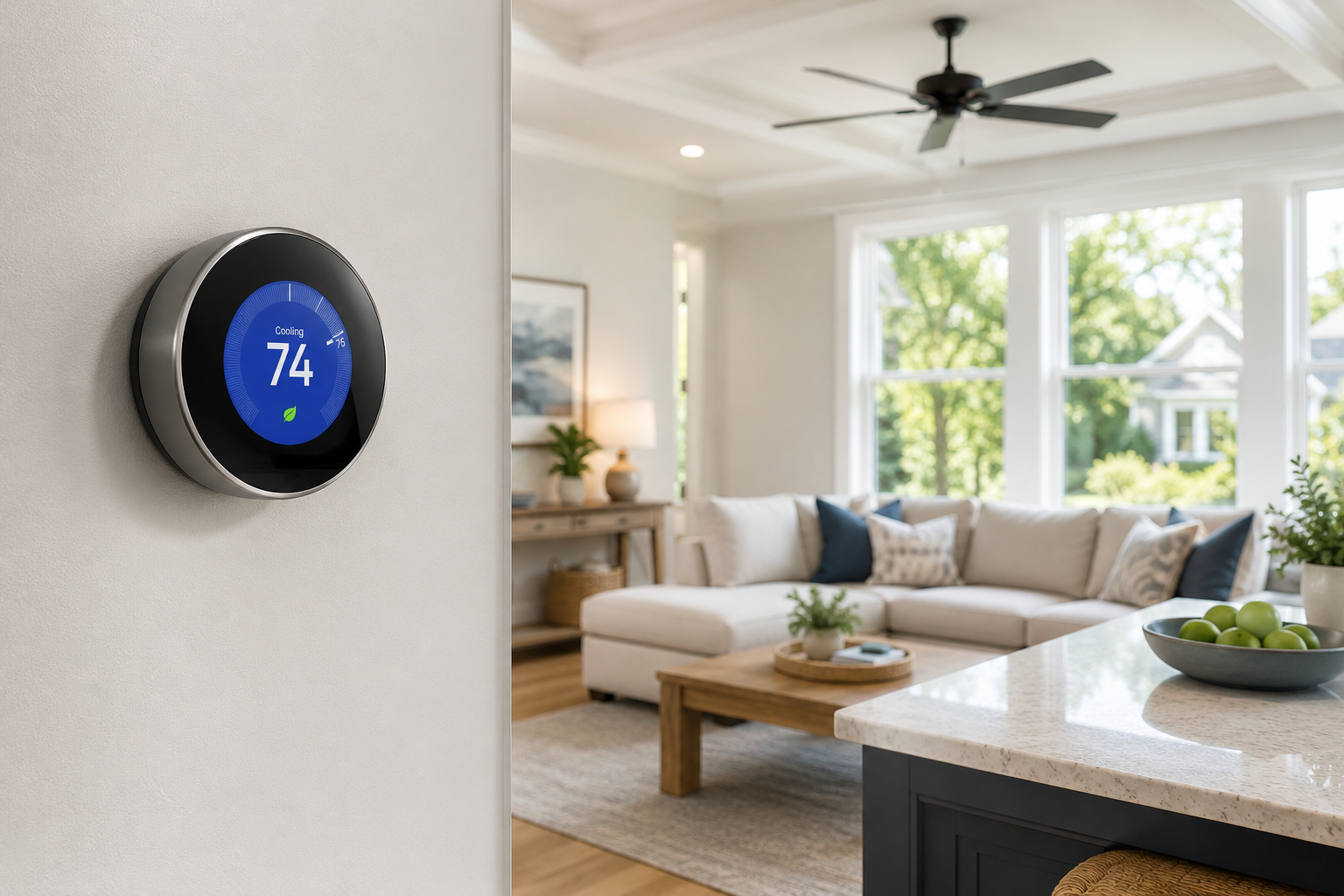
If you don’t have a smart thermostat, this is the upgrade that pays for itself fastest. Being able to set schedules, adjust from your phone, and let the system automatically raise the temperature when nobody’s home eliminates a huge amount of wasted cooling. A lot of people are surprised how much their bill drops in the first month after switching. We can talk through options when we’re out for any service visit; it’s one of those things that’s easy to add on and genuinely makes a difference.

Keep Up With the Filter

A clogged air filter is one of the most common and easily preventable reasons an AC system runs longer and harder than it needs to. When airflow is restricted, the system struggles to move conditioned air through the house efficiently, which means longer run times and higher bills for the same amount of cooling.


During summer in the Triangle, especially with the pollen and dust we deal with, filters can load up faster than people expect. Checking it monthly and replacing it when it’s visibly dirty—rather than on a fixed schedule regardless of condition—is the right approach. A clean filter costs a few dollars. The energy waste from a dirty one over a full summer is considerably more than that.

Think About Where Heat Is Getting In

Your AC can only do so much if the house is constantly absorbing heat from outside. A few things that make a bigger difference than most people realize:


Direct sunlight through windows is a major heat source during the day, especially on south and west-facing exposures in the afternoon. Keeping blinds or curtains closed on those windows during peak sun hours reduces the cooling load on your system meaningfully. It’s not glamorous advice, but it works.


Attic insulation matters more than most homeowners think. In a hot summer, an underinsulated attic can reach 150 degrees or more, and that heat radiates down through the ceiling into your living space. If your home is older and the attic hasn’t been looked at in a while, it’s worth checking. Better insulation reduces how hard your AC has to work every single day for the life of the system.


Heat-generating appliances during the hottest part of the day also add up. Running the oven, dishwasher, or dryer in the afternoon pumps heat directly into the house at exactly the wrong time. Shifting those to morning or evening is a simple habit that takes load off the system when it needs the help most.

Get the System Tuned Up

A well-maintained system runs more efficiently than a neglected one, full stop. Over time, coils get dirty, refrigerant levels drift, electrical connections loosen, and the system starts working harder than it should to produce the same amount of cooling. That extra effort shows up on your energy bill.


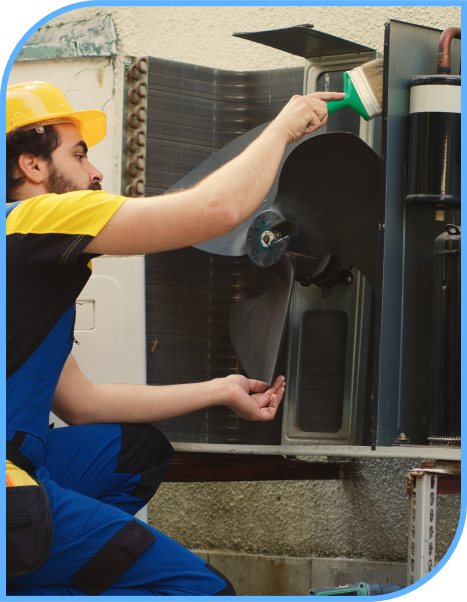
A professional tune-up addresses all of this. We clean the evaporator and condenser coils, check refrigerant charge, verify airflow, inspect electrical components, and make sure the system is operating the way it’s supposed to. The efficiency gains from a well-maintained system versus one that’s been running without service for a couple of years are real and measurable. If you haven’t had it serviced this season, it’s not too late. Take a look at what our preventative maintenance visits include for the specifics.

Check Your Ductwork

This one doesn’t come up enough in conversations about energy efficiency, but leaky ducts are a significant source of wasted cooling in a lot of Triangle homes. If your ducts run through an unconditioned attic and they’re leaking, you’re paying to cool air that never makes it into your living space. Studies consistently put duct leakage losses in the range of 20 to 30 percent in homes with older duct systems.


If certain rooms in your house are consistently harder to cool than others, or if your bills seem higher than they should be for the size of your home, ductwork is worth investigating. Sealing and insulating ducts properly can make a noticeable difference in both comfort and monthly costs.

Know When the System Itself Is the Problem

Sometimes the honest answer is that the system is old enough and inefficient enough that no amount of behavioral changes will get your bills where you want them. HVAC systems lose efficiency gradually over their lifespan, and a 15-year-old unit running at significantly reduced efficiency can cost substantially more to operate than a modern replacement, even before accounting for repair costs.


Current systems rated at 16 SEER2 or above are meaningfully more efficient than what most homes had installed a decade ago. If your system is aging and your summer bills keep climbing despite doing everything right, it’s worth having a conversation about whether a replacement pencils out financially. We’re not going to push you toward a new system if your current one has more life in it, but we’ll give you a straight answer either way. Check out our cooling services page for more on what replacement involves, or get in touch here to set up a visit.

Frequently Asked Questions

What temperature should I set my thermostat to in summer to save energy?

The Department of Energy recommends 78 degrees when you’re home and higher when you’re away. Every degree above your normal set point saves roughly 3 percent on cooling costs. Ceiling fans help a lot with comfort at higher thermostat settings since they make the air feel cooler without using nearly as much energy as the AC.

How much can a dirty air filter affect my energy bill?

More than most people expect. A clogged filter restricts airflow through the system, which forces it to run longer to achieve the same amount of cooling. In summer, when the system is already running hard, that inefficiency compounds quickly. Checking your filter monthly during peak cooling season is one of the easiest and cheapest things you can do to keep bills in check.

Does a smart thermostat actually save money?

For most households, yes. The savings come from eliminating the wasted cooling that happens when nobody’s home, building in setback schedules automatically, and giving you visibility into how the system is running. Most homeowners recoup the cost of a smart thermostat within the first cooling season, sometimes sooner.

How do I know if my AC system is running inefficiently?

A few signs: your bills are climbing year over year without obvious changes in usage, the system runs constantly without keeping up, certain rooms are much harder to cool than others, or the equipment is more than 12 to 15 years old. If any of those apply, it’s worth having someone come take a look rather than just paying higher bills indefinitely.

Why Your House Feels Humid Even With the AC Running

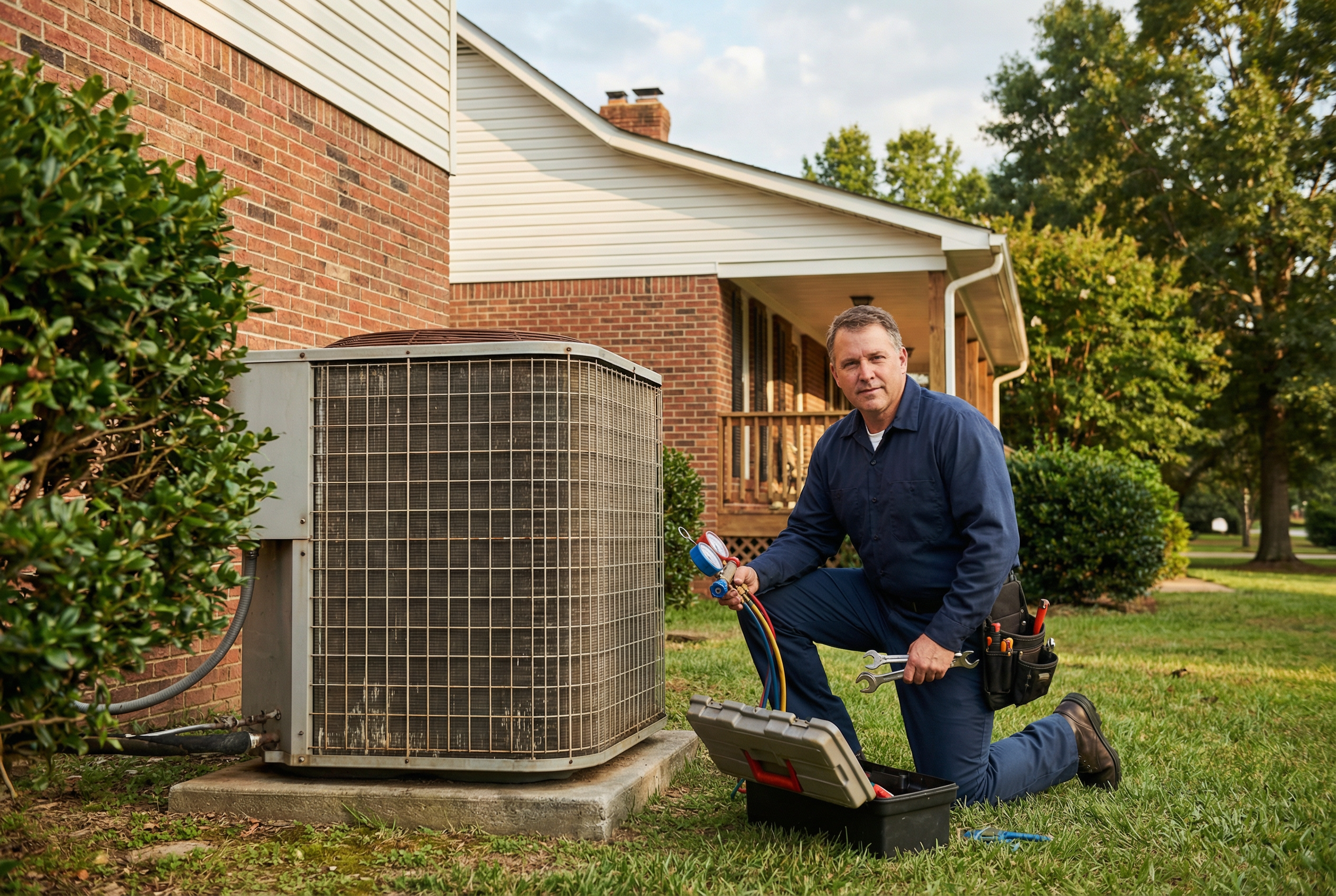
We get calls about this pretty regularly in the summer. The AC is running, the thermostat reads 73 or 74 degrees, and the homeowner still feels like they’re walking through soup. If your house feels humid with the AC on, there’s a real reason for it. It’s not just the weather and it’s not in your head.

Air conditioning does two things at once. It cools the air and it pulls moisture out of it. Most people only think about the first part, but honestly the second part is just as important for comfort, especially in North Carolina. When a system is working right, you don’t notice the humidity side of things. When something’s off, you absolutely do.

Here are the most common causes we see when we go out on calls like this.

The System Might Be Too Big for the House

That sounds backwards. Bigger should be better, right? But an oversized AC is one of the most common reasons a house feels humid with the AC on, and it trips people up every time.

Here’s the thing: moisture removal happens while the system is running. Warm, humid air passes over the evaporator coil, the moisture condenses on that coil, and drains away. That process needs time, usually a good 10 to 15 minutes of sustained runtime to actually make a dent in the humidity. An oversized system cools the air so fast that it hits your set temperature in five or six minutes and shuts off. The house cools down, but the air is still loaded with moisture.

This is called short cycling, and it’s a humidity problem as much as anything else. If your system seems to kick on and off constantly and your home always feels sticky even though the temperature is fine, oversizing is worth looking into. It’s not a quick fix since properly sizing a system means replacing it, but at least you’d know what you’re dealing with.

A Dirty Evaporator Coil Is a Really Common Culprit

The evaporator coil is the component inside your air handler where the actual moisture removal happens. When it gets coated in dust and grime over time, it can’t do that job as well. The system still runs and air still moves through the house, but the coil’s ability to condense moisture out of the air drops off.

The frustrating part is that it happens gradually, so it’s easy to miss. The house gets a little more humid each summer and you just kind of adjust to it. By the time it’s noticeably bad, you’ve forgotten what the system felt like when it was clean.

This is a big part of why annual maintenance matters beyond just checking the system. When we do a tune-up we’re cleaning that coil, clearing the condensate drain, and making sure everything involved in moisture removal is working the way it should. If you haven’t had the system serviced in a while, that’s honestly the first place we’d start. Take a look at what our preventative maintenance visits include if you want to know more about what that actually involves.

Low Refrigerant Affects Humidity Too, Not Just Cooling

When a system is low on refrigerant, usually from a slow leak somewhere, the evaporator coil gets colder than it should and can actually freeze over. A frozen coil does nothing for humidity, and as it thaws the water overflow can cause its own problems. Even before it gets to that point, low refrigerant reduces how effectively the coil handles moisture.

If you’re seeing ice on the refrigerant lines or the indoor unit, or if the system is running constantly but not cooling well, refrigerant could be the issue. This one needs a licensed technician. You can’t just add refrigerant and call it a day because the leak has to be found and repaired first, otherwise you’re just buying time.

Your Home Might Be Introducing More Moisture Than You Realize

Sometimes the AC is actually doing its job and the problem is the sheer volume of moisture coming into the house. We see this a lot in older homes around the Triangle.

North Carolina already throws a lot at us. We get 46 inches of rain per year, summer dewpoints that sit in the upper 60s for months at a time, and a lot of older housing stock that doesn’t seal particularly well. Add in a crawlspace without a proper vapor barrier, a bathroom exhaust fan that vents into the attic instead of outside, or a dryer duct that’s come loose somewhere, and you can have moisture pouring into the house faster than any AC system is designed to handle.

If the system checks out fine mechanically but the house still feels muggy, it’s worth walking through the home with an eye toward where that moisture is actually coming from. Crawlspace encapsulation alone makes a dramatic difference in a lot of Raleigh-area homes.

Leaky Ducts Can Work Against You in Summer

Duct leakage gets talked about mostly as an energy efficiency issue, but in a humid climate it’s a comfort issue too. If your return ducts run through an unconditioned attic or crawlspace and they’re leaking, they can pull hot, humid outside air directly into the system before it even reaches the evaporator coil. Now you’re fighting a constant influx of moisture the system wasn’t sized to handle.

We see this in a lot of homes that were built before tighter duct standards became common. If the house has always been a little muggy in summer and you’ve never had the ductwork looked at, that’s worth putting on the list.

When a Whole-Home Dehumidifier Is the Right Answer

If the system is properly sized, maintenance is current, the ducts are in decent shape, and the house is still humid, a dedicated whole-home dehumidifier is something we’d bring up. These units install inline with your existing HVAC system and run independently of the AC to hold the house at a target humidity level, usually somewhere between 45 and 55 percent. In a climate like ours they can make a real difference, especially for families dealing with allergies or anyone who just wants the house to actually feel comfortable in July.

They’re not a substitute for a well-functioning AC, but as a complement to one they work really well. You can check out our cooling services page for more on comfort solutions we offer.

Bottom Line

A house that feels humid with the AC on is almost always fixable. It might be a maintenance issue, a sizing problem, a moisture source nobody has addressed, or leaky ductwork, but there’s usually a clear reason once someone actually looks at the whole picture. You shouldn’t have to just live with it.

If you’re in Garner, Raleigh, or anywhere else in the Triangle and you’re tired of your house feeling muggy all summer, give us a call. We’ve been working on homes in this area for over 30 years and we’re happy to come take a look. Reach out here to get something scheduled.

Frequently Asked Questions

What humidity level should my home be at with the AC running?

Somewhere between 45 and 55 percent relative humidity is the sweet spot for most people. Above 60 percent starts to feel noticeably muggy, and it also creates conditions where mold and dust mites do well. A cheap digital hygrometer from any hardware store will tell you exactly where you’re sitting.

Can an AC unit actually be too big for a house?

Yes, and it’s more common than most people expect. An oversized system cools the air too fast, short cycles, and never runs long enough to remove humidity properly. The house hits the target temperature but still feels uncomfortable. Getting sizing right requires a Manual J load calculation, not just matching whatever was there before.

Does annual maintenance actually help with humidity problems?

It can, yes. A proper tune-up includes cleaning the evaporator coil, checking refrigerant levels, and clearing the condensate drain line, all things that directly affect how well the system removes moisture from the air. If the humidity problem is relatively new, a maintenance visit is a reasonable first step before assuming the system needs to be replaced.

How often should I be changing my air filter?

A clogged filter restricts airflow across the evaporator coil, which hurts the system’s ability to remove moisture. For most homes in the Triangle, checking it monthly and replacing it every one to three months is a good baseline. During pollen season you might be doing it more often. Thicker media filters can go longer, just follow what the manufacturer recommends.

AC Maintenance Raleigh NC: Seasonal HVAC Tips for Homeowners

North Carolina summers are long, humid, and demanding on your cooling system. Staying ahead of breakdowns starts with consistent AC maintenance Raleigh NC homeowners can rely on to keep their systems running efficiently when temperatures climb.


Most air conditioning problems develop gradually. Dust buildup, restricted airflow, and worn components often go unnoticed until the system struggles to keep up. Taking a seasonal approach to maintenance helps prevent those issues from turning into costly repairs during peak summer heat.

AC Maintenance in Raleigh, NC

In the Raleigh area, air conditioning systems run harder and longer than in many other parts of the country. High humidity levels, heavy pollen in the spring, and extended cooling seasons all contribute to additional strain on your equipment.


Routine maintenance helps your system operate more efficiently by keeping airflow consistent, ensuring electrical components function properly, and preventing unnecessary wear. It also reduces the likelihood of sudden breakdowns during the hottest days of the year.


For a closer look at professional service options, you can visit Bowman’s air conditioning services.

What to Check Before Cooling Season Begins

Spring is the ideal time to prepare your system before temperatures rise. Replacing your air filter is one of the simplest and most effective steps you can take. A clean filter allows proper airflow and reduces strain on the system.


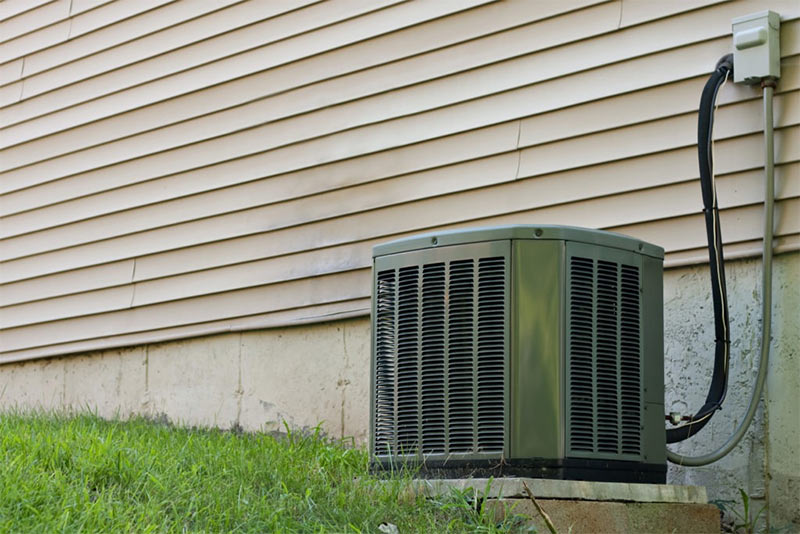
It is also important to inspect the outdoor unit. Leaves, pollen, and debris can collect around it during the winter months. Clearing that space allows the unit to function more efficiently once it is back in regular use.


Testing your thermostat early in the season ensures your system responds properly when you need it most. If temperatures do not match your settings, it may point to a calibration or electrical issue.

Keeping Your System Efficient During Summer

Once your air conditioner is running daily, consistency becomes key. Changing your air filter every one to three months helps maintain proper airflow and indoor air quality. Homes with pets or higher dust levels may need more frequent changes.


Pay attention to how your system sounds and performs. Weak airflow, warm air coming from vents, or frequent cycling can all signal underlying issues. Addressing those signs early can prevent a complete system failure during peak demand.


Maintaining clear space around your outdoor unit is equally important during the summer. Grass clippings and debris can restrict airflow and reduce efficiency if left unchecked.

Post-Season Maintenance and System Health

As temperatures begin to cool, fall is a good time to evaluate how your system performed over the summer. If you noticed any performance issues, even minor ones, they are worth addressing before the next cooling season.


Replacing your air filter again and clearing away leaves from the outdoor unit helps keep your system in good condition year-round. It also prepares your home for a smooth transition into heating season.


If your system is aging or struggling, exploring options like heat pump systems may provide more efficient long-term solutions.

When Professional Maintenance Makes a Difference

While homeowners can handle basic upkeep, professional maintenance provides a more thorough inspection. Technicians can check refrigerant levels, inspect electrical connections, and identify early signs of component failure that are not visible from the outside.


According to the U.S. Department of Energy, regular maintenance is one of the most effective ways to improve system efficiency and extend equipment lifespan.


Scheduling service at least once a year ensures your system is prepared for the demands of a North Carolina summer and helps reduce the risk of unexpected repairs.

Stay Ahead of HVAC Problems in Raleigh

Consistent AC maintenance Raleigh NC homeowners schedule each year is one of the simplest ways to protect comfort and avoid unnecessary costs. A well-maintained system runs more efficiently, lasts longer, and performs more reliably when you need it most.


If your system has not been inspected recently, now is a good time to schedule service. You can request an appointment directly through Bowman Heating & Cooling and make sure your system is ready for the next stretch of hot weather.

Frequently Asked Questions

How often should AC maintenance be done in Raleigh NC?

Most systems should be professionally serviced once per year, ideally in the spring before heavy use begins.

What happens if I skip AC maintenance?

Skipping maintenance can lead to reduced efficiency, higher energy bills, and an increased risk of system failure during peak summer months.

Can I do AC maintenance myself?

Homeowners can handle basic tasks like changing filters and clearing debris, but professional inspections are important for identifying deeper issues.

Does AC maintenance really lower energy bills?

Yes. A clean and properly functioning system uses less energy to cool your home, which can reduce monthly utility costs.

Spring HVAC Maintenance Checklist for Raleigh Homeowners

As winter fades and temperatures begin to climb in the Raleigh area, it’s a good time to make sure your HVAC system is ready for the months ahead. Spring is often when homeowners first start using their air conditioning again, and a little preventative maintenance now can help avoid problems when the summer heat arrives.


Seasonal HVAC maintenance helps your system run more efficiently, reduces the chance of unexpected breakdowns, and can even extend the lifespan of your equipment. Before the first really warm day arrives, it’s worth taking a few minutes to run through a basic spring maintenance checklist.

Replace Your Air Filter

Air filters collect dust, pollen, and other airborne particles as your HVAC system runs. Over time, these filters become clogged and restrict airflow, which forces the system to work harder than necessary.


Spring is an especially important time to change your filter because pollen levels rise quickly in North Carolina. A clean filter improves airflow, helps protect indoor air quality, and allows your system to cool your home more effectively.


Most homes benefit from replacing the air filter every one to three months depending on usage and household conditions.

Clear Debris Around the Outdoor Unit

Your outdoor condenser unit needs adequate airflow to release heat from your home. During the fall and winter, leaves, sticks, and other debris can accumulate around the unit and restrict airflow.


Take a moment to inspect the area around the condenser and remove anything that might be blocking the unit. It’s generally recommended to keep at least two feet of clear space around the equipment so it can operate efficiently.

Check Your Thermostat

Your thermostat controls when your HVAC system runs, so it’s important to make sure it’s working properly before the cooling season begins.


Switch the thermostat from heating to cooling mode and verify that the system responds correctly. If your thermostat uses batteries, replacing them at the start of spring can help prevent issues later in the season.


Homeowners who are looking to improve efficiency may also consider upgrading to a programmable or smart thermostat.

Inspect Vents and Registers

Walk through your home and check that vents and registers are open and unobstructed. Furniture, rugs, or other household items can sometimes block airflow without homeowners realizing it.


Proper airflow allows the HVAC system to distribute cooled air evenly throughout the home. If certain rooms tend to feel warmer than others, blocked vents are often part of the problem.

Look for Signs of Trouble

Before heavy summer usage begins, it’s a good idea to pay attention to any unusual signs coming from your system.

  • • Weak airflow from vents
  • • Strange noises when the system runs
  • • Unusual odors when the air conditioner starts
  • • Higher than normal energy bills
  • • Rooms that cool unevenly


These symptoms don’t always indicate a major problem, but they can signal that your system would benefit from professional inspection or service.

Schedule a Professional HVAC Tune-Up

While homeowners can handle basic maintenance tasks, a professional HVAC inspection provides a more thorough evaluation of the system. During a spring tune-up, technicians typically check refrigerant levels, inspect electrical components, clean coils, and ensure that all parts of the system are operating safely and efficiently.


Preventative maintenance often catches small issues before they turn into expensive repairs. It also helps ensure your air conditioner is ready to handle the hot and humid North Carolina summer.

Preparing for the Cooling Season

Taking care of your HVAC system in early spring can make a noticeable difference once temperatures begin to rise. Clean filters, clear airflow, and a properly functioning system all contribute to better comfort and lower energy costs.


If you would like help preparing your system for the warmer months, the team at Bowman Heating & Cooling provides professional HVAC maintenance and service throughout the Raleigh area. A seasonal inspection can help ensure your home stays comfortable all summer long.


Contact us: https://coolwithbowman.com/contact-us/

Save on Energy Bills: Bowman’s Expert Guide to HVAC Preventative Maintenance in Raleigh, NC

If you’re tired of skyrocketing energy bills, the solution might be simpler than you think. Regular HVAC preventative maintenance in Raleigh, NC, can drastically improve your system’s performance while saving you hundreds on energy costs each year. At Bowman Heating and Cooling, we specialize in keeping your HVAC systems running efficiently year-round.

Why Preventive HVAC Maintenance Matters

Your HVAC system is like the heart of your home, working hard behind the scenes to keep you comfortable. But without proper maintenance, it can become inefficient, overworked, and expensive to operate. Preventative care helps your unit:

  • Lower energy usage 
  • Extend system lifespan 
  • Reduce costly emergency repairs 
  • Improve indoor air quality 

At Bowman Heating and Cooling, we recommend bi-annual tune-ups: one before summer and one before winter. This ensures your system runs smoothly during Raleigh’s hottest and coldest months.

What’s Included in Bowman’s HVAC Maintenance Service?

Our expert technicians follow a comprehensive HVAC maintenance checklist to catch issues before they become big problems. When you schedule HVAC preventative maintenance in Raleigh, NC with Bowman Heating and Cooling, you’ll receive:

  • Thermostat calibration 
  • Air filter inspection and replacement 
  • Coil and blower cleaning 
  • Refrigerant level checks 
  • Electrical component testing 
  • System safety checks 

These services are all designed to maximize efficiency, keep your energy bills in check, and help avoid unexpected system breakdowns.

Energy-Saving Benefits for Raleigh Homeowners

Routine maintenance from Bowman Heating and Cooling can help your HVAC system run up to 30% more efficiently, according to ENERGY STAR. This translates into real savings on monthly utility bills and greater peace of mind for homeowners in Raleigh, NC.

You’ll also reduce your home’s carbon footprint—helping the environment while saving money.

Why Choose Bowman Heating and Cooling?

With decades of HVAC experience in the Triangle area, Bowman Heating and Cooling is Raleigh’s trusted name for reliable, honest service. We treat every home like our own and take the time to explain what your system needs and why.

When you choose us for HVAC preventative maintenance in Raleigh, NC, you’re not just getting a tune-up—you’re investing in long-term comfort and savings.

Schedule Your HVAC Maintenance Today

Don’t wait for high energy bills or system breakdowns. Contact Bowman Heating and Cooling today to schedule your expert HVAC preventative maintenance in Raleigh, NC. Let us help you save money, boost efficiency, and enjoy year-round comfort in your home.

 Visit Our Website or call now to book your appointment!

Stay Cool with Bowman’s HVAC Services

When the summer heat strikes or winter temperatures dip, the last thing any homeowner wants is an HVAC system that fails. That’s why more and more residents are turning to Bowman Heating & Cooling for reliable Raleigh HVAC preventative maintenance. Regular upkeep not only keeps your system running smoothly but also extends its life, reduces energy bills, and prevents costly emergency repairs.

The Importance of Preventative HVAC Maintenance

Living in North Carolina means experiencing both humid summers and chilly winters. Your HVAC system works hard year-round—so why not return the favor? Raleigh HVAC preventative maintenance is essential to ensure that your heating and cooling systems are ready for every season. Routine check-ups identify small issues before they become big problems, keeping your home comfortable and your wallet intact.

Why Choose Bowman Heating & Cooling?

Homeowners across Raleigh trust Bowman Heating & Cooling for one simple reason: experience you can count on. With years of dedicated service in the Triangle area, we’ve built a reputation for top-notch service, transparent pricing, and expert technicians who care. Here’s what sets us apart:

  • Thorough Inspections: We check everything—filters, refrigerant levels, electrical connections, and more. 
  • Seasonal Tune-Ups: Optimize your system before the weather changes. 
  • Custom Maintenance Plans: Designed to fit your home’s unique needs and budget. 
  • Fast, Friendly Service: Our team is local, responsive, and always professional. 

Benefits of Regular Maintenance with Bowman Heating & Cooling

  1. Fewer Repairs – Catch issues early before they turn into expensive breakdowns. 
  2. Longer System Life – Protect your investment with regular service. 
  3. Better Air Quality – Cleaner filters and coils mean healthier indoor air. 
  4. Peace of Mind – You’ll always know your system is ready when you need it. 

Ready to Schedule Your Service?

Don’t wait for your HVAC system to break down in the middle of a heatwave. Trust Bowman Heating & Cooling—the name Raleigh homeowners rely on for expert Raleigh HVAC preventative maintenance. Contact us today to schedule your seasonal tune-up and experience the difference proactive care can make.