🛠 NOW OFFERING PLUMBING SERVICES — CALL (919) 772-2759 🛠 NOW OFFERING PLUMBING SERVICES — CALL (919) 772-2759 🛠 NOW OFFERING PLUMBING SERVICES — CALL (919) 772-2759

How to Improve Indoor Air Quality During Wildfire Smoke

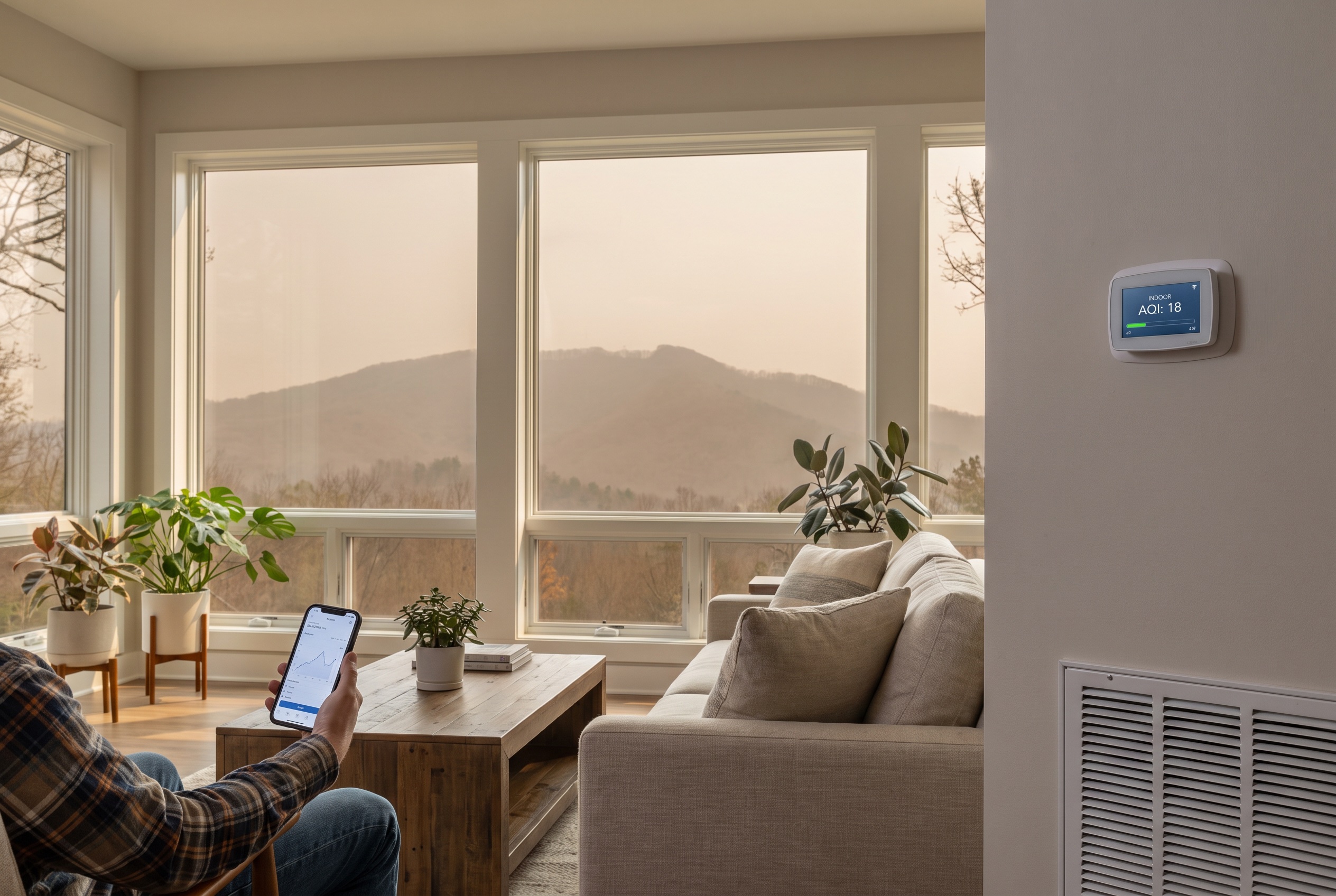
Wildfire smoke does not have to originate nearby to affect the air around your home. Smoke from wildfires—like the current ones in Canada—can travel hundreds of miles, creating hazy skies and elevated particle pollution across North Carolina and other parts of the East Coast.


That does not necessarily mean the air inside your house is protected. Fine particles can enter through open doors and windows, gaps in the building, ventilation systems, and other pathways. Fortunately, your heating and cooling system may be able to help improve wildfire smoke indoor air quality when it is operated and maintained correctly.


During the current smoke event, conditions around Raleigh have generally been less severe than in some areas farther north, but air quality can change as smoke plumes and weather patterns shift. Homeowners can check current conditions using the AirNow Fire and Smoke Map before deciding how aggressively to limit outdoor air exposure.

How Wildfire Smoke Affects Indoor Air Quality

Wildfire smoke contains a mixture of gases and very small particles. One of the primary concerns is PM2.5, particulate matter measuring 2.5 micrometers across or smaller. These particles are tiny enough to remain suspended in the air and travel deep into buildings.


A closed house can reduce exposure, but it is not airtight. Smoke can enter when doors open, through leaks around windows, and through mechanical ventilation that brings outdoor air inside. Once particles are indoors, everyday activities and air movement can keep them circulating.


Your HVAC system can help capture some of those particles as indoor air passes through its filter. The results depend on the type and condition of the filter, how often the air circulates, and whether the system is bringing in additional outdoor air.

Set the HVAC System to Recirculate Indoor Air

If your HVAC system or thermostat has a setting that controls outdoor-air intake, switch it to recirculate during smoky conditions. Recirculation keeps more of the existing indoor air moving through the system instead of continuously drawing smoky outdoor air into the house.


Not every residential system has an obvious fresh-air control, and the correct setting can vary by equipment. Some homes also have dedicated ventilation systems that operate separately from the main thermostat. When the controls are unclear, an HVAC technician can identify whether your system has an outdoor-air intake and explain how it should be managed.


The U.S. Environmental Protection Agency recommends closing fresh-air intakes or using recirculation mode when possible during wildfire smoke events. It also recommends making sure the HVAC filter fits securely so air does not simply pass around it. EPA’s wildfire and indoor air quality guidance provides additional steps for reducing smoke exposure inside a home.

Use the Right HVAC Filter for Wildfire Smoke

Filter efficiency is important because basic filters are often designed primarily to protect HVAC equipment from larger dust and debris. They may not capture the smaller particles found in smoke as effectively as a higher-efficiency filter.


EPA guidance recommends considering a filter rated MERV 13 or higher when the HVAC system can accommodate it. A higher MERV rating generally indicates that the filter can capture smaller particles more effectively. During smoky conditions, this can make the HVAC system more useful as a whole-house filtration tool.


However, the densest filter on the shelf is not automatically the right filter for every system. A filter that creates too much resistance can reduce airflow and place extra strain on the blower. Filter size, thickness, duct design, equipment specifications, and existing airflow all affect what the system can safely handle.


Bowman Heating, Cooling, & Plumbing can assess filtration and other healthy air options without treating every home as though it has the same equipment or indoor air quality needs.

Run the HVAC Fan More Often

A filter only captures particles while air is passing through it. During a smoke event, setting the thermostat fan from “Auto” to “On” can increase air circulation through the filter and help remove more suspended particles from the indoor air.


EPA guidance recommends operating the fan as often as possible when using a high-efficiency HVAC filter to create cleaner indoor air. This strategy works best when the filter is compatible with the equipment and the system has adequate airflow.


Running the fan continuously also means the filter may collect debris more quickly. Check it regularly rather than assuming the normal replacement schedule still applies. A filter that has become heavily loaded with smoke and dust can restrict airflow and lose effectiveness.

Check and Replace the Filter More Frequently

Wildfire smoke can place an unusual load on HVAC filters. Even a relatively new filter may become dirty faster than it would under ordinary summer conditions.


Inspect the filter during and after a prolonged smoke event. Replace it when it becomes visibly dirty or according to the equipment and filter manufacturer’s instructions. Make sure the replacement is installed in the correct direction and fits snugly in the slot.


Regular filter checks are also part of sound seasonal HVAC care. Bowman’s guide to AC maintenance for Raleigh homes explains how airflow, filtration, and routine service affect cooling performance during the summer.

Keep Windows, Doors, and Exhaust Fans in Mind

Keeping windows and exterior doors closed is one of the simplest ways to limit smoke entry. This is especially important when the outdoor air smells smoky, visibility is reduced, or local PM2.5 readings are elevated.


Kitchen exhaust fans, bathroom fans, clothes dryers, and other equipment can create pressure differences that encourage outdoor air to enter through small leaks. You still need to use ventilation when cooking or controlling moisture, but avoiding unnecessary or prolonged exhaust-fan operation may help reduce infiltration during the worst smoke periods.


Central air conditioning can keep the home comfortable while the windows remain closed. Before asking the system to run for extended periods, make sure the filter is clean and the equipment is working properly. Bowman’s preventative maintenance services can help identify airflow and performance problems before they become mid-summer breakdowns.

Consider a Portable Air Cleaner for Key Rooms

Central HVAC filtration can serve much of the house, but a portable air cleaner can provide additional filtration in a bedroom, living area, or designated cleaner-air room. Look for a unit with a true HEPA filter that is appropriately sized for the room where it will operate.


Place the cleaner where airflow is not blocked by furniture or curtains, and run it continuously when smoke levels are elevated. Avoid air-cleaning devices that intentionally generate ozone, since ozone is itself a lung irritant.


A portable unit does not replace proper HVAC filtration or stop smoke from entering the building, but it can add another layer of particle removal in the spaces where household members spend the most time.

Do Air Purifiers, UV Lights, and Other IAQ Products Remove Smoke?

Indoor air quality products solve different problems, so it helps to distinguish between them. Particle filtration is the main tool for reducing the fine particles associated with wildfire smoke. Higher-efficiency HVAC filters and portable HEPA air cleaners are designed for that job.


UV lights are generally used to address biological growth on HVAC components rather than airborne smoke particles. Humidity-control equipment can improve comfort and help manage moisture, but it does not function as a smoke filter. Some whole-home air-cleaning systems combine multiple technologies, though their effectiveness depends on design, installation, airflow, and maintenance.


The right solution begins with understanding what is in the air and how the existing HVAC system operates. Loading a system with add-ons that do not address the actual problem is an expensive way to decorate the ductwork.

Know When Outdoor Conditions Have Improved

Smoke conditions can change from one hour to the next. A hazy sky does not always correspond perfectly with ground-level particle concentrations, and clearer-looking skies do not guarantee that the air has returned to normal.


Use the Air Quality Index and local PM2.5 readings rather than visibility alone. AirNow reports current air-quality information and explains what the different AQI categories mean for the general public and people who may be more sensitive to pollution.


Once outdoor conditions improve, homeowners can return ventilation and thermostat settings to their normal configuration. Continue checking the HVAC filter for a few days, since particles collected during the event may have shortened its useful life.

Improve Indoor Air Quality Before the Next Smoke Event

Wildfire smoke may be an occasional problem in Raleigh rather than a daily one, but it highlights the importance of filtration, airflow, and a properly maintained HVAC system. The same improvements that help during smoke events can also reduce ordinary dust, pollen, and other airborne particles throughout the year.


Bowman Heating, Cooling, & Plumbing can evaluate your current filtration setup, confirm what filter efficiency the equipment can support, and recommend indoor air quality improvements suited to your home. To discuss your system or schedule an assessment, contact the Bowman team.

Frequently Asked Questions

Can wildfire smoke get inside a closed house?

Yes. Smoke particles can enter through doors, windows, building leaks, ventilation systems, and other openings even when the house is closed.

What HVAC filter is best for wildfire smoke?

EPA recommends considering a MERV 13 or higher filter when the HVAC system can safely accommodate it. An HVAC professional can help determine the appropriate efficiency and filter design for your equipment.

Should I leave my HVAC fan on during wildfire smoke?

Running the fan more frequently can move more indoor air through the filter. This may improve particle removal, provided the system has a compatible, clean filter and adequate airflow.

Should I turn off my air conditioner when it is smoky outside?

Usually, you can continue using central air conditioning while keeping windows and doors closed. Use recirculation mode and close outdoor-air intakes when possible so the system is not deliberately drawing smoky air indoors.

Will a UV light remove wildfire smoke?

UV lights are not designed to capture smoke particles. Effective particle filtration, such as a compatible high-efficiency HVAC filter or portable HEPA cleaner, is more relevant during wildfire smoke events.

Why Your House Feels Humid Even With the AC Running

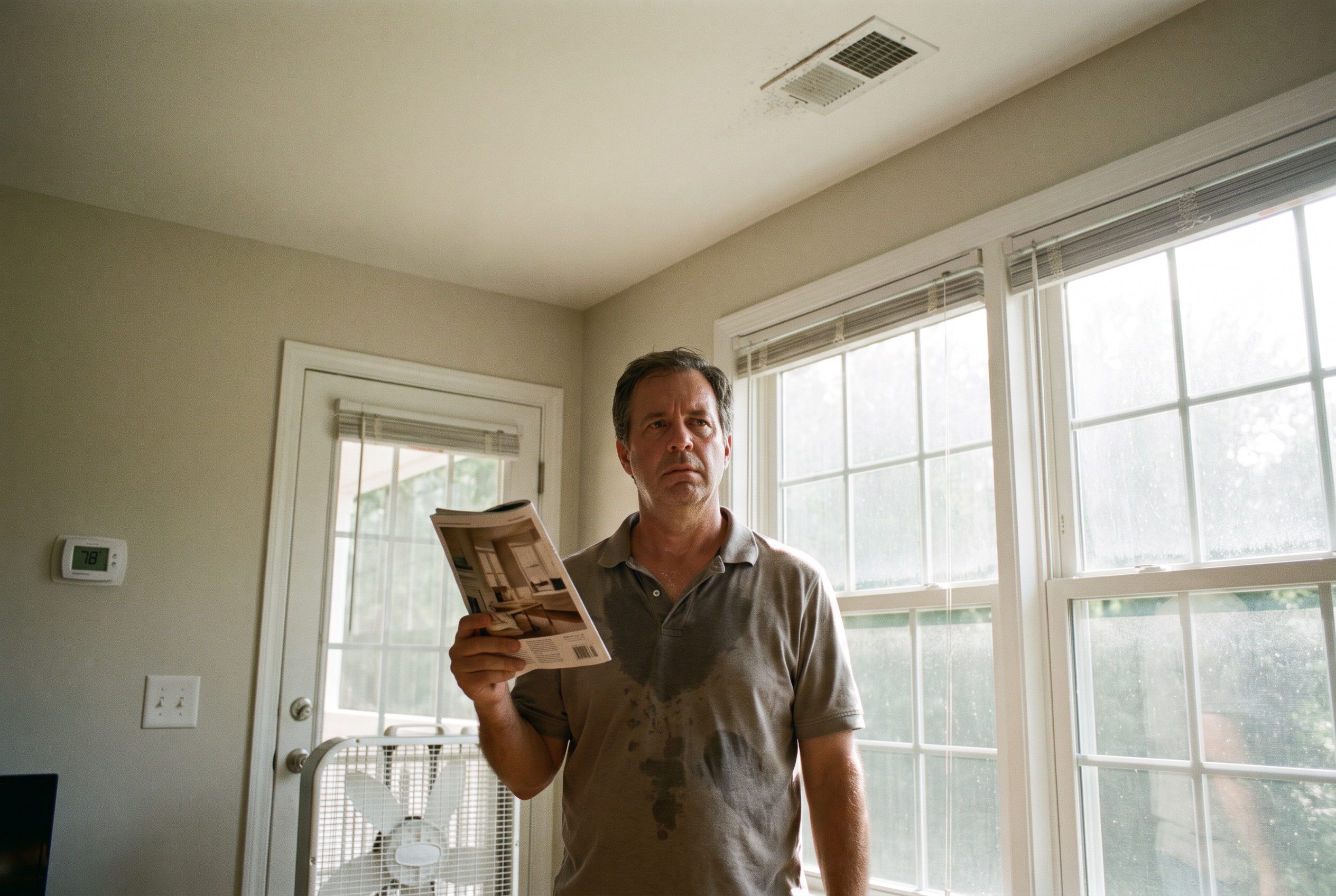
We get calls about this pretty regularly in the summer. The AC is running, the thermostat reads 73 or 74 degrees, and the homeowner still feels like they’re walking through soup. If your house feels humid with the AC on, there’s a real reason for it. It’s not just the weather and it’s not in your head.

Air conditioning does two things at once. It cools the air and it pulls moisture out of it. Most people only think about the first part, but honestly the second part is just as important for comfort, especially in North Carolina. When a system is working right, you don’t notice the humidity side of things. When something’s off, you absolutely do.

Here are the most common causes we see when we go out on calls like this.

The System Might Be Too Big for the House

That sounds backwards. Bigger should be better, right? But an oversized AC is one of the most common reasons a house feels humid with the AC on, and it trips people up every time.

Here’s the thing: moisture removal happens while the system is running. Warm, humid air passes over the evaporator coil, the moisture condenses on that coil, and drains away. That process needs time, usually a good 10 to 15 minutes of sustained runtime to actually make a dent in the humidity. An oversized system cools the air so fast that it hits your set temperature in five or six minutes and shuts off. The house cools down, but the air is still loaded with moisture.

This is called short cycling, and it’s a humidity problem as much as anything else. If your system seems to kick on and off constantly and your home always feels sticky even though the temperature is fine, oversizing is worth looking into. It’s not a quick fix since properly sizing a system means replacing it, but at least you’d know what you’re dealing with.

A Dirty Evaporator Coil Is a Really Common Culprit

The evaporator coil is the component inside your air handler where the actual moisture removal happens. When it gets coated in dust and grime over time, it can’t do that job as well. The system still runs and air still moves through the house, but the coil’s ability to condense moisture out of the air drops off.

The frustrating part is that it happens gradually, so it’s easy to miss. The house gets a little more humid each summer and you just kind of adjust to it. By the time it’s noticeably bad, you’ve forgotten what the system felt like when it was clean.

This is a big part of why annual maintenance matters beyond just checking the system. When we do a tune-up we’re cleaning that coil, clearing the condensate drain, and making sure everything involved in moisture removal is working the way it should. If you haven’t had the system serviced in a while, that’s honestly the first place we’d start. Take a look at what our preventative maintenance visits include if you want to know more about what that actually involves.

Low Refrigerant Affects Humidity Too, Not Just Cooling

When a system is low on refrigerant, usually from a slow leak somewhere, the evaporator coil gets colder than it should and can actually freeze over. A frozen coil does nothing for humidity, and as it thaws the water overflow can cause its own problems. Even before it gets to that point, low refrigerant reduces how effectively the coil handles moisture.

If you’re seeing ice on the refrigerant lines or the indoor unit, or if the system is running constantly but not cooling well, refrigerant could be the issue. This one needs a licensed technician. You can’t just add refrigerant and call it a day because the leak has to be found and repaired first, otherwise you’re just buying time.

Your Home Might Be Introducing More Moisture Than You Realize

Sometimes the AC is actually doing its job and the problem is the sheer volume of moisture coming into the house. We see this a lot in older homes around the Triangle.

North Carolina already throws a lot at us. We get 46 inches of rain per year, summer dewpoints that sit in the upper 60s for months at a time, and a lot of older housing stock that doesn’t seal particularly well. Add in a crawlspace without a proper vapor barrier, a bathroom exhaust fan that vents into the attic instead of outside, or a dryer duct that’s come loose somewhere, and you can have moisture pouring into the house faster than any AC system is designed to handle.

If the system checks out fine mechanically but the house still feels muggy, it’s worth walking through the home with an eye toward where that moisture is actually coming from. Crawlspace encapsulation alone makes a dramatic difference in a lot of Raleigh-area homes.

Leaky Ducts Can Work Against You in Summer

Duct leakage gets talked about mostly as an energy efficiency issue, but in a humid climate it’s a comfort issue too. If your return ducts run through an unconditioned attic or crawlspace and they’re leaking, they can pull hot, humid outside air directly into the system before it even reaches the evaporator coil. Now you’re fighting a constant influx of moisture the system wasn’t sized to handle.

We see this in a lot of homes that were built before tighter duct standards became common. If the house has always been a little muggy in summer and you’ve never had the ductwork looked at, that’s worth putting on the list.

When a Whole-Home Dehumidifier Is the Right Answer

If the system is properly sized, maintenance is current, the ducts are in decent shape, and the house is still humid, a dedicated whole-home dehumidifier is something we’d bring up. These units install inline with your existing HVAC system and run independently of the AC to hold the house at a target humidity level, usually somewhere between 45 and 55 percent. In a climate like ours they can make a real difference, especially for families dealing with allergies or anyone who just wants the house to actually feel comfortable in July.

They’re not a substitute for a well-functioning AC, but as a complement to one they work really well. You can check out our cooling services page for more on comfort solutions we offer.

Bottom Line

A house that feels humid with the AC on is almost always fixable. It might be a maintenance issue, a sizing problem, a moisture source nobody has addressed, or leaky ductwork, but there’s usually a clear reason once someone actually looks at the whole picture. You shouldn’t have to just live with it.

If you’re in Garner, Raleigh, or anywhere else in the Triangle and you’re tired of your house feeling muggy all summer, give us a call. We’ve been working on homes in this area for over 30 years and we’re happy to come take a look. Reach out here to get something scheduled.

Frequently Asked Questions

What humidity level should my home be at with the AC running?

Somewhere between 45 and 55 percent relative humidity is the sweet spot for most people. Above 60 percent starts to feel noticeably muggy, and it also creates conditions where mold and dust mites do well. A cheap digital hygrometer from any hardware store will tell you exactly where you’re sitting.

Can an AC unit actually be too big for a house?

Yes, and it’s more common than most people expect. An oversized system cools the air too fast, short cycles, and never runs long enough to remove humidity properly. The house hits the target temperature but still feels uncomfortable. Getting sizing right requires a Manual J load calculation, not just matching whatever was there before.

Does annual maintenance actually help with humidity problems?

It can, yes. A proper tune-up includes cleaning the evaporator coil, checking refrigerant levels, and clearing the condensate drain line, all things that directly affect how well the system removes moisture from the air. If the humidity problem is relatively new, a maintenance visit is a reasonable first step before assuming the system needs to be replaced.

How often should I be changing my air filter?

A clogged filter restricts airflow across the evaporator coil, which hurts the system’s ability to remove moisture. For most homes in the Triangle, checking it monthly and replacing it every one to three months is a good baseline. During pollen season you might be doing it more often. Thicker media filters can go longer, just follow what the manufacturer recommends.

The Importance of Indoor Air Quality & How HVAC Services Company Help

Most homeowners are quick to adjust the thermostat when it gets too hot or cold, but indoor air quality (IAQ)? That often gets overlooked—until allergy symptoms flare up or the house starts feeling stuffy. At Bowman Heating & Cooling, we believe your comfort goes beyond just temperature. It’s also about breathing clean, healthy air.

Let’s break down why indoor air quality matters and how a reliable HVAC services company (like us!) can make a big difference.

Why Indoor Air Quality Should Be a Priority

Your home should be a safe and relaxing space—but indoor air can sometimes be more polluted than the air outside. Surprising, right?

Common indoor pollutants include:

  • Dust and pet dander

  • Mold spores

  • Pollen

  • Chemical fumes from cleaning products or paints

  • Smoke and cooking fumes

If anyone in your home has allergies, asthma, or other respiratory issues, poor air quality can make things worse. Even if you’re generally healthy, breathing in pollutants over time can lead to headaches, fatigue, or even trouble sleeping.

That’s where a trusted HVAC services company like Bowman Heating & Cooling steps in to help.

How an HVAC Services Company Improves Your Indoor Air Quality

When you think of HVAC, you probably picture heating and cooling. But the truth is, a good HVAC system does a lot more. Here’s how our team at Bowman Heating & Cooling helps homeowners like you improve their air quality:

1. Filter Upgrades and Maintenance

But not all filters are created equal. We recommend high-efficiency filters that trap more dust, allergens, and tiny particles. As a full-service HVAC services company, we help you choose the right filter and make sure it’s changed on schedule.

2. Ductwork Cleaning

When your system runs, all that gunk gets circulated through your home. Our duct cleaning services clear out contaminants and help your HVAC system run more efficiently too.

3. Humidity Control

Too much humidity? You could be inviting mold and dust mites. Too little? Dry air can irritate your skin, eyes, and throat. We install and maintain whole-home humidifiers and dehumidifiers to keep your indoor air balanced.

4. Air Purifiers & UV Lights

We offer advanced solutions like air purification systems and UV lights that kill bacteria, viruses, and mold. These are great add-ons for families with health concerns or anyone who wants cleaner, fresher air.

5. Ventilation Systems

Newer homes are well-sealed for energy efficiency, but that can also trap pollutants inside. We provide ventilation systems that bring in fresh air and push out stale air—without sacrificing energy savings.

Let’s Clear the Air—Together

At Bowman Heating & Cooling, we care about the air your family breathes. As a locally trusted HVAC services company, we bring years of experience, honest service, and tailored solutions to every home. Whether it’s routine maintenance or a full system upgrade, our goal is to help you breathe easier and live healthier.

Ready to Improve Your Air Quality?

If your home feels stuffy, dusty, or you’re noticing more allergy symptoms, now’s the time to act. Give Bowman Heating & Cooling a call today and let us help you take the first step toward cleaner indoor air.

📞 Contact us today for a free indoor air quality consultation or to schedule an HVAC tune-up!