🛠 NOW OFFERING PLUMBING SERVICES — CALL (919) 772-2759 🛠 NOW OFFERING PLUMBING SERVICES — CALL (919) 772-2759 🛠 NOW OFFERING PLUMBING SERVICES — CALL (919) 772-2759

Summer Energy Saving Tips: How to Lower Your AC Bill Without Sweating It Out

It’s been a brutal stretch across the Triangle. When it’s pushing 100 degrees for weeks at a time, energy bills follow, and a lot of homeowners are opening their Duke Energy statements with a kind of grim resignation. The good news is there’s real room to cut costs without turning your house into a sauna. Most of the best summer energy saving tips aren’t about sacrifice, they’re about running your system smarter so it doesn’t have to work as hard.


Here’s what actually moves the needle.

Start With Your Thermostat Strategy

The single biggest lever most homeowners have on their summer energy bill is what they set their thermostat to and when. The Department of Energy recommends 78 degrees when you’re home and active, and higher when you’re away or asleep. Every degree you raise the set point reduces cooling costs by roughly 3 percent, so the difference between holding 72 and 78 is not trivial over a full summer.


The key is not fighting the thermostat during extreme heat. When it’s 102 outside, trying to hold 70 indoors costs a tremendous amount of energy and may not even be achievable without an oversized system burning through electricity. Setting it to 76 or 78 and using ceiling fans to compensate is almost always more efficient and plenty comfortable once you adjust.


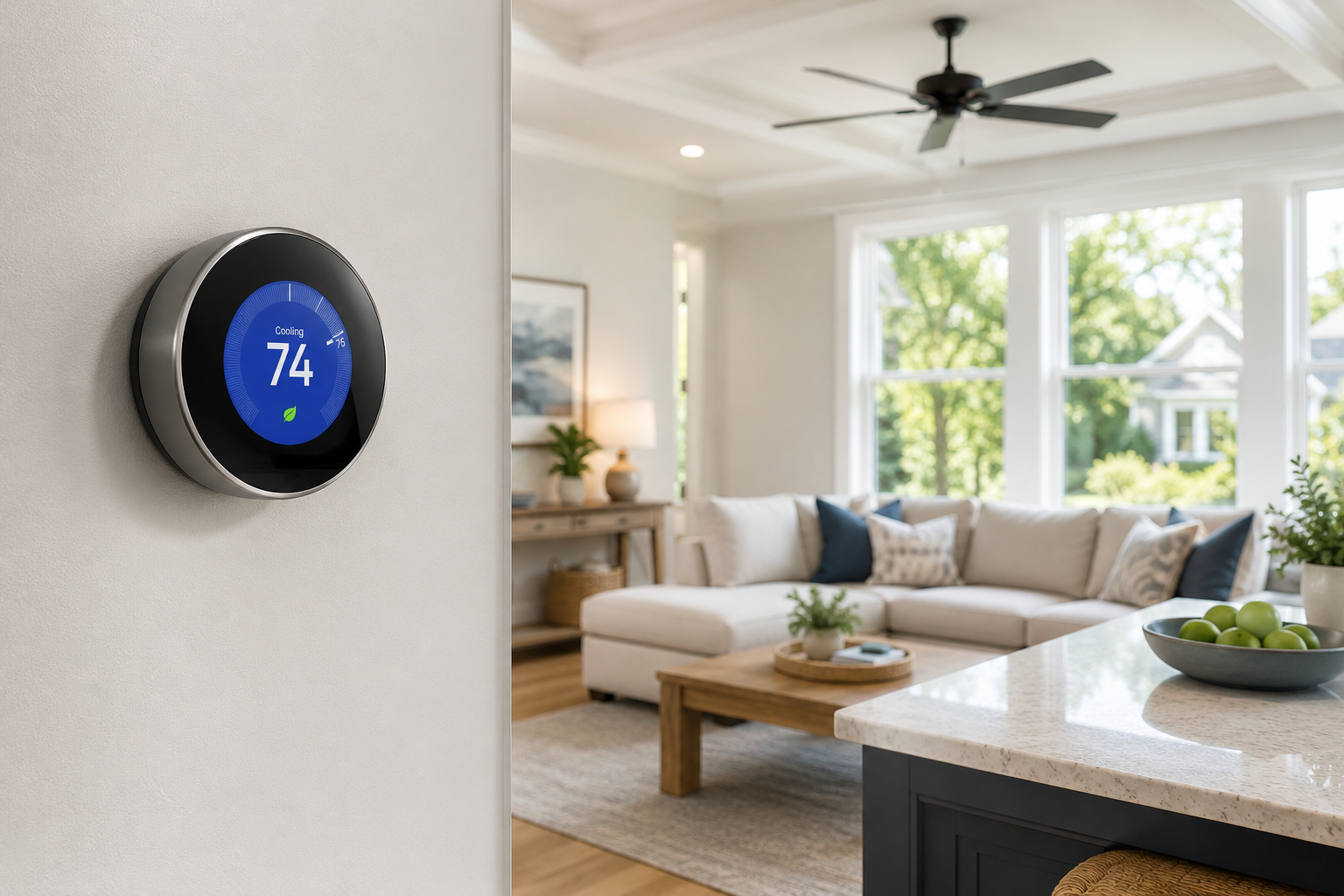
If you don’t have a smart thermostat, this is the upgrade that pays for itself fastest. Being able to set schedules, adjust from your phone, and let the system automatically raise the temperature when nobody’s home eliminates a huge amount of wasted cooling. A lot of people are surprised how much their bill drops in the first month after switching. We can talk through options when we’re out for any service visit; it’s one of those things that’s easy to add on and genuinely makes a difference.

Keep Up With the Filter

A clogged air filter is one of the most common and easily preventable reasons an AC system runs longer and harder than it needs to. When airflow is restricted, the system struggles to move conditioned air through the house efficiently, which means longer run times and higher bills for the same amount of cooling.


During summer in the Triangle, especially with the pollen and dust we deal with, filters can load up faster than people expect. Checking it monthly and replacing it when it’s visibly dirty—rather than on a fixed schedule regardless of condition—is the right approach. A clean filter costs a few dollars. The energy waste from a dirty one over a full summer is considerably more than that.

Think About Where Heat Is Getting In

Your AC can only do so much if the house is constantly absorbing heat from outside. A few things that make a bigger difference than most people realize:


Direct sunlight through windows is a major heat source during the day, especially on south and west-facing exposures in the afternoon. Keeping blinds or curtains closed on those windows during peak sun hours reduces the cooling load on your system meaningfully. It’s not glamorous advice, but it works.


Attic insulation matters more than most homeowners think. In a hot summer, an underinsulated attic can reach 150 degrees or more, and that heat radiates down through the ceiling into your living space. If your home is older and the attic hasn’t been looked at in a while, it’s worth checking. Better insulation reduces how hard your AC has to work every single day for the life of the system.


Heat-generating appliances during the hottest part of the day also add up. Running the oven, dishwasher, or dryer in the afternoon pumps heat directly into the house at exactly the wrong time. Shifting those to morning or evening is a simple habit that takes load off the system when it needs the help most.

Get the System Tuned Up

A well-maintained system runs more efficiently than a neglected one, full stop. Over time, coils get dirty, refrigerant levels drift, electrical connections loosen, and the system starts working harder than it should to produce the same amount of cooling. That extra effort shows up on your energy bill.


A professional tune-up addresses all of this. We clean the evaporator and condenser coils, check refrigerant charge, verify airflow, inspect electrical components, and make sure the system is operating the way it’s supposed to. The efficiency gains from a well-maintained system versus one that’s been running without service for a couple of years are real and measurable. If you haven’t had it serviced this season, it’s not too late. Take a look at what our preventative maintenance visits include for the specifics.

Check Your Ductwork

This one doesn’t come up enough in conversations about energy efficiency, but leaky ducts are a significant source of wasted cooling in a lot of Triangle homes. If your ducts run through an unconditioned attic and they’re leaking, you’re paying to cool air that never makes it into your living space. Studies consistently put duct leakage losses in the range of 20 to 30 percent in homes with older duct systems.


If certain rooms in your house are consistently harder to cool than others, or if your bills seem higher than they should be for the size of your home, ductwork is worth investigating. Sealing and insulating ducts properly can make a noticeable difference in both comfort and monthly costs.

Know When the System Itself Is the Problem

Sometimes the honest answer is that the system is old enough and inefficient enough that no amount of behavioral changes will get your bills where you want them. HVAC systems lose efficiency gradually over their lifespan, and a 15-year-old unit running at significantly reduced efficiency can cost substantially more to operate than a modern replacement, even before accounting for repair costs.


Current systems rated at 16 SEER2 or above are meaningfully more efficient than what most homes had installed a decade ago. If your system is aging and your summer bills keep climbing despite doing everything right, it’s worth having a conversation about whether a replacement pencils out financially. We’re not going to push you toward a new system if your current one has more life in it, but we’ll give you a straight answer either way. Check out our cooling services page for more on what replacement involves, or get in touch here to set up a visit.

Frequently Asked Questions

What temperature should I set my thermostat to in summer to save energy?

The Department of Energy recommends 78 degrees when you’re home and higher when you’re away. Every degree above your normal set point saves roughly 3 percent on cooling costs. Ceiling fans help a lot with comfort at higher thermostat settings since they make the air feel cooler without using nearly as much energy as the AC.

How much can a dirty air filter affect my energy bill?

More than most people expect. A clogged filter restricts airflow through the system, which forces it to run longer to achieve the same amount of cooling. In summer, when the system is already running hard, that inefficiency compounds quickly. Checking your filter monthly during peak cooling season is one of the easiest and cheapest things you can do to keep bills in check.

Does a smart thermostat actually save money?

For most households, yes. The savings come from eliminating the wasted cooling that happens when nobody’s home, building in setback schedules automatically, and giving you visibility into how the system is running. Most homeowners recoup the cost of a smart thermostat within the first cooling season, sometimes sooner.

How do I know if my AC system is running inefficiently?

A few signs: your bills are climbing year over year without obvious changes in usage, the system runs constantly without keeping up, certain rooms are much harder to cool than others, or the equipment is more than 12 to 15 years old. If any of those apply, it’s worth having someone come take a look rather than just paying higher bills indefinitely.

What to Set Your Thermostat to Before You Leave for Vacation

It’s July, you’re heading out of town, and you’re standing at the thermostat trying to figure out what to do with it. Turn it off completely? Bump it up to 85 and hope for the best? Leave it where it is so you don’t come back to a disaster? The thermostat setting before vacation is one of those things people genuinely disagree on, and the wrong call can cost you more than you’d expect.


Here’s the actual answer, plus why it matters more in North Carolina than a lot of people realize.

Do Not Turn Your AC Off Completely

This one comes up every summer and the answer is always the same: don’t do it. Turning the AC off entirely when you leave for a week in July sounds like it saves energy, and technically it does in the short term. But what happens to a closed-up house in North Carolina when there’s no air conditioning running is not pretty.


Indoor temperatures can hit 90 degrees or above within a day or two. At that point humidity takes over, and in our climate that happens fast. Moisture levels climb, and you start creating ideal conditions for mold growth, particularly in closets, bathrooms, and anywhere with limited airflow. Wood floors, furniture, musical instruments, and electronics don’t love extended exposure to heat and humidity either. And when you come back and turn the system back on, it has to work incredibly hard to pull the house back down from 90-something degrees, which is a brutal way to stress the equipment.


The energy savings from turning it off are real but they’re not worth it when you factor in the risk of mold, the wear on the system when it restarts, and the fact that you’re walking back into a sauna.

The Right Thermostat Setting for Vacation in Summer

The sweet spot for most homes in the Triangle is somewhere between 78 and 82 degrees when you’re away in summer. This keeps the system running often enough to manage humidity, prevents the house from getting dangerously hot, and still saves meaningful energy compared to holding your normal set point while you’re gone.


Humidity control is the real reason for this range. Your AC removes moisture from the air as it runs. If the set point is too high, the system barely runs and humidity climbs unchecked. Setting it at 80 rather than 85 or off entirely keeps the system cycling enough to stay on top of it, which is especially important if you’re going to be gone for more than a few days.


If you have pets staying in the house, obviously adjust accordingly. Eighty degrees is fine for most homes but not for a dog or cat left alone in there.

This Is Where a Smart Thermostat Really Earns Its Keep

If you don’t have a smart thermostat yet, this scenario is one of the best arguments for getting one. Being able to monitor your home’s temperature and humidity from your phone while you’re sitting on a beach somewhere is genuinely useful, not just a gimmick.


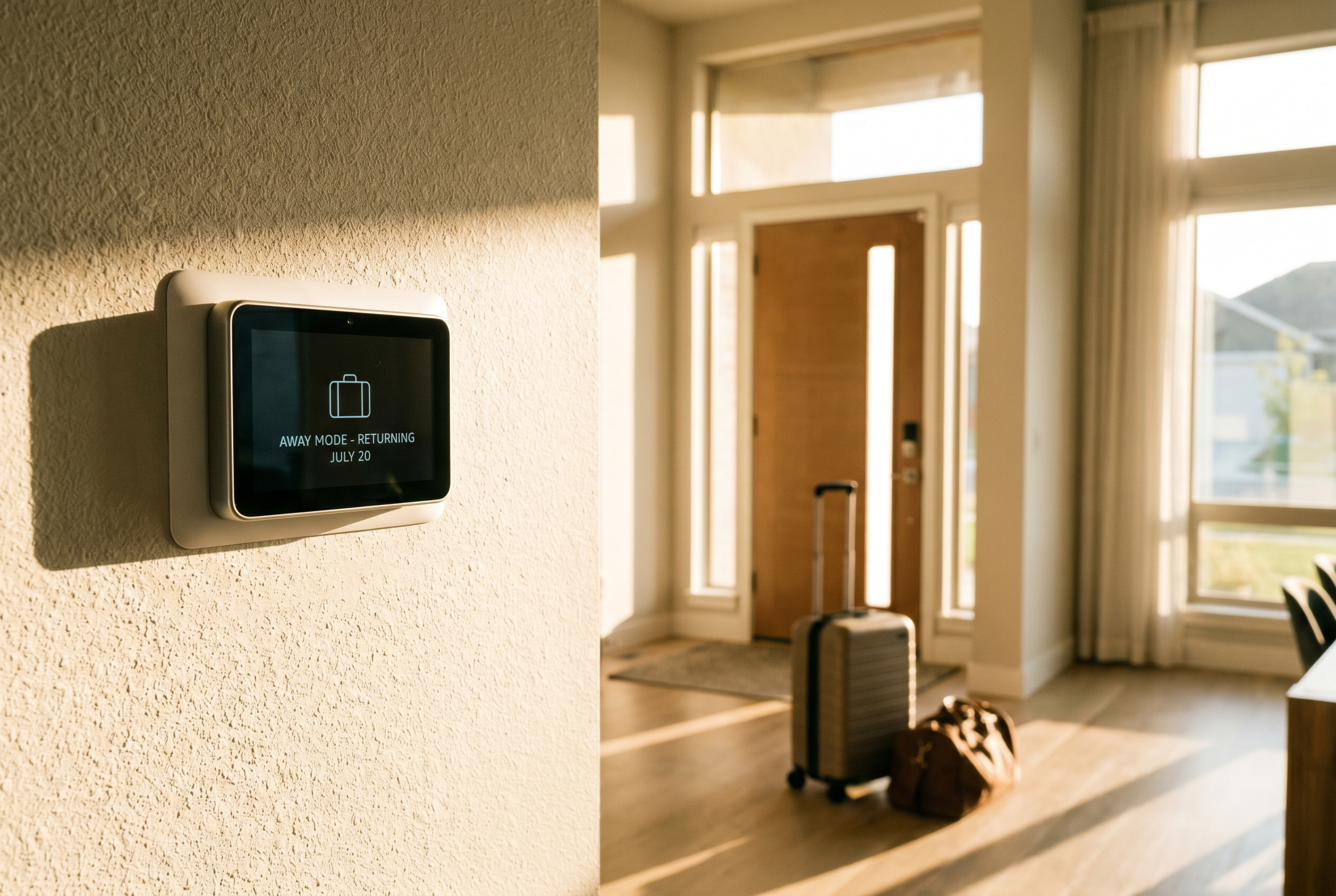
Most smart thermostats have a dedicated vacation or away mode that handles this automatically. You set your parameters before you leave and the system manages itself. If something goes wrong—a power outage, a system failure, temperatures climbing higher than expected—you get an alert on your phone and can deal with it remotely or call someone to check on the house, rather than coming home to a problem that’s been sitting for a week.


Some models also track humidity separately and can run the system specifically to manage moisture even when the temperature target is already met. In a North Carolina summer, that’s a feature worth having. We can talk through thermostat options when we’re out for any service visit if that’s something you want to explore.

A Few Other Things Worth Doing Before You Leave

The thermostat setting is the main thing, but while you’re thinking about the HVAC system before a trip, a couple of other things are worth checking.


Change or check your air filter before you go. A clean filter means the system runs more efficiently while you’re away, and you won’t come home to one that’s been pushing air through a clogged filter for a week straight.


Make sure your condensate drain line is clear. In summer the drain line is working hard to remove all the moisture the system is pulling out of the air. A clogged drain line can cause the drain pan to overflow, which means water damage, and that’s a miserable thing to come home to. If you’ve never had the drain line checked or flushed, a quick maintenance visit before a long trip is worth it. Check out our preventative maintenance page if you want to know more about what that involves.


If you have a smart thermostat, make sure it’s connected and working before you leave, not when you’re already at the airport. Log in, verify the app is showing current readings, and set your away temperature before you walk out the door. Our cooling services page has more on system health and what we can help with if you want a quick checkup before a long trip.

Coming Home

When you get back, don’t just drop the thermostat back to 70 and expect the house to cool down in twenty minutes. Give the system a realistic amount of time to recover, especially if the house has been sitting at 80 for a week. Close the blinds, run ceiling fans, and let it work. It’ll get there.


If you come home and the house is noticeably hotter than your set point(like it’s 88 inside when you had it set to 80) that’s a sign something may have gone wrong while you were away. Check the filter, check the drain pan for water, and if neither of those is obviously the issue, give us a call. Reach out here and we’ll get someone out to take a look.

Frequently Asked Questions

What should I set my thermostat to when I go on vacation in summer?

Between 78 and 82 degrees is the right range for most homes in North Carolina during summer. This keeps the system running often enough to control humidity, prevents the house from getting dangerously hot, and saves energy compared to holding your normal set point while you’re away.

Is it okay to turn the AC off completely when I leave for vacation?

We don’t recommend it, especially in summer. A closed-up house in North Carolina can reach 90 degrees or above within a day or two without AC running. That level of heat and humidity creates real risk of mold growth and can damage wood floors, furniture, and electronics. The energy savings aren’t worth it for most people.

How does a smart thermostat help when I’m on vacation?

It lets you monitor and adjust your home’s temperature and humidity from anywhere using your phone. Most smart thermostats have a dedicated away or vacation mode, and many will send you an alert if the temperature goes above a threshold you set. That means if something goes wrong while you’re away, you find out immediately rather than when you walk in the door.

Should I do anything to my HVAC system before leaving for a long trip?

A couple of things worth doing: check or replace your air filter, and make sure your condensate drain line is clear. A clogged drain line can overflow the drain pan while you’re away and cause water damage. If you haven’t had the system serviced recently, a quick maintenance visit before a long vacation is a reasonable precaution.

Why Your House Is Too Hot During a Heat Wave (And What to Actually Do About It)

If your house has been too hot during this heat wave and you’re convinced your AC is dying, hold off before you call anyone in a panic. It might be, sure. But there’s a decent chance your system is actually doing exactly what it’s supposed to do and just getting absolutely overwhelmed by conditions it was never designed to handle.


We’ve been out on a lot of calls this week. When it’s 100 degrees outside with a heat index pushing 110, that changes the math on what your air conditioner can realistically accomplish. Here’s what’s going on and what you can actually do about it.

Your AC Was Not Designed for This

Most residential HVAC systems are sized to maintain about a 20-degree difference between the outdoor temperature and your indoor set point. So if it’s 95 outside, a properly sized system should be able to hold 75 inside without too much trouble. When it’s 102 degrees with brutal humidity on top of that, you’re asking the system to do more than it was ever engineered for.


That doesn’t mean it’s broken. It means it’s running constantly and still losing ground, which is genuinely different from a mechanical failure. The first thing to figure out is whether you’re dealing with an overwhelmed system or an actual problem. A system that’s running nonstop but still putting out cold air at the vents is probably just working as hard as it can. A system that’s running nonstop and blowing warm or barely cool air is a different story and worth a call.

What to Do When the House Is Too Hot in a Heat Wave

The goal during extreme heat isn’t to win, it’s to reduce how hard your system has to work so it can at least keep the house livable. A few things that actually help:


Keep blinds and curtains closed on any windows that get direct sun during the day. This sounds basic but it makes a real difference. South and west-facing windows in the afternoon are especially brutal, and a lot of the heat load your AC is fighting is coming straight through the glass.


Set your thermostat and leave it alone. Dropping the set point when it’s this hot doesn’t make the system cool faster, it just makes it run longer. Pick a temperature you can live with, something in the 76 to 78 range if your system is struggling, and let it work. Constantly adjusting it up and down doesn’t help anyone. Once the ambient outdoor temperature drops to a reasonable level when the sun is down and your system isn’t constantly running, you can set the thermostat lower (keeping in mind the ~20-degree rule). This can help it stay cooler a bit longer in the morning as well.


Run ceiling fans in rooms you’re occupying. Fans don’t cool the air but they make you feel cooler by helping to evaporate moisture from your skin, which means you can tolerate a higher thermostat setting without being miserable. Make sure that the blades are angled up in the direction that the fan is turning so that it pushes air downward. Another added benefit is that fans cause turbulence as they circulate the air, which helps distribute the cool air rather than leaving it lying low to the ground. Just remember to turn them off when you leave the room since they only help if someone’s in there to feel them.


Avoid running heat-generating appliances during the hottest part of the day. Ovens, dryers, dishwashers—all of these dump heat into the house at exactly the wrong time. Push laundry and cooking to the morning or evening if you can.


Check your air filter. A clogged filter during a heat wave is a problem. It restricts airflow across the evaporator coil, which reduces the system’s ability to move heat out of the house at the exact moment you need it working at full capacity. If you haven’t changed it in a while, change it now.

Signs Something Is Actually Wrong

Like we said, a system running constantly in extreme heat isn’t automatically broken. But there are a few things that do indicate a real mechanical issue worth looking at.


If the air coming out of your vents isn’t cold (not just “not as cold as I’d like” but genuinely warm or room temperature) that points toward a refrigerant issue or a failing compressor. If you see ice forming on the refrigerant lines or the indoor unit, that’s also a sign something’s off, usually low refrigerant or an airflow problem. And if the system is short cycling, meaning it kicks on for a few minutes and then shuts off repeatedly without completing a full run, that’s worth a call too.


The short version: if it’s blowing cold and running constantly, give it time and reduce your load. If it’s not blowing cold, call someone.

If You’ve Been Thinking About an Upgrade

Heat waves have a way of making people finally pull the trigger on a replacement they’ve been putting off. If your system is more than 12 to 15 years old and is really struggling this week, it’s not going to get better. Older systems lose efficiency every year, and extreme heat exposes that faster than anything.


If that’s where you’re at, we’re happy to come take a look and give you a straight answer on whether repair or replacement makes more sense. Check out our AC and cooling services for more on what that process looks like, or get in touch here to schedule something.

Frequently Asked Questions

Why can’t my AC keep up when it’s over 100 degrees?

Most residential systems are designed to maintain roughly a 20-degree difference between outdoor and indoor temperatures. When it’s 100 or above, especially with high humidity on top of that, you’re pushing past what the system was sized for. Running constantly and still losing a few degrees is normal in extreme heat. It doesn’t necessarily mean something is wrong.

Should I turn my AC off during a heat wave to give it a rest?

No. Turning it off lets the house heat up significantly, and then the system has to work even harder to bring the temperature back down when you turn it back on. Better to keep it running at a slightly higher set point than to cycle it off and on.

How do I know if my AC is broken or just overwhelmed by the heat?

Check what’s coming out of the vents. If it’s cold air and the system is just running constantly, it’s probably overwhelmed rather than broken. If the air is warm or barely cool, if you see ice on the unit or lines, or if the system keeps shutting off after only a few minutes of running, those are signs of an actual mechanical issue worth having someone look at.

What temperature should I set my thermostat to during a heat wave?

Something in the 76 to 78 range is realistic when it’s extremely hot outside. Trying to hold 70 or 72 during a heat wave puts enormous strain on the system and may not even be achievable. Ceiling fans, closed blinds, and avoiding heat-generating appliances during peak afternoon hours will make a higher set point feel much more comfortable.

How to Claim North Carolina Heat Pump Rebates in 2026

A lot of homeowners we talk to have heard there’s money available for heat pump upgrades but have no idea how to actually get it. That’s fair, because the rebate landscape in North Carolina changed pretty significantly at the end of 2025. The federal tax credits that used to sweeten heat pump deals expired on December 31, 2025. But the state programs that replaced them as the main financial incentive are now bigger and more widely available than ever. If you’re thinking about installing a heat pump in 2026, here’s what you actually need to know about North Carolina heat pump rebates and how to claim them.

The Federal Tax Credit Is Gone, But State Rebates Are Still Very Much Alive.

The Section 25C Energy Efficient Home Improvement Credit, which had been covering up to $2,000 per year for qualifying heat pump installations specifically, was terminated effective December 31, 2025 under the One Big Beautiful Bill Act. Equipment needs to have been installed before that date to qualify, and there’s no federal HVAC tax credit for anything installed in 2026. Same goes for the 25D Residential Clean Energy Credit, which had covered geothermal heat pumps at 30 percent of project cost.


That’s the bad news. The good news is that North Carolina’s own rebate program, Energy Saver NC, launched in January 2025, expanded to all 100 counties in February 2026, and has more than $200 million in funding available. For income-eligible households, the rebates through this program are larger than the federal credits ever were anyway.

Energy Saver NC: The Two Programs You Need to Know

Energy Saver NC is administered by the NC Department of Environmental Quality’s State Energy Office and runs two separate rebate tracks. Which one you go through depends on what you’re upgrading and your income.


The first is HEAR, which stands for Home Electrification and Appliance Rebates. This is the track most people will use for a straightforward heat pump installation. It offers up to $8,000 for an ENERGY STAR-certified electric heat pump, with a household cap of $14,000 across all eligible appliances combined. The rebate is applied as a point-of-sale discount, so you’re paying less upfront rather than waiting for a check. Households earning less than 80 percent of Area Median Income qualify for the full rebate amount, covering 100 percent of eligible costs up to the cap. Households earning between 80 and 150 percent of AMI receive a partial rebate covering 50 percent of project costs up to the same maximum. If your income is above 150 percent AMI, HEAR doesn’t apply to you. AMI limits are set by HUD and update annually, so check your eligibility directly at energysavernc.org rather than relying on any dollar figure you see cited online.


One important caveat worth knowing before you get too far into planning: the HEAR program only covers upgrading from a non-heat-pump system to a heat pump. If you already have a heat pump and need to replace it, HEAR does not apply. That’s actually a pretty common situation, especially for systems installed in the late 2000s and early 2010s that are starting to reach the end of their lifespan. In that case, the HOMES program is still potentially available if your project qualifies on whole-home energy savings, and Duke Energy’s Smart Saver rebate does cover heat-pump-to-heat-pump replacements, so there’s still money on the table worth pursuing.


The second track is HOMES, which stands for Homeowners Managing Efficiency Savings. This one is for whole-home efficiency projects rather than a single appliance swap. It offers up to $16,000 for eligible whole-home upgrades and requires at least 20 percent projected energy savings to qualify. It generally starts with a home energy assessment, so it’s a more involved process than HEAR. If you’re just replacing a heat pump, HEAR is probably your path. If you’re doing a bigger project that includes insulation, air sealing, and a new HVAC system together, HOMES is worth looking into.

Duke Energy Rebates Stack on Top

If you’re a Duke Energy Progress or Duke Energy Carolinas customer, which covers most of the Raleigh-Garner area, there’s an additional rebate through their Smart Saver program that stacks with Energy Saver NC. To qualify, your heat pump needs to meet ENERGY STAR standards (as of this writing that means a SEER2 rating of 15.2 or higher and an HSPF2 of 7.5 or higher, though efficiency requirements can shift alongside rebate amounts), and you need to complete a Home Energy Check within 24 months of installation. Verify the current specs directly at duke-energy.com or with your contractor before purchasing equipment.


The exact Duke Energy rebate amounts have shifted over the past year and sources vary slightly, so we’d recommend verifying the current figure directly at duke-energy.com or asking your contractor to confirm before you plan around a specific number. The programs do stack, though, and combining them meaningfully reduces your out-of-pocket cost regardless of the exact current amount.

How to Actually Apply

The process for Energy Saver NC is pretty straightforward. You start at energysavernc.org by checking your income eligibility. Once that’s confirmed, you find a registered contractor through the program’s contractor directory and get quotes. The rebate gets applied at the point of sale, meaning the contractor handles the paperwork and you pay the reduced amount upfront rather than submitting anything separately after the fact.


A few things to keep in mind. The contractor has to be registered with Energy Saver NC for the rebate to apply. You can’t use just any HVAC company and submit for reimbursement later on your own. Self-installation projects don’t qualify either. And because the program is funded with a finite pool of money on a first-come, first-served basis, waiting doesn’t help you.


For Duke Energy rebates, applications go through their Smart Saver portal at duke-energy.com. Documentation requirements include proof of equipment installation and efficiency specs, and applications generally need to be submitted within 90 days of the installation date.

What This Looks Like in Practice

For a Wake County household earning under 80 percent AMI, the math is pretty striking. Heat pump installation in the Triangle typically runs somewhere between $5,000 and $10,000 depending on home size, system type, and whether any ductwork needs attention. The $8,000 HEAR rebate can cover the full cost for lower-end installations, and stacked with the Duke Energy Smart Saver program, qualifying households may pay little to nothing out of pocket.


For households in the 80 to 150 percent AMI range, the rebate covers 50 percent of project costs up to the cap, which still represents meaningful savings on a system that will lower your monthly bills for the next 15 to 20 years. And for households above 150 percent AMI who don’t qualify for HEAR, the Duke Energy utility rebate is still on the table.

One More Thing: Geothermal

If you’ve been considering a geothermal system, the 25D federal credit that covered 30 percent of geothermal installation costs with no cap also expired at the end of 2025. Geothermal may still qualify for HOMES rebates depending on project scope and the energy savings achieved. Bowman has installed close to 650 geothermal systems in the Triangle since 1987, so if you want to talk through what still makes financial sense given the current incentive picture, we’re happy to have that conversation. You can read more about our geothermal services if you want some background first.

Ready to Move Forward?

If you’re in the Raleigh, Garner, or surrounding Triangle area and want to figure out whether you qualify for North Carolina heat pump rebates and what the right system looks like for your home, give Bowman Heating, Cooling, & Plumbing a call. We’ve been doing this work here for more than 30 years and we can help you understand your options without the runaround. Get in touch here to set something up, or check out our heating services page for more on heat pump installation and replacement.

Frequently Asked Questions

Is there still a federal tax credit for heat pumps in 2026?

No. The Section 25C Energy Efficient Home Improvement Credit expired on December 31, 2025, and there is currently no federal tax credit for heat pumps installed in 2026. The North Carolina state rebate programs through Energy Saver NC are now the primary incentive available.

Who qualifies for the Energy Saver NC heat pump rebate?

Eligibility is income-based. Households earning below 80 percent of the Area Median Income for their county qualify for the full rebate amount; households earning between 80 and 150 percent AMI qualify for a partial rebate; households above 150 percent AMI are not eligible for HEAR but may still qualify for Duke Energy utility rebates. Both homeowners and renters may qualify, though renters need landlord approval.

Do I need to use a specific contractor to get the rebate?

Yes. Energy Saver NC rebates require installation by a registered contractor in the program’s network. The rebate is applied at the point of sale through the contractor, not as a reimbursement you claim later on your own. If you’re planning on using a rebate, confirm your contractor is registered before scheduling the work.

Can I combine Energy Saver NC rebates with my Duke Energy rebate?

Yes, the two programs use separate funding sources and can be stacked, as long as the combined rebate total doesn’t exceed the purchase price of the equipment. Confirm current Duke Energy rebate amounts and eligibility requirements directly through duke-energy.com before planning around a specific number, since those figures have been updated recently.

Why Your House Feels Humid Even With the AC Running

We get calls about this pretty regularly in the summer. The AC is running, the thermostat reads 73 or 74 degrees, and the homeowner still feels like they’re walking through soup. If your house feels humid with the AC on, there’s a real reason for it. It’s not just the weather and it’s not in your head.

Air conditioning does two things at once. It cools the air and it pulls moisture out of it. Most people only think about the first part, but honestly the second part is just as important for comfort, especially in North Carolina. When a system is working right, you don’t notice the humidity side of things. When something’s off, you absolutely do.

Here are the most common causes we see when we go out on calls like this.

The System Might Be Too Big for the House

That sounds backwards. Bigger should be better, right? But an oversized AC is one of the most common reasons a house feels humid with the AC on, and it trips people up every time.

Here’s the thing: moisture removal happens while the system is running. Warm, humid air passes over the evaporator coil, the moisture condenses on that coil, and drains away. That process needs time, usually a good 10 to 15 minutes of sustained runtime to actually make a dent in the humidity. An oversized system cools the air so fast that it hits your set temperature in five or six minutes and shuts off. The house cools down, but the air is still loaded with moisture.

This is called short cycling, and it’s a humidity problem as much as anything else. If your system seems to kick on and off constantly and your home always feels sticky even though the temperature is fine, oversizing is worth looking into. It’s not a quick fix since properly sizing a system means replacing it, but at least you’d know what you’re dealing with.

A Dirty Evaporator Coil Is a Really Common Culprit

The evaporator coil is the component inside your air handler where the actual moisture removal happens. When it gets coated in dust and grime over time, it can’t do that job as well. The system still runs and air still moves through the house, but the coil’s ability to condense moisture out of the air drops off.

The frustrating part is that it happens gradually, so it’s easy to miss. The house gets a little more humid each summer and you just kind of adjust to it. By the time it’s noticeably bad, you’ve forgotten what the system felt like when it was clean.

This is a big part of why annual maintenance matters beyond just checking the system. When we do a tune-up we’re cleaning that coil, clearing the condensate drain, and making sure everything involved in moisture removal is working the way it should. If you haven’t had the system serviced in a while, that’s honestly the first place we’d start. Take a look at what our preventative maintenance visits include if you want to know more about what that actually involves.

Low Refrigerant Affects Humidity Too, Not Just Cooling

When a system is low on refrigerant, usually from a slow leak somewhere, the evaporator coil gets colder than it should and can actually freeze over. A frozen coil does nothing for humidity, and as it thaws the water overflow can cause its own problems. Even before it gets to that point, low refrigerant reduces how effectively the coil handles moisture.

If you’re seeing ice on the refrigerant lines or the indoor unit, or if the system is running constantly but not cooling well, refrigerant could be the issue. This one needs a licensed technician. You can’t just add refrigerant and call it a day because the leak has to be found and repaired first, otherwise you’re just buying time.

Your Home Might Be Introducing More Moisture Than You Realize

Sometimes the AC is actually doing its job and the problem is the sheer volume of moisture coming into the house. We see this a lot in older homes around the Triangle.

North Carolina already throws a lot at us. We get 46 inches of rain per year, summer dewpoints that sit in the upper 60s for months at a time, and a lot of older housing stock that doesn’t seal particularly well. Add in a crawlspace without a proper vapor barrier, a bathroom exhaust fan that vents into the attic instead of outside, or a dryer duct that’s come loose somewhere, and you can have moisture pouring into the house faster than any AC system is designed to handle.

If the system checks out fine mechanically but the house still feels muggy, it’s worth walking through the home with an eye toward where that moisture is actually coming from. Crawlspace encapsulation alone makes a dramatic difference in a lot of Raleigh-area homes.

Leaky Ducts Can Work Against You in Summer

Duct leakage gets talked about mostly as an energy efficiency issue, but in a humid climate it’s a comfort issue too. If your return ducts run through an unconditioned attic or crawlspace and they’re leaking, they can pull hot, humid outside air directly into the system before it even reaches the evaporator coil. Now you’re fighting a constant influx of moisture the system wasn’t sized to handle.

We see this in a lot of homes that were built before tighter duct standards became common. If the house has always been a little muggy in summer and you’ve never had the ductwork looked at, that’s worth putting on the list.

When a Whole-Home Dehumidifier Is the Right Answer

If the system is properly sized, maintenance is current, the ducts are in decent shape, and the house is still humid, a dedicated whole-home dehumidifier is something we’d bring up. These units install inline with your existing HVAC system and run independently of the AC to hold the house at a target humidity level, usually somewhere between 45 and 55 percent. In a climate like ours they can make a real difference, especially for families dealing with allergies or anyone who just wants the house to actually feel comfortable in July.

They’re not a substitute for a well-functioning AC, but as a complement to one they work really well. You can check out our cooling services page for more on comfort solutions we offer.

Bottom Line

A house that feels humid with the AC on is almost always fixable. It might be a maintenance issue, a sizing problem, a moisture source nobody has addressed, or leaky ductwork, but there’s usually a clear reason once someone actually looks at the whole picture. You shouldn’t have to just live with it.

If you’re in Garner, Raleigh, or anywhere else in the Triangle and you’re tired of your house feeling muggy all summer, give us a call. We’ve been working on homes in this area for over 30 years and we’re happy to come take a look. Reach out here to get something scheduled.

Frequently Asked Questions

What humidity level should my home be at with the AC running?

Somewhere between 45 and 55 percent relative humidity is the sweet spot for most people. Above 60 percent starts to feel noticeably muggy, and it also creates conditions where mold and dust mites do well. A cheap digital hygrometer from any hardware store will tell you exactly where you’re sitting.

Can an AC unit actually be too big for a house?

Yes, and it’s more common than most people expect. An oversized system cools the air too fast, short cycles, and never runs long enough to remove humidity properly. The house hits the target temperature but still feels uncomfortable. Getting sizing right requires a Manual J load calculation, not just matching whatever was there before.

Does annual maintenance actually help with humidity problems?

It can, yes. A proper tune-up includes cleaning the evaporator coil, checking refrigerant levels, and clearing the condensate drain line, all things that directly affect how well the system removes moisture from the air. If the humidity problem is relatively new, a maintenance visit is a reasonable first step before assuming the system needs to be replaced.

How often should I be changing my air filter?

A clogged filter restricts airflow across the evaporator coil, which hurts the system’s ability to remove moisture. For most homes in the Triangle, checking it monthly and replacing it every one to three months is a good baseline. During pollen season you might be doing it more often. Thicker media filters can go longer, just follow what the manufacturer recommends.