
We get calls about this pretty regularly in the summer. The AC is running, the thermostat reads 73 or 74 degrees, and the homeowner still feels like they’re walking through soup. If your house feels humid with the AC on, there’s a real reason for it. It’s not just the weather and it’s not in your head.
Air conditioning does two things at once. It cools the air and it pulls moisture out of it. Most people only think about the first part, but honestly the second part is just as important for comfort, especially in North Carolina. When a system is working right, you don’t notice the humidity side of things. When something’s off, you absolutely do.
Here are the most common causes we see when we go out on calls like this.
The System Might Be Too Big for the House
That sounds backwards. Bigger should be better, right? But an oversized AC is one of the most common reasons a house feels humid with the AC on, and it trips people up every time.
Here’s the thing: moisture removal happens while the system is running. Warm, humid air passes over the evaporator coil, the moisture condenses on that coil, and drains away. That process needs time, usually a good 10 to 15 minutes of sustained runtime to actually make a dent in the humidity. An oversized system cools the air so fast that it hits your set temperature in five or six minutes and shuts off. The house cools down, but the air is still loaded with moisture.
This is called short cycling, and it’s a humidity problem as much as anything else. If your system seems to kick on and off constantly and your home always feels sticky even though the temperature is fine, oversizing is worth looking into. It’s not a quick fix since properly sizing a system means replacing it, but at least you’d know what you’re dealing with.
A Dirty Evaporator Coil Is a Really Common Culprit
The evaporator coil is the component inside your air handler where the actual moisture removal happens. When it gets coated in dust and grime over time, it can’t do that job as well. The system still runs and air still moves through the house, but the coil’s ability to condense moisture out of the air drops off.
The frustrating part is that it happens gradually, so it’s easy to miss. The house gets a little more humid each summer and you just kind of adjust to it. By the time it’s noticeably bad, you’ve forgotten what the system felt like when it was clean.
This is a big part of why annual maintenance matters beyond just checking the system. When we do a tune-up we’re cleaning that coil, clearing the condensate drain, and making sure everything involved in moisture removal is working the way it should. If you haven’t had the system serviced in a while, that’s honestly the first place we’d start. Take a look at what our preventative maintenance visits include if you want to know more about what that actually involves.
Low Refrigerant Affects Humidity Too, Not Just Cooling
When a system is low on refrigerant, usually from a slow leak somewhere, the evaporator coil gets colder than it should and can actually freeze over. A frozen coil does nothing for humidity, and as it thaws the water overflow can cause its own problems. Even before it gets to that point, low refrigerant reduces how effectively the coil handles moisture.
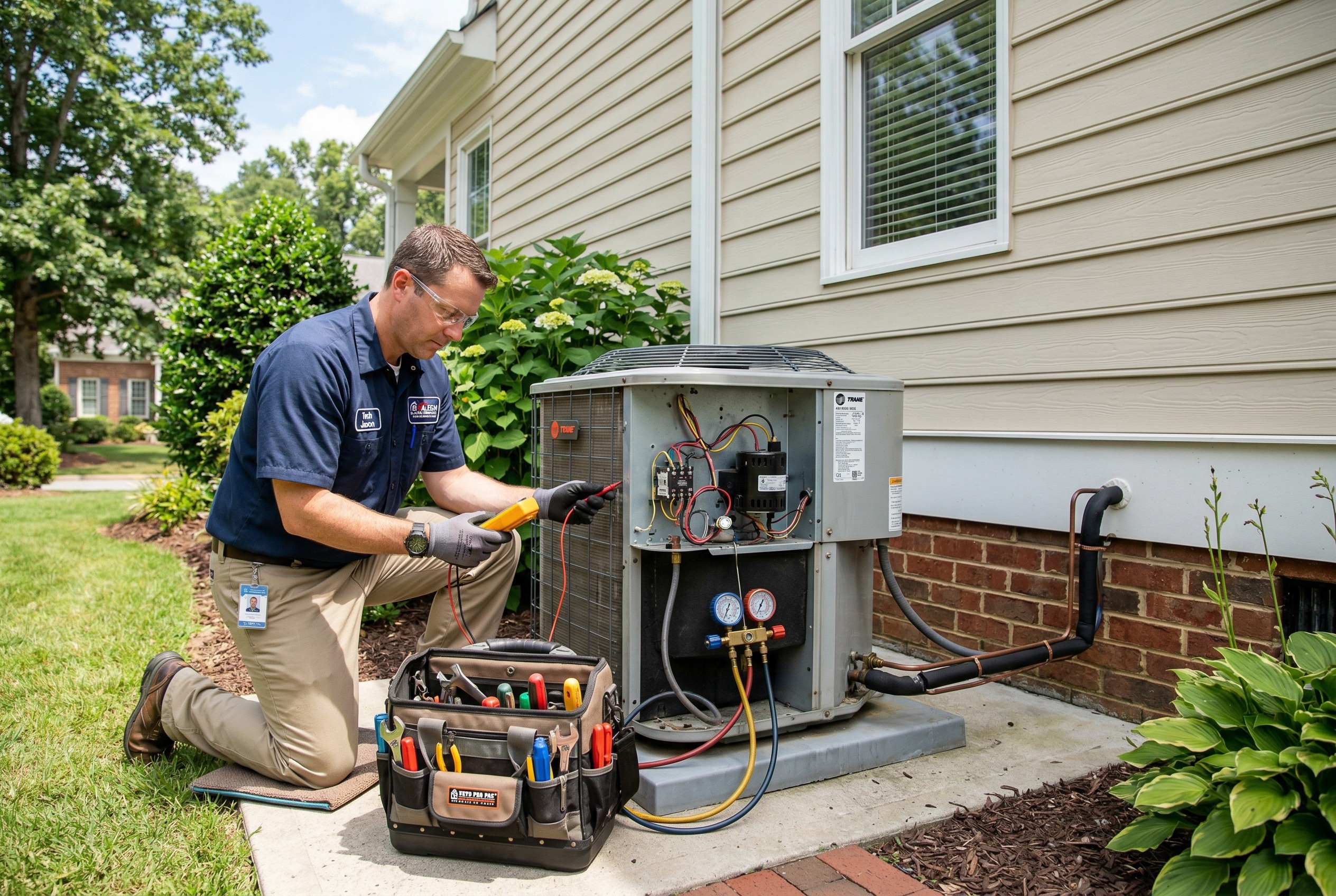
If you’re seeing ice on the refrigerant lines or the indoor unit, or if the system is running constantly but not cooling well, refrigerant could be the issue. This one needs a licensed technician. You can’t just add refrigerant and call it a day because the leak has to be found and repaired first, otherwise you’re just buying time.
Your Home Might Be Introducing More Moisture Than You Realize
Sometimes the AC is actually doing its job and the problem is the sheer volume of moisture coming into the house. We see this a lot in older homes around the Triangle.
North Carolina already throws a lot at us. We get 46 inches of rain per year, summer dewpoints that sit in the upper 60s for months at a time, and a lot of older housing stock that doesn’t seal particularly well. Add in a crawlspace without a proper vapor barrier, a bathroom exhaust fan that vents into the attic instead of outside, or a dryer duct that’s come loose somewhere, and you can have moisture pouring into the house faster than any AC system is designed to handle.
If the system checks out fine mechanically but the house still feels muggy, it’s worth walking through the home with an eye toward where that moisture is actually coming from. Crawlspace encapsulation alone makes a dramatic difference in a lot of Raleigh-area homes.
Leaky Ducts Can Work Against You in Summer
Duct leakage gets talked about mostly as an energy efficiency issue, but in a humid climate it’s a comfort issue too. If your return ducts run through an unconditioned attic or crawlspace and they’re leaking, they can pull hot, humid outside air directly into the system before it even reaches the evaporator coil. Now you’re fighting a constant influx of moisture the system wasn’t sized to handle.
We see this in a lot of homes that were built before tighter duct standards became common. If the house has always been a little muggy in summer and you’ve never had the ductwork looked at, that’s worth putting on the list.
When a Whole-Home Dehumidifier Is the Right Answer
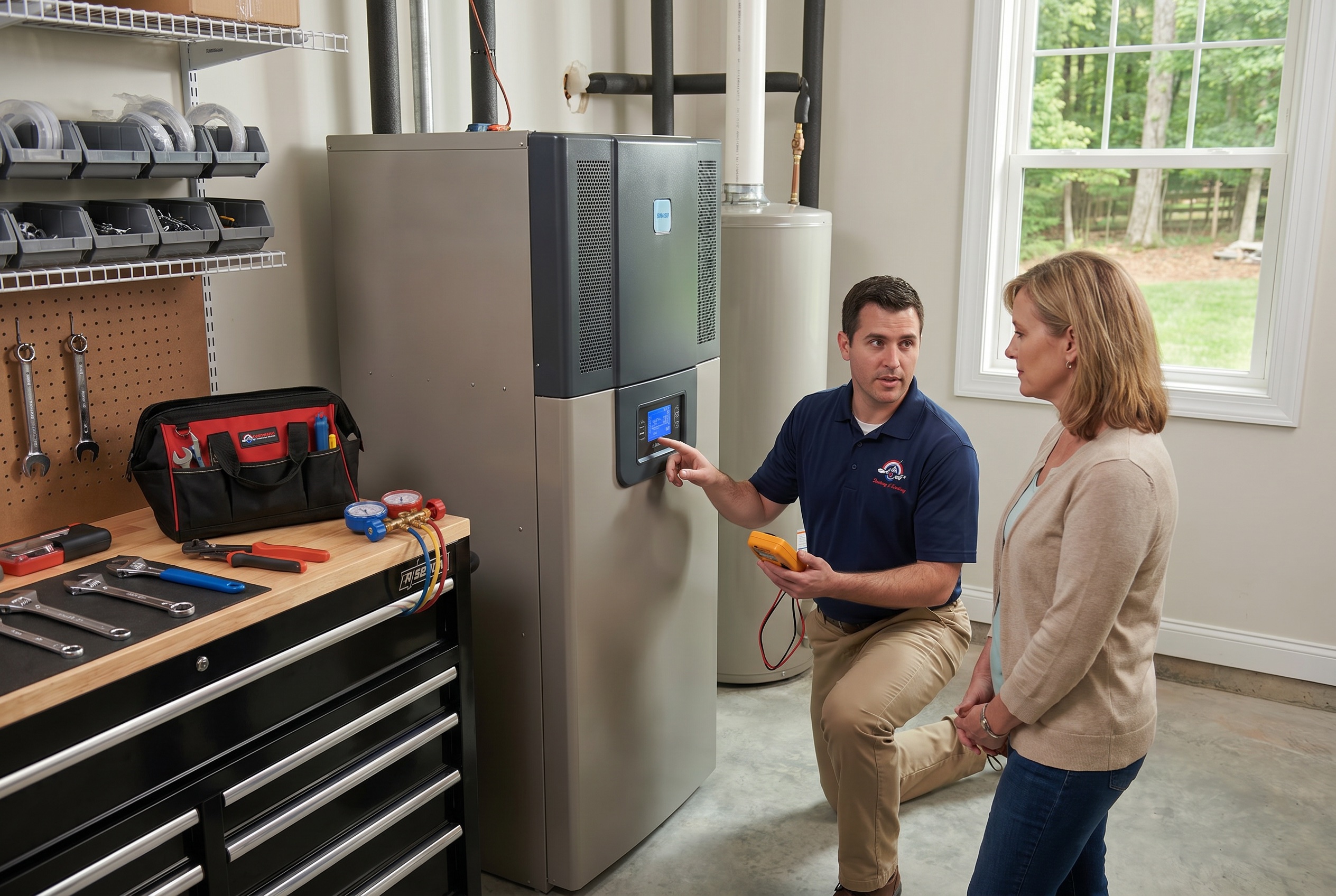
If the system is properly sized, maintenance is current, the ducts are in decent shape, and the house is still humid, a dedicated whole-home dehumidifier is something we’d bring up. These units install inline with your existing HVAC system and run independently of the AC to hold the house at a target humidity level, usually somewhere between 45 and 55 percent. In a climate like ours they can make a real difference, especially for families dealing with allergies or anyone who just wants the house to actually feel comfortable in July.
They’re not a substitute for a well-functioning AC, but as a complement to one they work really well. You can check out our cooling services page for more on comfort solutions we offer.
Bottom Line
A house that feels humid with the AC on is almost always fixable. It might be a maintenance issue, a sizing problem, a moisture source nobody has addressed, or leaky ductwork, but there’s usually a clear reason once someone actually looks at the whole picture. You shouldn’t have to just live with it.
If you’re in Garner, Raleigh, or anywhere else in the Triangle and you’re tired of your house feeling muggy all summer, give us a call. We’ve been working on homes in this area for over 30 years and we’re happy to come take a look. Reach out here to get something scheduled.
Frequently Asked Questions
What humidity level should my home be at with the AC running?
Somewhere between 45 and 55 percent relative humidity is the sweet spot for most people. Above 60 percent starts to feel noticeably muggy, and it also creates conditions where mold and dust mites do well. A cheap digital hygrometer from any hardware store will tell you exactly where you’re sitting.
Can an AC unit actually be too big for a house?
Yes, and it’s more common than most people expect. An oversized system cools the air too fast, short cycles, and never runs long enough to remove humidity properly. The house hits the target temperature but still feels uncomfortable. Getting sizing right requires a Manual J load calculation, not just matching whatever was there before.
Does annual maintenance actually help with humidity problems?
It can, yes. A proper tune-up includes cleaning the evaporator coil, checking refrigerant levels, and clearing the condensate drain line, all things that directly affect how well the system removes moisture from the air. If the humidity problem is relatively new, a maintenance visit is a reasonable first step before assuming the system needs to be replaced.
How often should I be changing my air filter?
A clogged filter restricts airflow across the evaporator coil, which hurts the system’s ability to remove moisture. For most homes in the Triangle, checking it monthly and replacing it every one to three months is a good baseline. During pollen season you might be doing it more often. Thicker media filters can go longer, just follow what the manufacturer recommends.